About this artwork
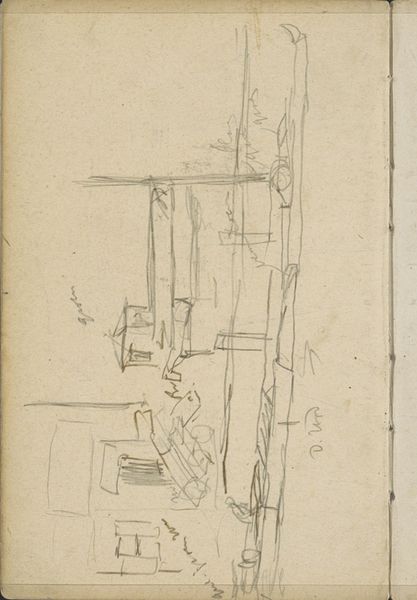
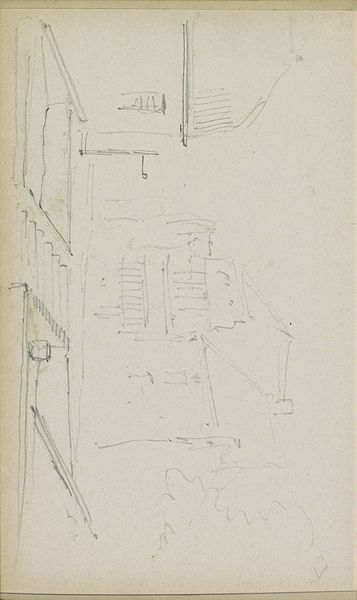
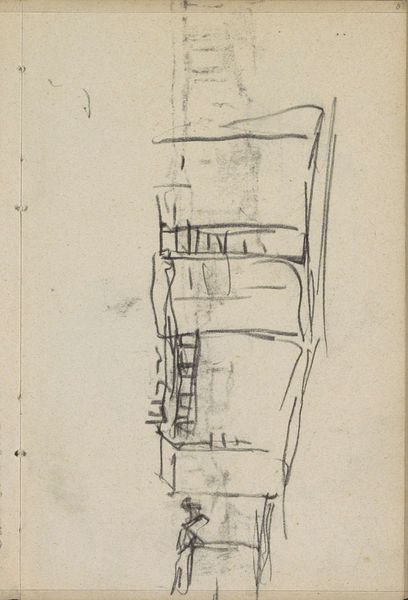
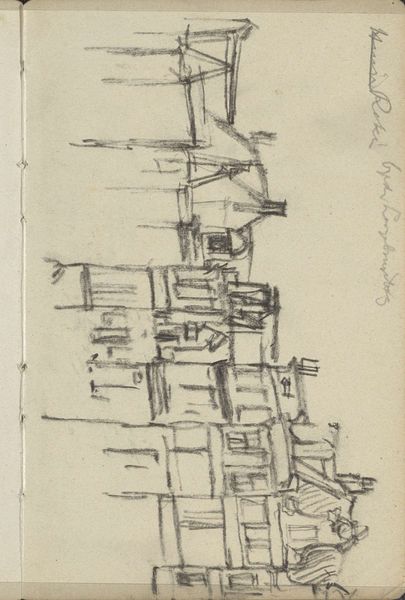
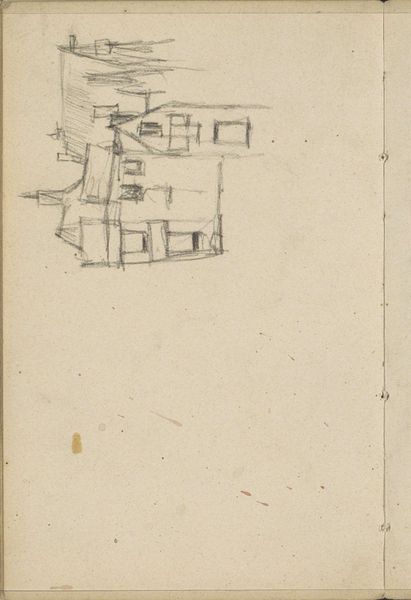
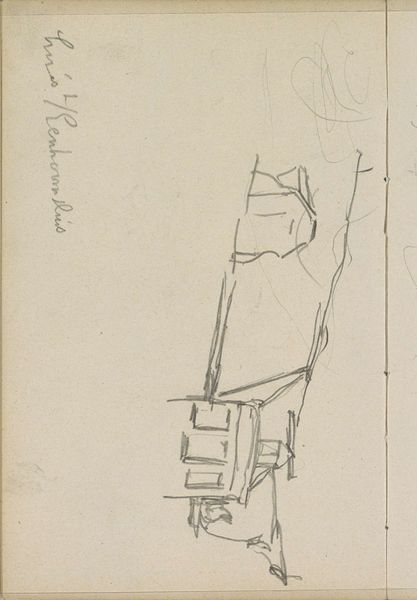
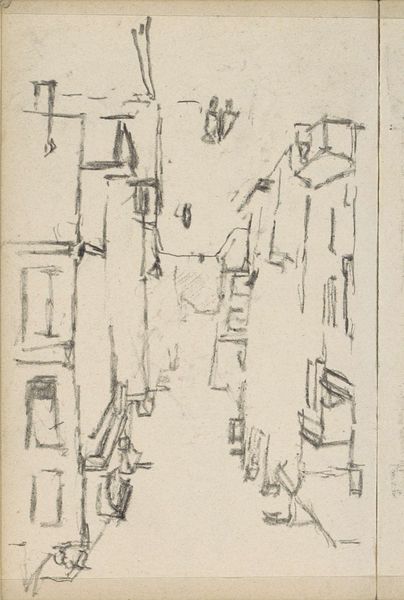
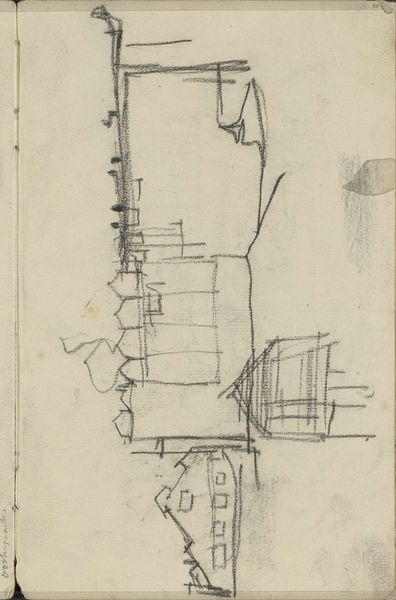
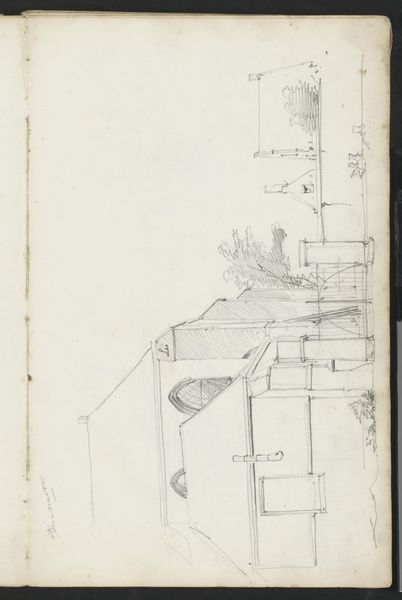
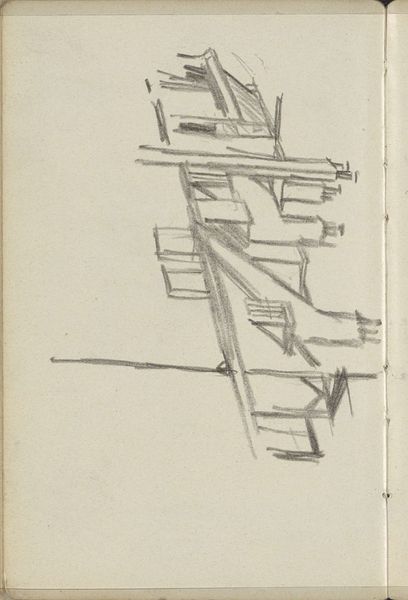
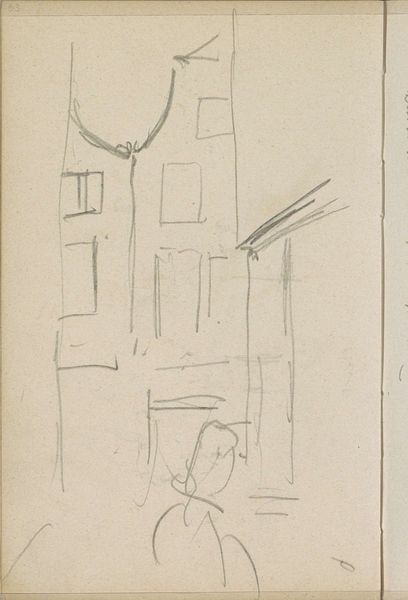
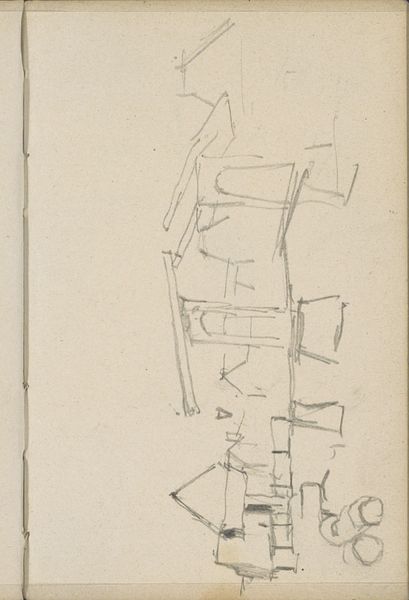
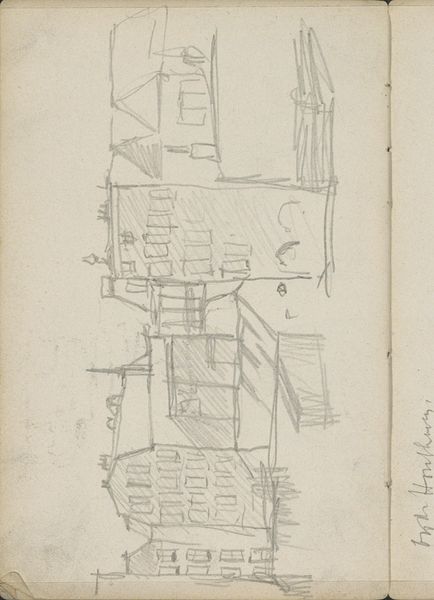
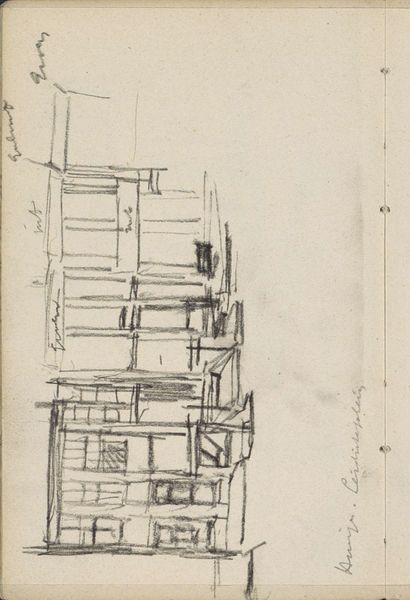
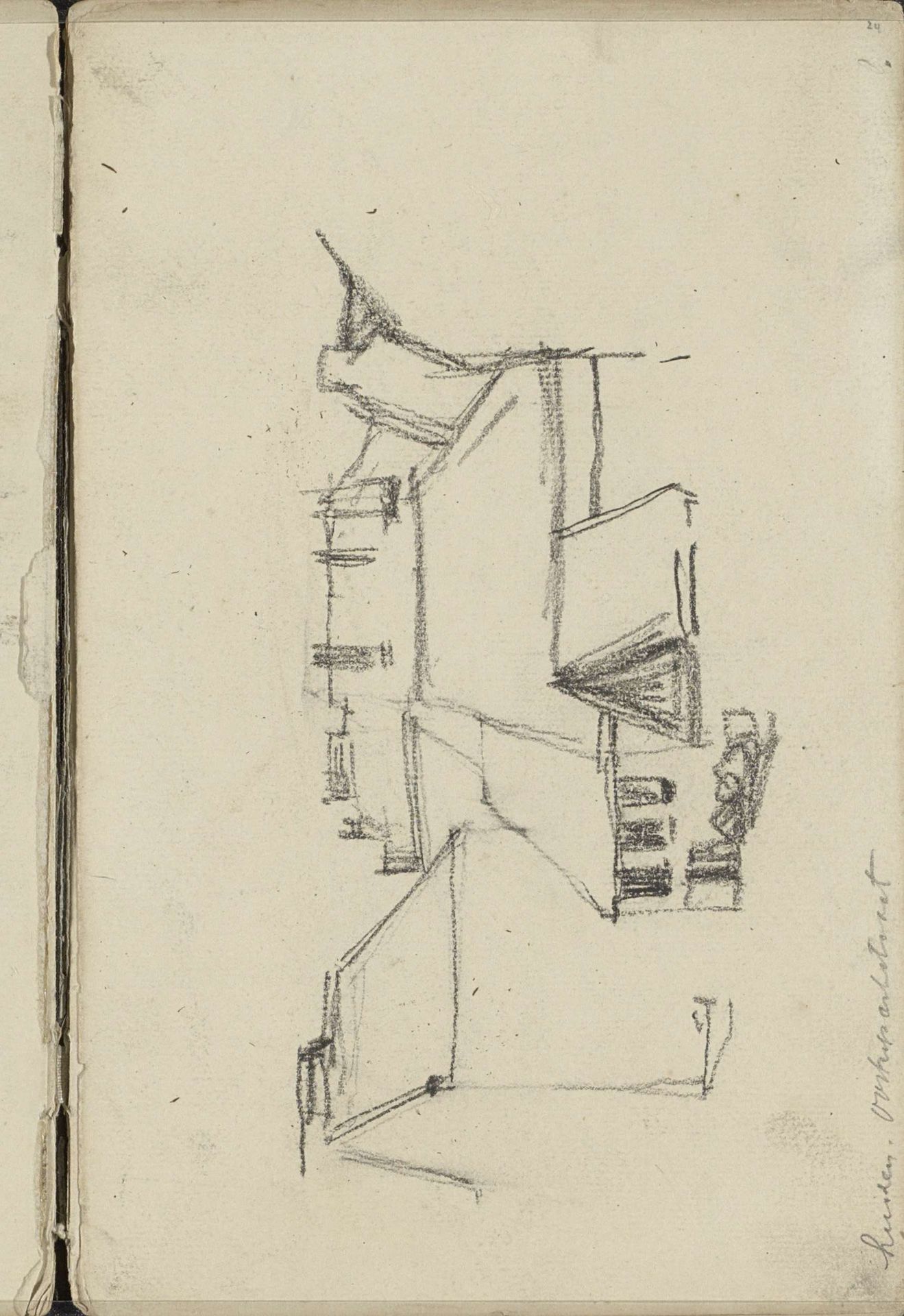
Editor: So, here we have "Huizen in de Oosterparkstraat te Amsterdam," a pencil and graphite drawing by George Hendrik Breitner, made between 1887 and 1891. It looks like a quick sketch of a street. The sketchiness gives it an almost melancholic feeling. What jumps out at you when you look at it? Curator: What strikes me is how Breitner is using the tools of drawing—the graphite and the paper itself—to capture a moment in Amsterdam’s urban development. We need to consider how industrialization was changing the city’s landscape and, by extension, the lives of its inhabitants. Think about the cost of paper and graphite at the time; how might that influence what kind of people could become artists and the subject matter that becomes popularized? Editor: That's interesting. So you’re seeing the drawing itself as a record of social and economic conditions? Curator: Exactly. It's about more than just representing buildings. Breitner chose this subject and medium, thereby making choices related to labor and material available in that era. How does that knowledge change your interpretation of the work? Editor: I guess I was initially focused on the mood, but thinking about it as a document of labor shifts my perspective. It makes me wonder about who lived in those houses, who built them, and the changing fabric of Amsterdam society at that time. I wonder if Breitner ever worked in other media and if it shifted his perspective or themes. Curator: Exactly. By looking at the materiality of the drawing and the social context it evokes, we see how even a simple sketch like this can tell a much bigger story. Editor: Thanks! I'll never look at a simple pencil sketch the same way again!
Huizen in de Oosterparkstraat te Amsterdam
1887 - 1891

George Hendrik Breitner
1857 - 1923Location
RijksmuseumArtwork details
- Medium
- drawing, pencil, graphite
- Location
- Rijksmuseum
- Copyright
- Rijks Museum: Open Domain
Tags
Comments
Share your thoughts
About this artwork
Editor: So, here we have "Huizen in de Oosterparkstraat te Amsterdam," a pencil and graphite drawing by George Hendrik Breitner, made between 1887 and 1891. It looks like a quick sketch of a street. The sketchiness gives it an almost melancholic feeling. What jumps out at you when you look at it? Curator: What strikes me is how Breitner is using the tools of drawing—the graphite and the paper itself—to capture a moment in Amsterdam’s urban development. We need to consider how industrialization was changing the city’s landscape and, by extension, the lives of its inhabitants. Think about the cost of paper and graphite at the time; how might that influence what kind of people could become artists and the subject matter that becomes popularized? Editor: That's interesting. So you’re seeing the drawing itself as a record of social and economic conditions? Curator: Exactly. It's about more than just representing buildings. Breitner chose this subject and medium, thereby making choices related to labor and material available in that era. How does that knowledge change your interpretation of the work? Editor: I guess I was initially focused on the mood, but thinking about it as a document of labor shifts my perspective. It makes me wonder about who lived in those houses, who built them, and the changing fabric of Amsterdam society at that time. I wonder if Breitner ever worked in other media and if it shifted his perspective or themes. Curator: Exactly. By looking at the materiality of the drawing and the social context it evokes, we see how even a simple sketch like this can tell a much bigger story. Editor: Thanks! I'll never look at a simple pencil sketch the same way again!
Comments
Share your thoughts