c. 1549
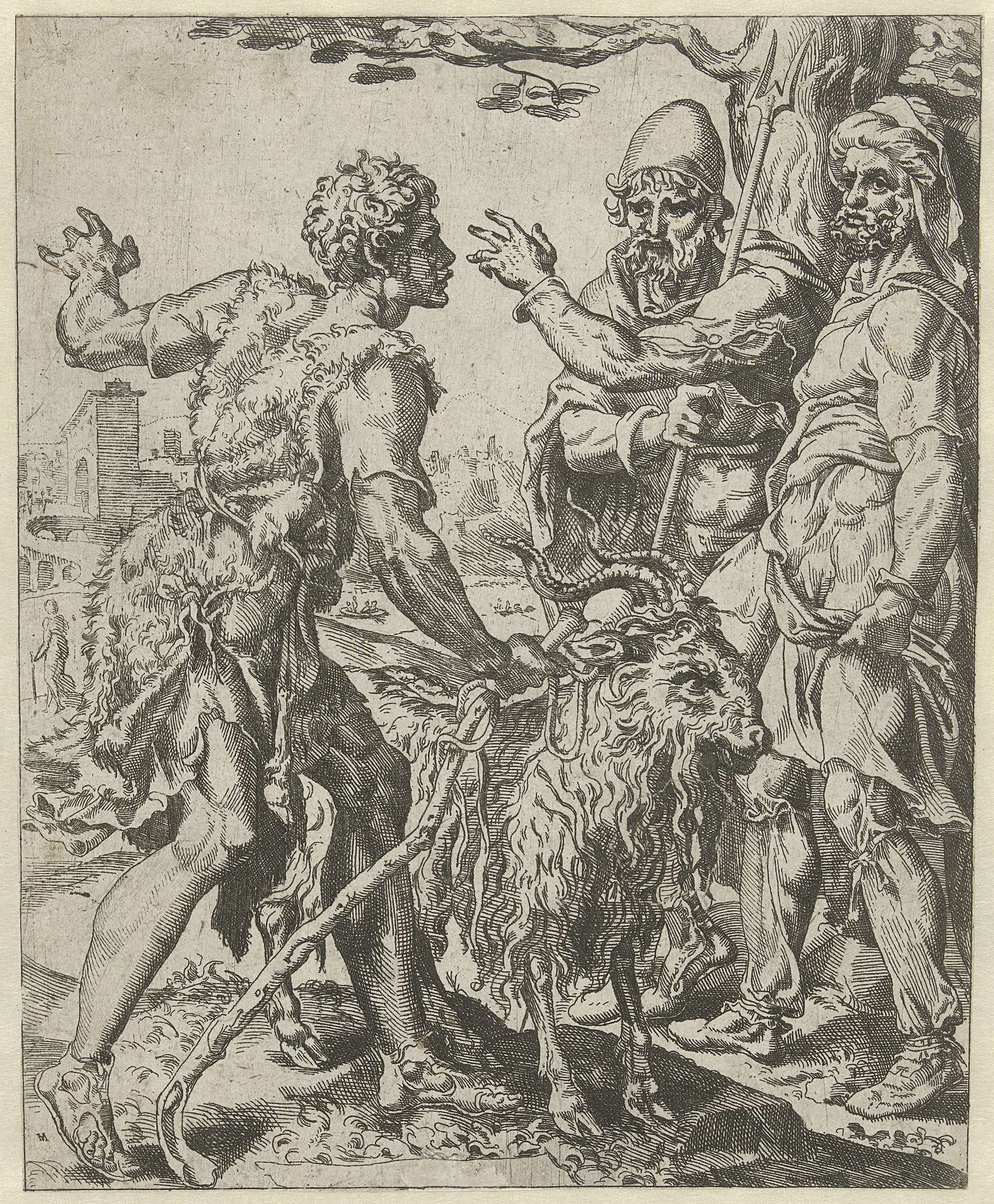
Chira op zoek naar de prostituee

Dirck Volckertsz Coornhert
1519 - 1590Location
RijksmuseumListen to curator's interpretation
Curatorial notes
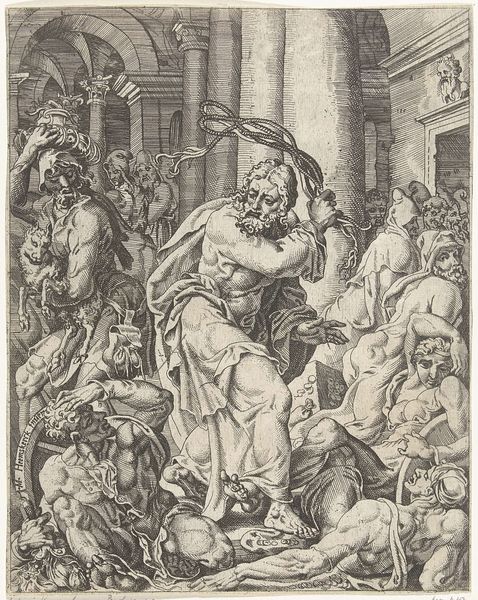
Dirck Volckertsz Coornhert’s engraving presents Chira searching for a prostitute, a narrative rife with symbolism. Here, the goat is more than a mere animal; it embodies base instincts and untamed desire. Its presence alongside the figures evokes ancient sacrificial rites and fertility symbols. Consider how this motif resonates with similar imagery across time. The goat, often linked to Pan or Dionysus, represents primal energies. Even in Christian contexts, it appears, though often demonized, reflecting humanity's struggle with temptation. The raised hand, a gesture of discourse or confrontation, echoes across classical oratory and Renaissance debates. The emotional weight of these symbols is a powerful force, engaging viewers on a subconscious level, stirring primal associations linked to morality. Such symbols do not progress linearly. Instead, they resurface, evolve, and take on new meanings. The goat's symbolic journey—from sacred offering to emblem of sin—reveals the cyclical nature of cultural memory, constantly reinterpreting our collective psyche.