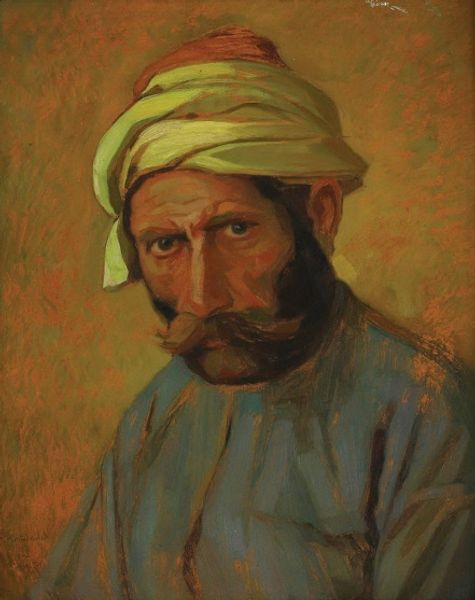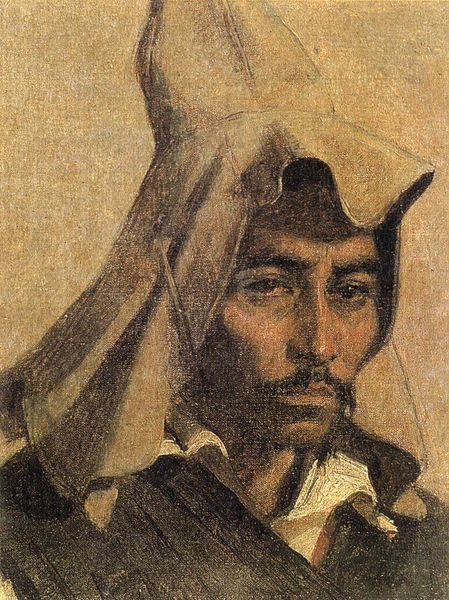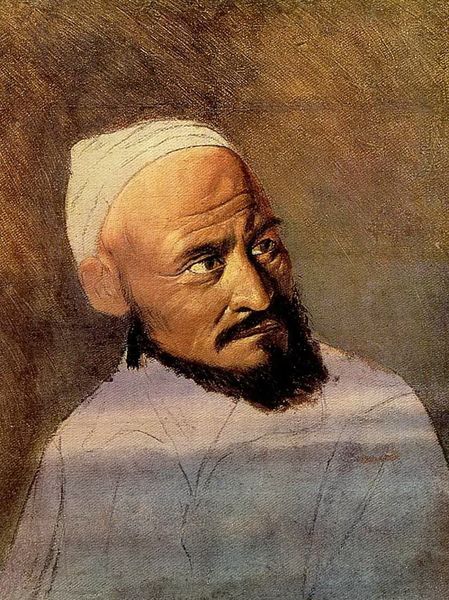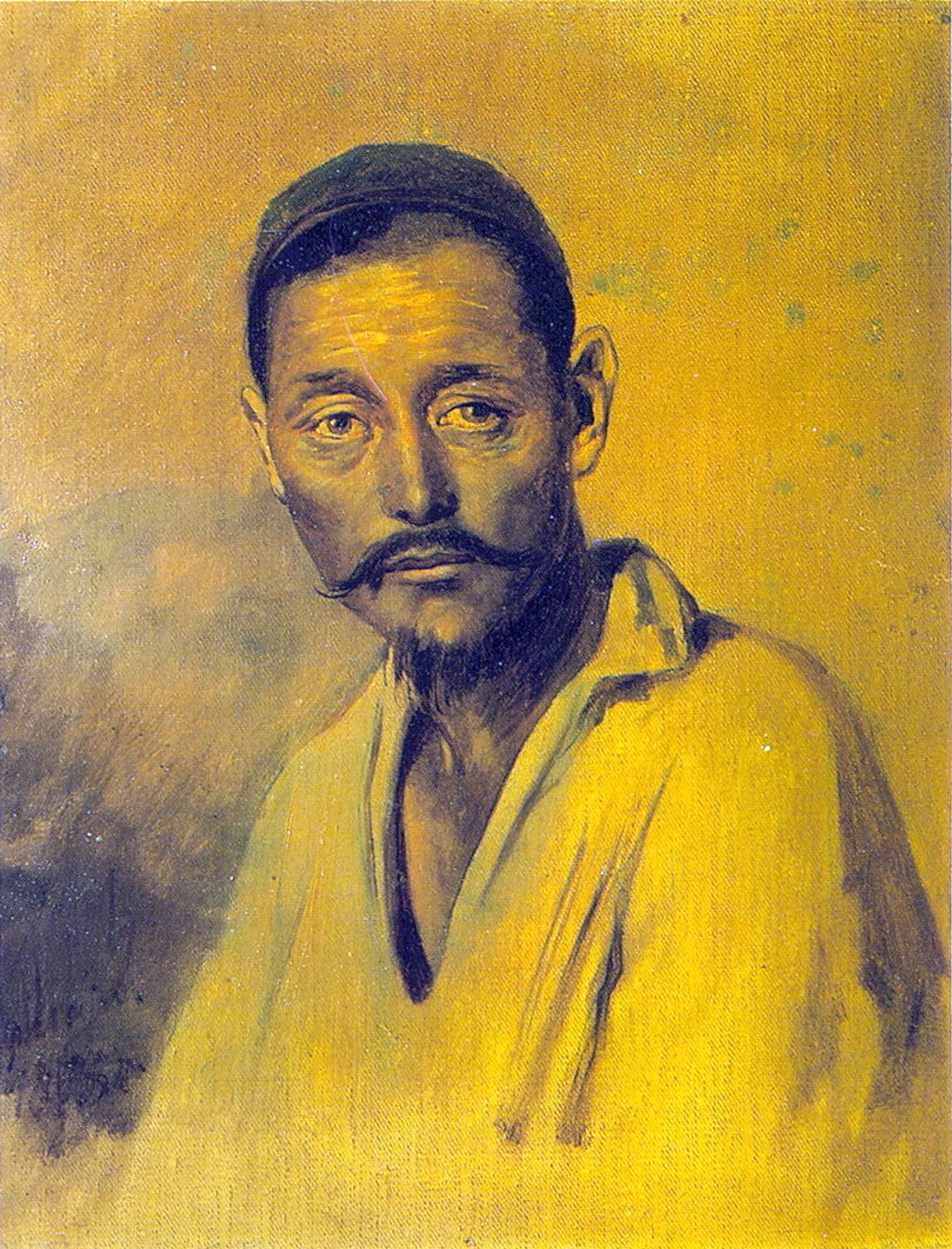
Head of a Kirghiz. Study for 'The Court Pugachev'

Listen to curator's interpretation
Curatorial notes
Curator: Before us, we see Vasily Perov's "Head of a Kirghiz. Study for 'The Court Pugachev'". Editor: A study, yes, but immediately striking in its raw emotion. The ochre palette lends a sense of antiquity, while the subject's gaze hints at profound suffering or stoicism. It's powerful, despite its seemingly modest scale. Curator: Indeed. Let’s delve into that ochre tonality. Perov skillfully employs a limited palette, creating a sense of unity and focusing the viewer's attention on the figure’s facial expression. The subtle variations in hue suggest depth and form, particularly around the eyes and cheekbones. The artist masterfully manipulates light and shadow to convey texture. Editor: This work provides critical insight into Perov’s preparatory process for his large history paintings. The Russian empire often romanticized or exoticized its subjects of central asian heritage. This image could almost be a document in its sympathetic observation. This piece challenges those tendencies, depicting an individual rather than an abstracted “other." How does that reading influence how we respond to the figure? Curator: From a purely compositional standpoint, note how the asymmetry created by his slightly tilted head adds a layer of dynamic tension. This tension contributes to the compelling sense of interiority the portrait evokes, moving beyond a simple surface representation. We are dealing with the philosophical complexity of how color interacts with meaning here. Editor: Yes. But looking through the lens of Russian history, we might ask how works like this functioned politically. How were they read? Did Perov intend this portrayal to offer social critique, to align himself with populist sentiments? What sources might illuminate his agenda? Curator: Well, regardless of the historical subtext, its visual impact is undeniable. The careful balancing of color, the precise modeling of form, elevates it beyond mere historical document. Its a great achievement on its own terms, formally speaking. Editor: True enough. It seems like whether approaching it through careful looking or cultural interrogation, Perov’s study prompts deeper reflection on art's role as witness and provocateur. Curator: Agreed. It is a compelling synthesis.