c. 1896
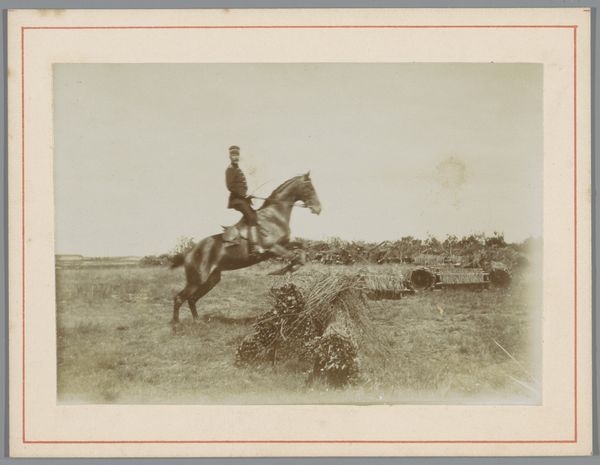
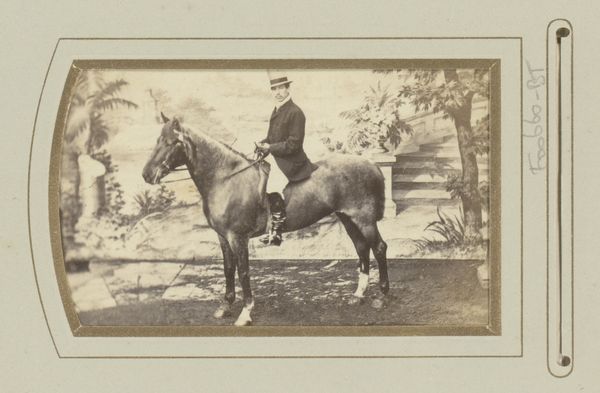
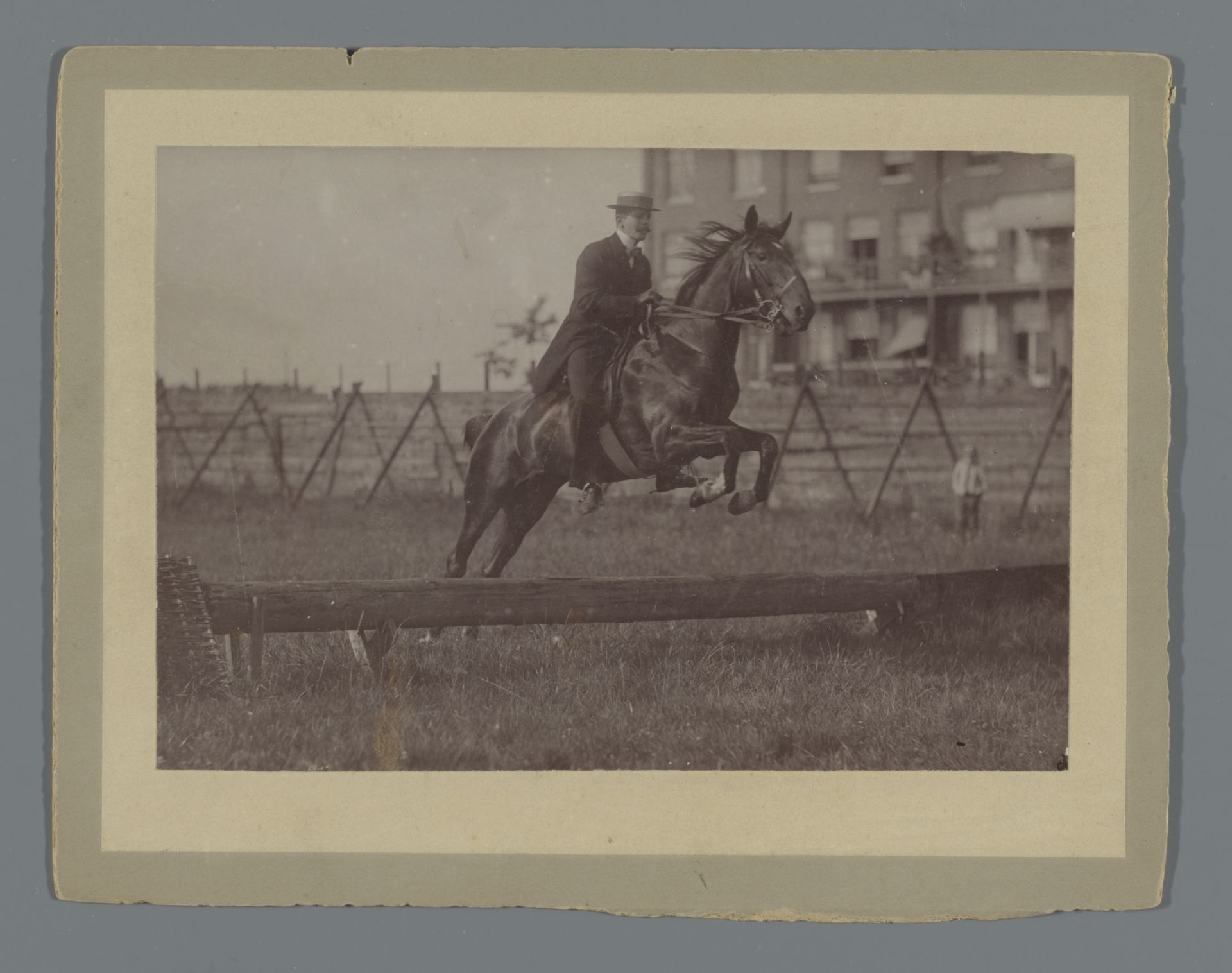
Henk van de Berg neemt op zijn paard Bobbie een horde op het veld achter het Rijksmuseum

Listen to curator's interpretation
Curatorial notes
Editor: This is a gelatin-silver print from around 1896 by Hendrik Herman van den Berg, titled "Henk van de Berg takes his horse Bobbie over a hurdle on the field behind the Rijksmuseum". It captures a dynamic scene, but I am curious: what strikes you most about this image? Curator: The immediate appeal lies in understanding the gelatin-silver process. We need to appreciate the chemical manipulation, the specific labor, to fix this instant. Notice how the monochromatic palette, born from material limitations, paradoxically directs our focus. Editor: Are you saying the value of the photograph resides in the technical ability of capturing such a fleeting scene so well? Curator: Precisely. Think about the social context. The rise of photography democratized image-making, previously a realm of painted portraits for the elite. Van den Berg's choice of subject and medium reflects a changing dynamic between accessibility and artistic aspiration. Editor: It is interesting that you draw a parallel to the democratization of images because I also thought the setting may signal wealth or status. Curator: Indeed. Consider also, then, the economic aspects: The cost of equipment, the labor involved, and how the consumption of these images shaped visual culture. Every stage involved materials and decisions, influenced by class. Editor: So the "realism" the museum tag mentioned has less to do with truthful depictions and more with the socio-economic climate, or the ways things were? Curator: Precisely. The subject becomes secondary to the material reality that makes its representation possible. What do you take away from that? Editor: I've never thought about images being linked so strongly to class. I'm definitely seeing this piece—and photography in general—in a new, more critical way. Curator: Understanding how labor, materiality, and economic access define art provides invaluable context. This process itself unveils new readings of seemingly simple images.