1850
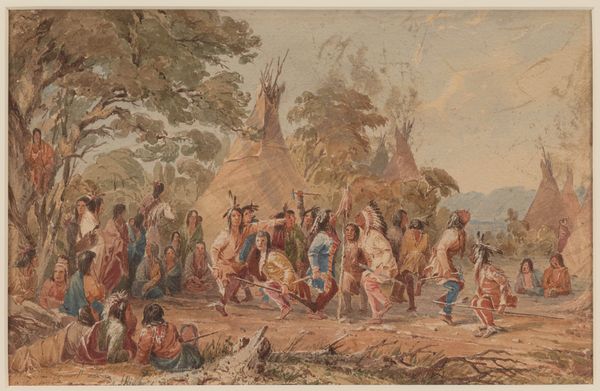
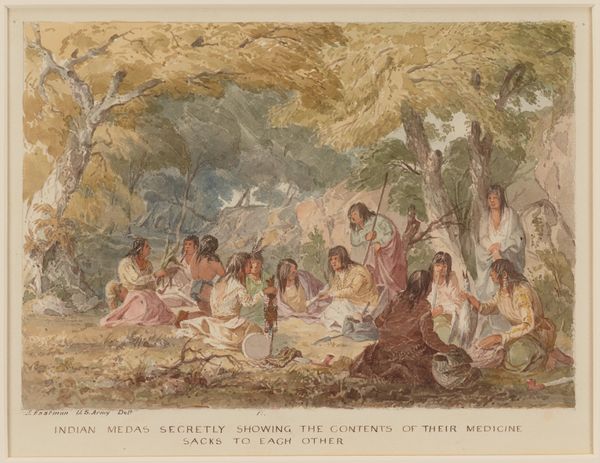
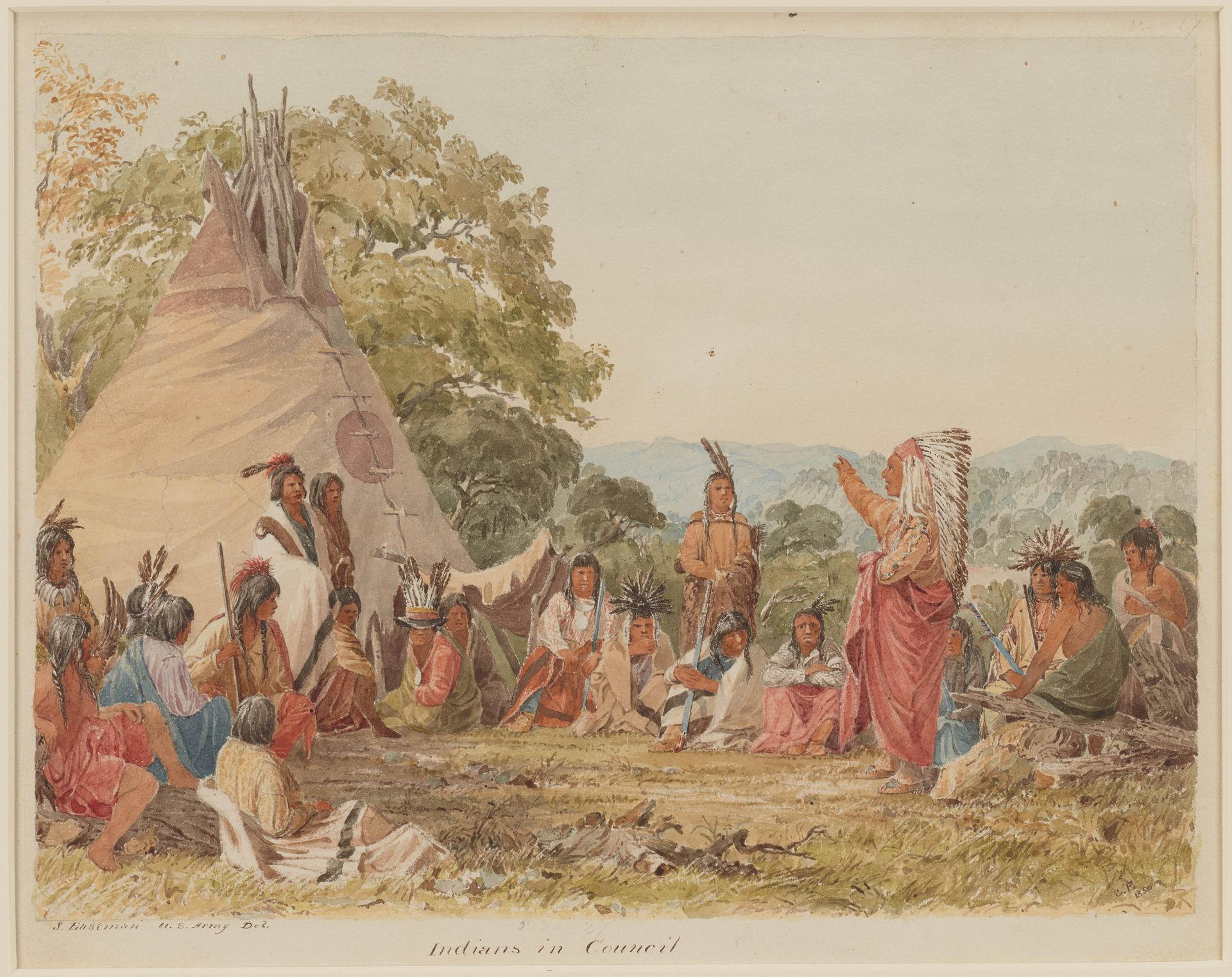
Indians in Council


Listen to curator's interpretation
Curatorial notes
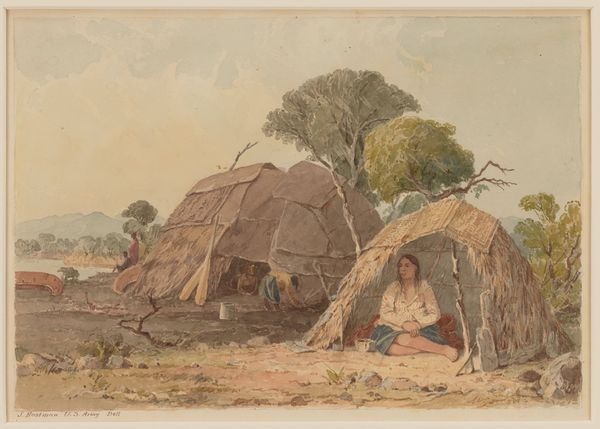
Editor: This is "Indians in Council," a watercolor and graphite work by Seth Eastman from 1850. It's interesting; the painting depicts what seems to be a peaceful gathering. The use of light watercolor gives it a very serene, almost idyllic quality. How do you interpret the scene and its historical context? Curator: Eastman, as an army officer, had a unique position. While he participated in westward expansion, his artworks offer insights into Indigenous life, albeit often filtered through a colonial lens. We must consider his role in the very system that displaced these communities. Do you think the work is trying to be documentary or romanticizing? Editor: It’s hard to tell! I can see elements of both. The details of dress and the setting seem realistically portrayed, but the overall calm atmosphere feels idealized, right? Curator: Precisely. The image functions within a complex power dynamic. These depictions were consumed by a public shaping policy toward Indigenous populations. Think about how Eastman's role influenced the reception of the artwork. Editor: That's a really important point. So it’s not just about what’s *in* the painting, but also about who made it and *why*? Curator: Absolutely. And how that “why” then shapes public perceptions and narratives surrounding Native American communities. Understanding this image requires recognizing the complex politics of representation in the 19th century. It serves as both historical document and cultural artifact. Editor: That gives me a lot to think about! I never considered how deeply entangled the art is with the social and political landscape of the time. Curator: Indeed! The painting serves as a reminder to look critically at whose stories are being told and how they are being framed in visual culture.