

1657
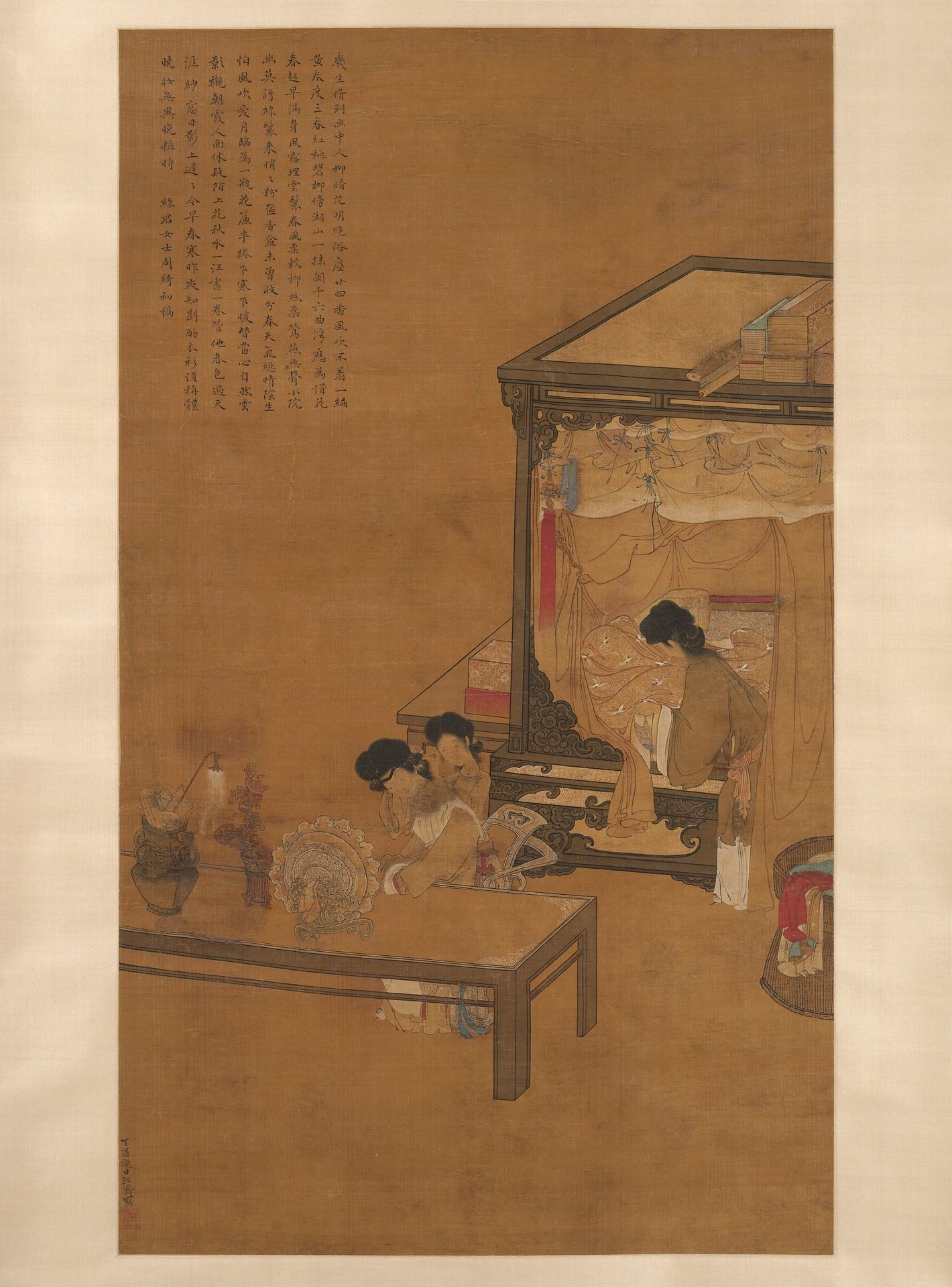
Lady at Dressing Table


Listen to curator's interpretation
Curatorial notes
Curator: At first glance, I find myself immediately drawn to the sense of serene interiority it evokes. The muted colors and the postures of the women create a very intimate atmosphere, like we are catching them in a moment of quiet contemplation. Editor: We're looking at "Lady at Dressing Table," a hanging scroll painted in ink and watercolor on paper, created around 1657 by Wang Qiao, who worked during the transition between the Ming and Qing dynasties. The work resides here at the Minneapolis Institute of Art. What I find striking is its demonstration of cultural continuities, offering insights into evolving aesthetics and social dynamics. Curator: Absolutely. And that scene…it almost feels like a dream. Notice the delicate brushwork rendering the fabrics and the details of their coiffure, even that fan on the table, each item suggests rituals of refinement central to the construction of feminine identity in the Ming-Qing court. This visual language certainly reveals codes of status and ideals. Editor: Yes, the painting provides a window into the lifestyle of elite women during that time. Art like this reflects social shifts of the era—the growing status of women, consumerism and evolving expectations of visual culture in society and their social circles. Curator: The mirror becomes particularly significant, too. The act of adornment wasn't purely for self-image; these elements hold psychological weight. They reflect desires for personal autonomy amidst social constraints and offer viewers insights into the inner world. Editor: Also, it seems these intimate portraits became quite fashionable then, showcasing women's roles as arbiters of taste and beauty. I’m thinking about who this work may have been commissioned by, who its intended viewers were, and how they may have interpreted it. It suggests how this representation might have bolstered specific political or social views at court. Curator: These observations certainly enrich our reading of the work beyond mere aesthetic pleasure. I now also observe a certain tension between the representation of feminine space and the active participation within the social domain through gestures of personal agency in those gestures. Editor: Considering our modern standpoint, it makes you think about shifting ideals. What we consider meaningful—how beauty, identity, and agency were interpreted, and what stays relevant now. Curator: Exactly, art's strength isn't just in reflecting moments, but in reminding us of timeless questions about beauty, personhood and place. Editor: Precisely, prompting us to see not only the surface representation, but the depth beneath it.
