About this artwork
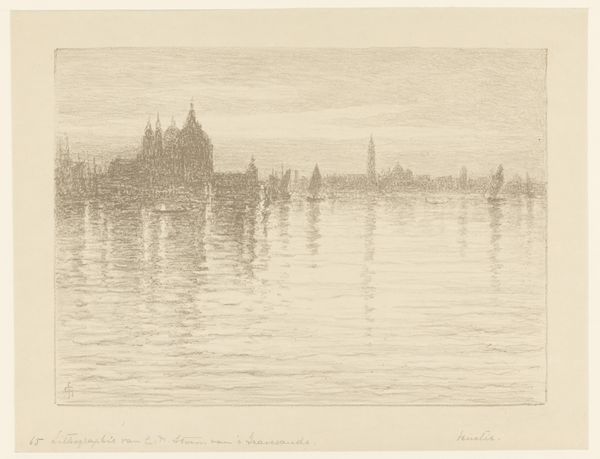
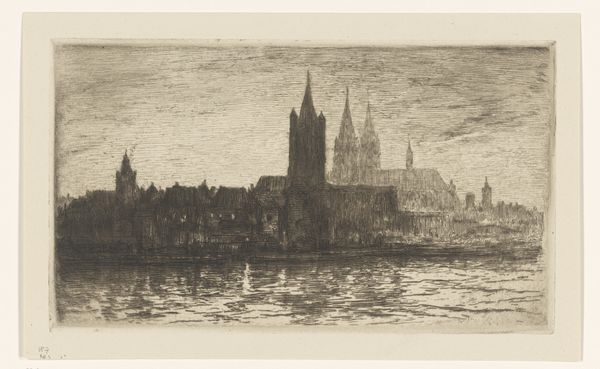
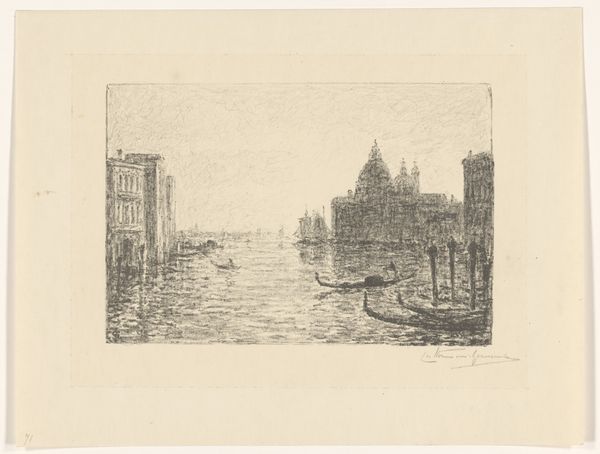
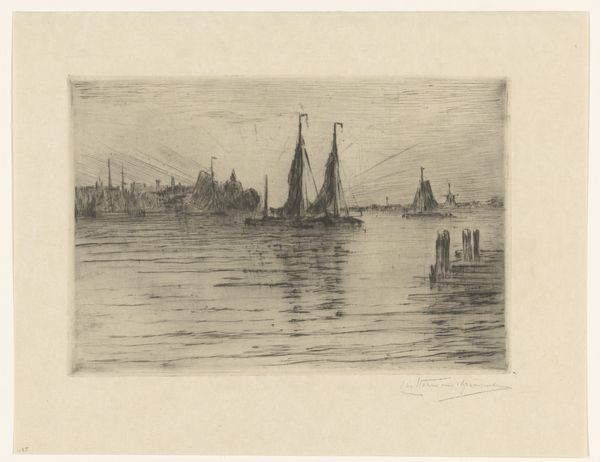
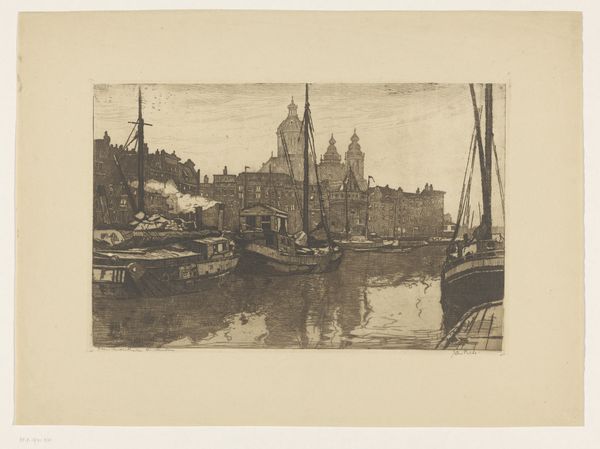
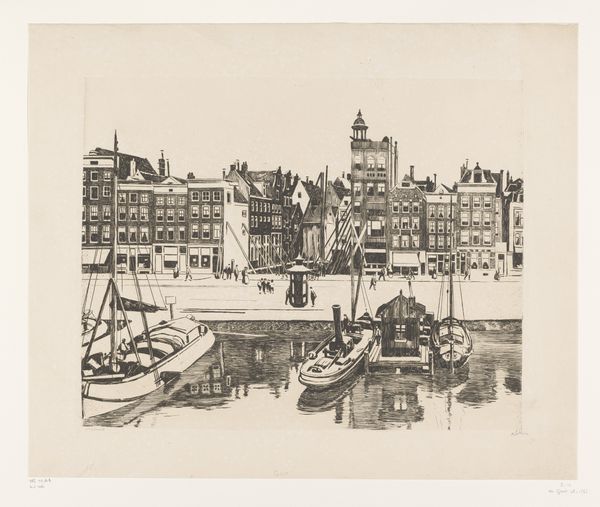
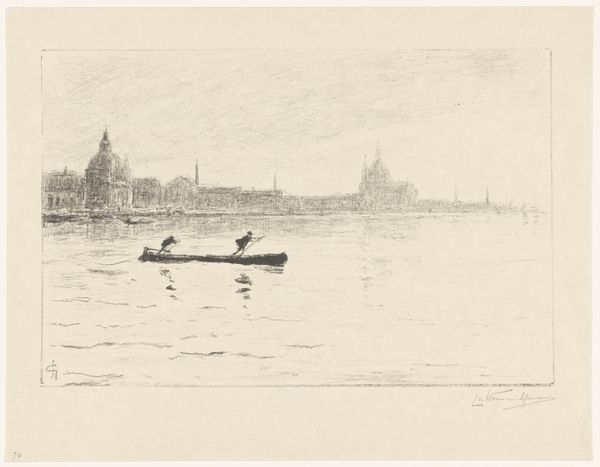
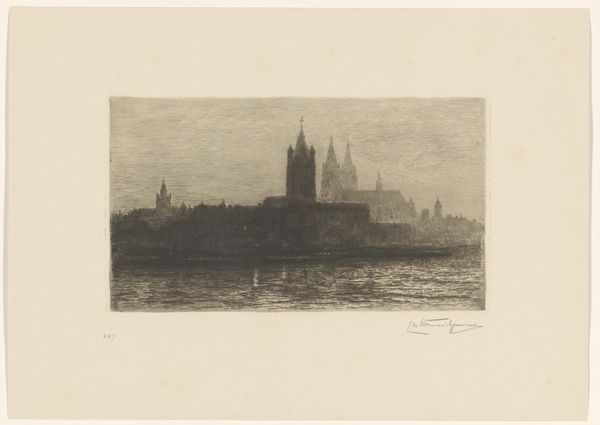
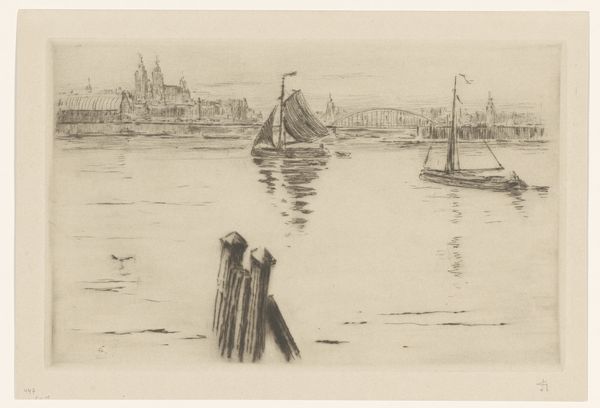
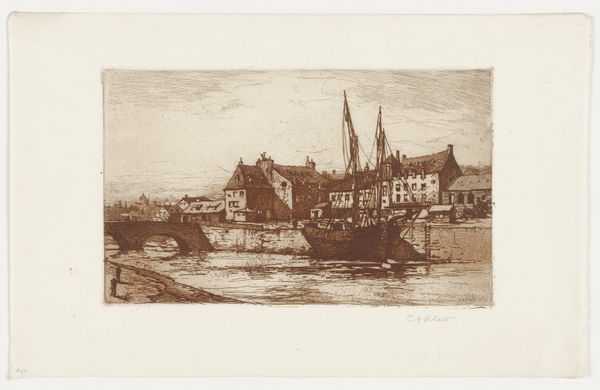
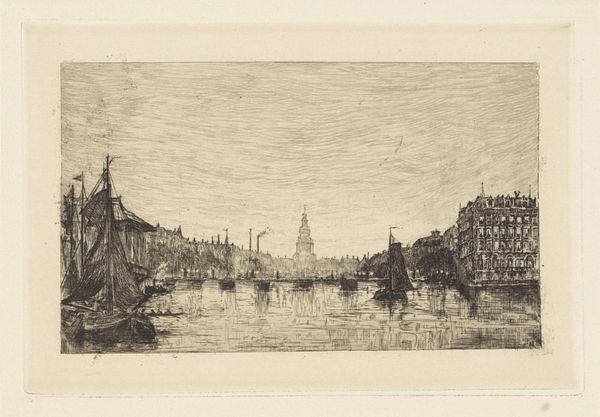
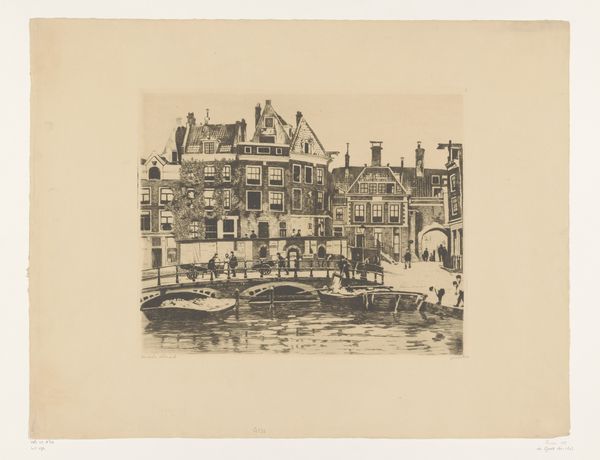
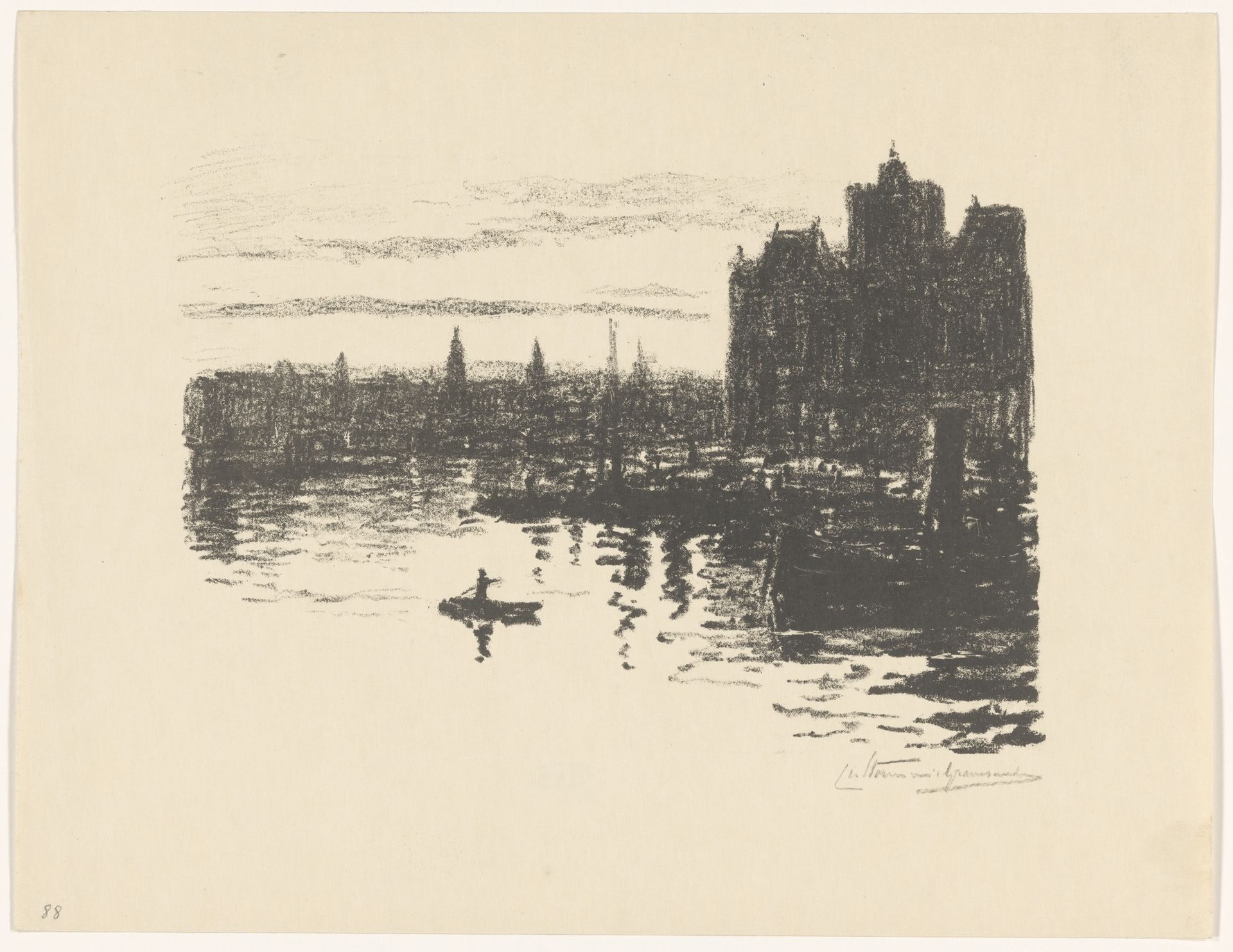
Carel Nicolaas Storm van 's-Gravesande sketched this view of Geldersekade in Amsterdam using black chalk. The dark, looming buildings are reflected in the water, creating a mirror image that doubles the sense of weight and foreboding. The image of water as a reflective surface resonates deeply in art history, often symbolizing introspection and the subconscious. Think of Narcissus, captivated by his own reflection, an allegory of self-absorption but also a profound meditation on identity. Here, the reflection is not of an individual, but of a city, hinting at collective identities. Consider the boat with a solitary figure. This motif of a lone boatman appears across cultures, often representing a journey—perhaps a passage through life or even to the afterlife, as seen in ancient Egyptian funerary art. This image resonates with a primal human experience, a journey into the unknown. The symbol is not static; it evolves, adapting to new contexts while retaining its core emotional charge. In van 's-Gravesande’s rendering, it evokes feelings of loneliness and introspection.
Geldersekade in Amsterdam
1851 - 1924

Carel Nicolaas Storm van 's-Gravesande
1841 - 1924Location
RijksmuseumArtwork details
- Dimensions
- height 250 mm, width 324 mm
- Location
- Rijksmuseum
- Copyright
- Rijks Museum: Open Domain
Comments
Share your thoughts
About this artwork
Carel Nicolaas Storm van 's-Gravesande sketched this view of Geldersekade in Amsterdam using black chalk. The dark, looming buildings are reflected in the water, creating a mirror image that doubles the sense of weight and foreboding. The image of water as a reflective surface resonates deeply in art history, often symbolizing introspection and the subconscious. Think of Narcissus, captivated by his own reflection, an allegory of self-absorption but also a profound meditation on identity. Here, the reflection is not of an individual, but of a city, hinting at collective identities. Consider the boat with a solitary figure. This motif of a lone boatman appears across cultures, often representing a journey—perhaps a passage through life or even to the afterlife, as seen in ancient Egyptian funerary art. This image resonates with a primal human experience, a journey into the unknown. The symbol is not static; it evolves, adapting to new contexts while retaining its core emotional charge. In van 's-Gravesande’s rendering, it evokes feelings of loneliness and introspection.
Comments
Share your thoughts