About this artwork
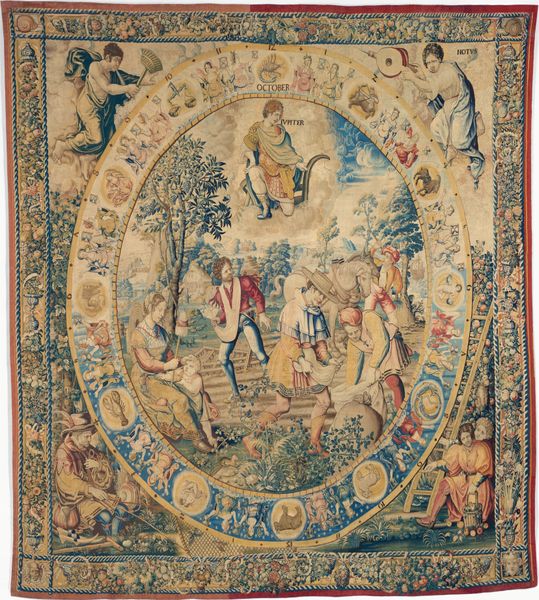
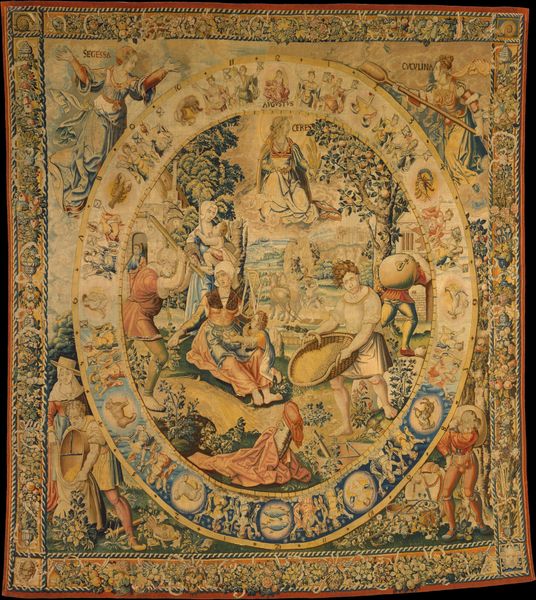
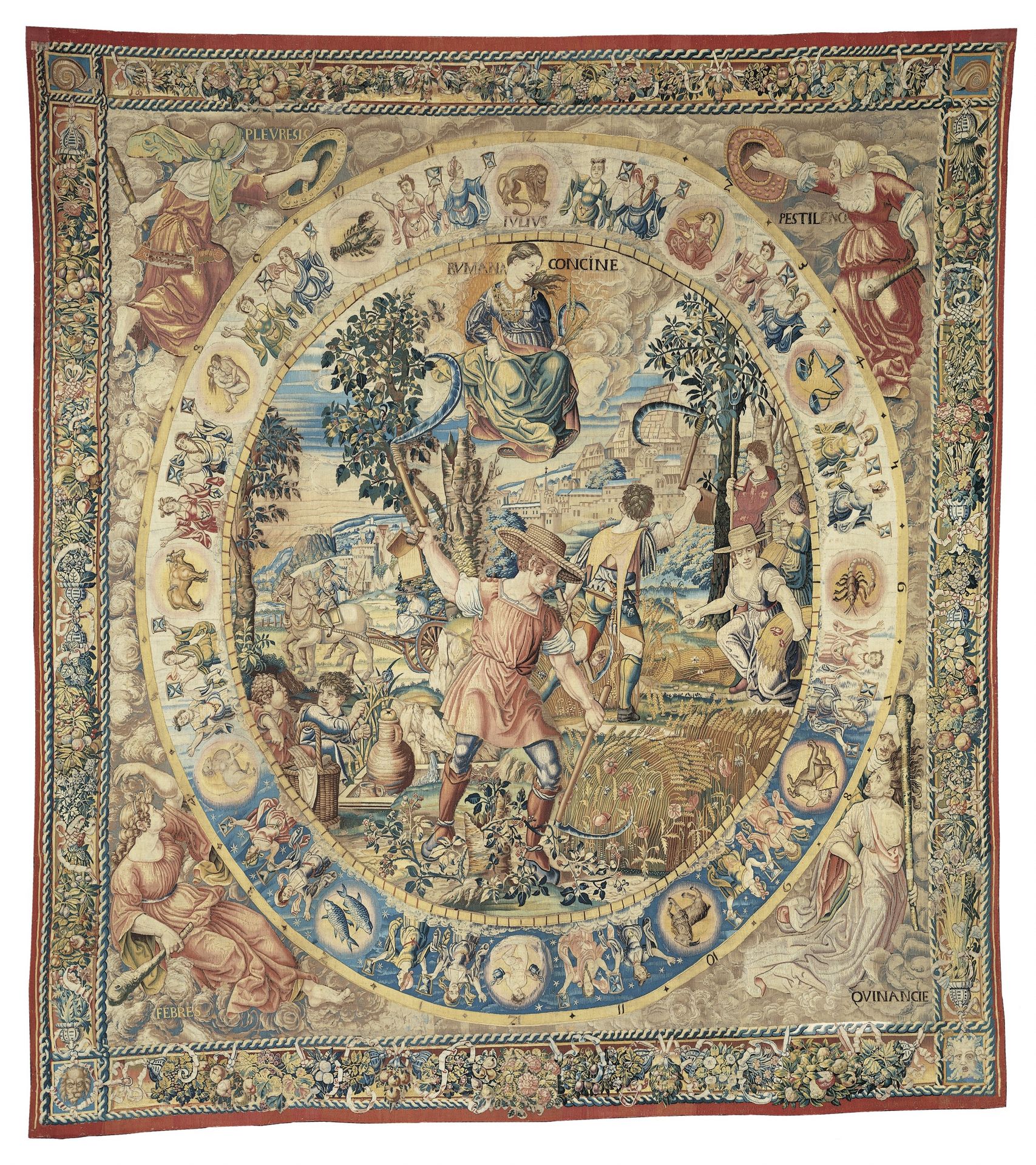
This is ‘July, from The Medallion Months,’ a tapestry made by Bernard van Orley, circa 1530, and now residing at the Art Institute of Chicago. The dominant visual experience is one of organized complexity. Van Orley employs a circular composition, densely packed with figures and symbols, creating a rich tapestry of color, shape, and texture that evokes a sense of abundance and activity. The circular form is structured around the labors of the months, set within the context of astrological signs, alluding to larger cosmological structures that govern earthly existence. This design suggests a worldview that integrates human activity with cosmic order. The tapestry's semiotic system reflects broader cultural codes, specifically the Renaissance interest in classical antiquity and the alignment of humanism with natural philosophy. Ultimately, Van Orley's piece challenges fixed meanings. Instead, the circular structure and cyclical repetition implies an ongoing reinterpretation of meaning, as the relationship between man and nature is being constantly reassessed.
July, from The Medallion Months
before 1528


Artwork details
- Medium
- weaving, textile
- Dimensions
- 399.7 × 448.3 cm (157 3/8 × 176 1/2 in.)
- Location
- The Art Institute of Chicago
- Copyright
- Public Domain
Tags
Comments
Share your thoughts
About this artwork
This is ‘July, from The Medallion Months,’ a tapestry made by Bernard van Orley, circa 1530, and now residing at the Art Institute of Chicago. The dominant visual experience is one of organized complexity. Van Orley employs a circular composition, densely packed with figures and symbols, creating a rich tapestry of color, shape, and texture that evokes a sense of abundance and activity. The circular form is structured around the labors of the months, set within the context of astrological signs, alluding to larger cosmological structures that govern earthly existence. This design suggests a worldview that integrates human activity with cosmic order. The tapestry's semiotic system reflects broader cultural codes, specifically the Renaissance interest in classical antiquity and the alignment of humanism with natural philosophy. Ultimately, Van Orley's piece challenges fixed meanings. Instead, the circular structure and cyclical repetition implies an ongoing reinterpretation of meaning, as the relationship between man and nature is being constantly reassessed.
Comments
Share your thoughts