Copyright: Public domain
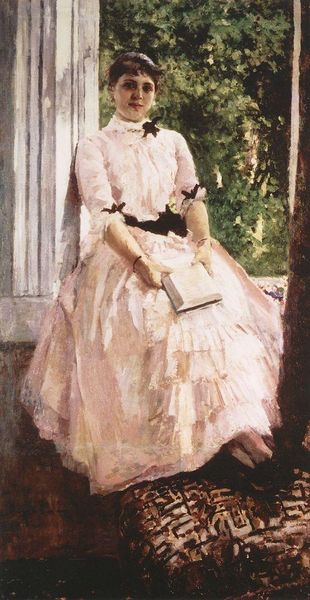
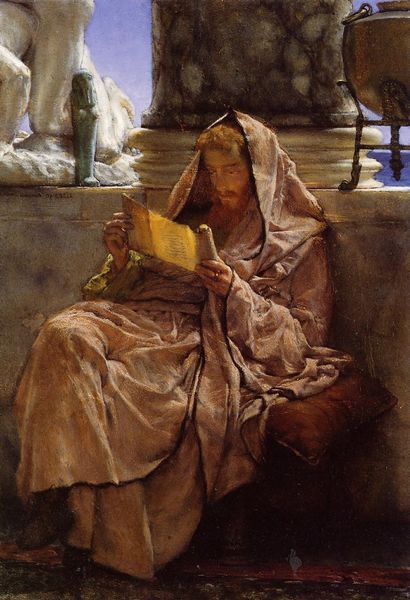
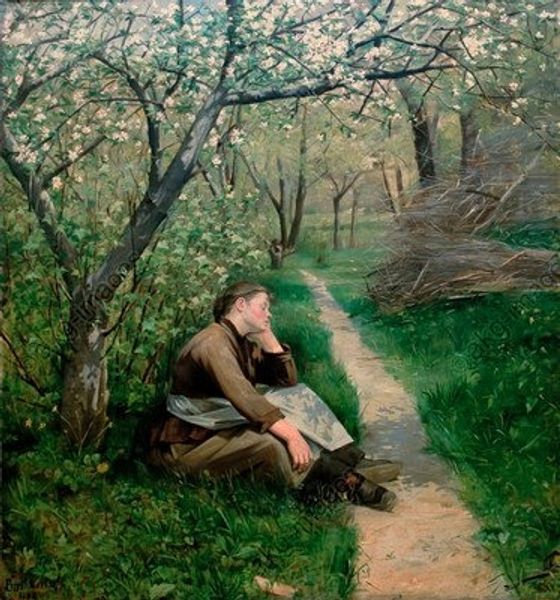
Giovanni Costa painted this intriguing scene, entitled "To be or not to be: who loves not is not," in Italy, during the late nineteenth century. The woman, dressed in classical robes, sits outside with a writing desk. She seems to be contemplating the words she will write. Costa was a leading figure in the Macchiaioli movement, a group of Italian painters who broke from the academic tradition to paint en plein air. Their focus was on capturing the effects of light and atmosphere. Costa was also a fervent patriot, deeply involved in the Risorgimento, the movement for Italian unification. His art often reflected his political ideals and sought to convey a sense of national identity. But here, the institutional history of Italian art has been rejected in favor of a new, more modern aesthetic. To understand the context of this painting, you might look to manifestos or other writings by Costa himself, as well as studies of the Macchiaioli and the Risorgimento. This can help us understand how such cultural and political ideas shape artistic production.
Comments
No comments
Be the first to comment and join the conversation on the ultimate creative platform.
 Collect
 React
React Comment
More like this