

1820 - 1826
Chimneypiece consisting of three pieces

Dixon Austin and Co.
@dixonaustinandcoThe Metropolitan Museum of Art
Metropolitan Museum of Art, New York, NYListen to curator's interpretation
Curatorial notes
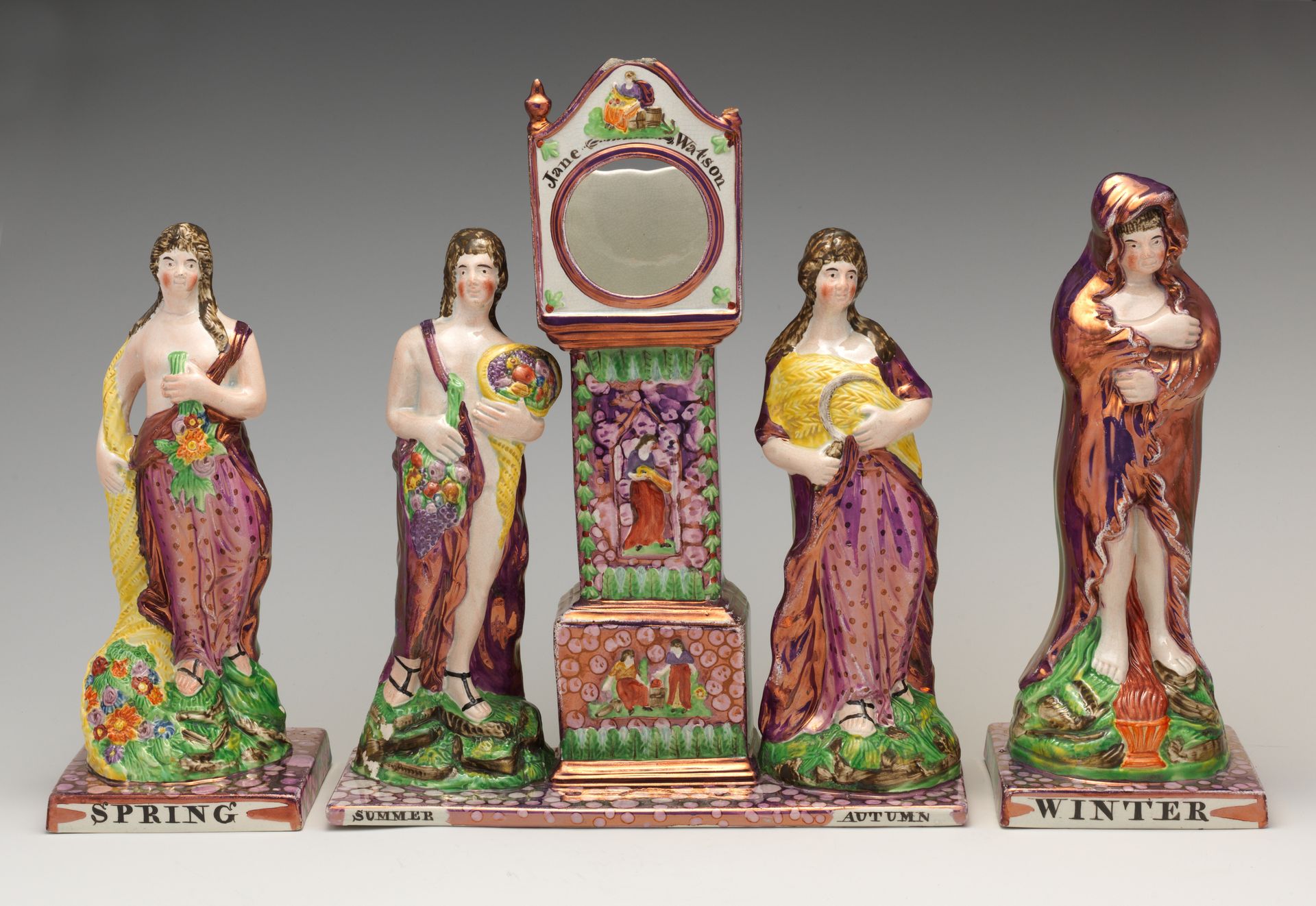
Curator: This fascinating ceramic sculpture, "Chimneypiece consisting of three pieces," crafted by Dixon Austin and Co. between 1820 and 1826, presents a unique blend of functionality and allegorical representation. Editor: My immediate thought? It's incredibly tactile. The sheen on that ceramic practically begs to be touched, but also somewhat uncanny; there is an interesting tension here between its obvious intended use as decoration, but also has almost animatronic features and tonality. Curator: The choice of depicting the four seasons is rich with symbolism. Each figure, representing Spring, Summer, Autumn, and Winter, embodies the attributes and qualities associated with their respective time of year. Note the Grandfather clock and the positioning of "Jane Watson's" portrait above this very elemental force, further cementing humanity and their relationship to mother earth and father time. Editor: Exactly, it makes me wonder about the firing process. Given its complexity, how were such intricate details preserved without warping or cracking? I imagine the labor involved in glazing alone must have been substantial. Plus, what was it about chimneypieces during this period that allowed them to become almost altars for displaying ceramic pieces that combined utility and artistry? Curator: The imagery would have served a function beyond mere decoration. Each figure, for instance, has associated flowers, fruit, sheaf, and cloaked form—evoking themes of growth, harvest, abundance, and the need for warmth, survival and introspection through winter. Each aspect carries with it cultural memory and symbolic language about this society's perception of time. Editor: Perhaps a reflection of anxieties of that specific time or perhaps even some class envy to possess works like these to ward off the coming bleakness of Winter and a celebration of the abundance found during Summer? Still, the very public display speaks to an act of intentional consumption, not unlike some performative signaling in modern culture today. I find that incredibly telling. Curator: A perfect summation! The convergence of the allegorical, historical portraiture, and materiality creates an art object of surprising narrative power. Editor: I agree. It is interesting how a combination of design and technique offers insights into the human condition, society, and the passage of time, through the lens of its physical making and materials.