ceramic, sculpture
#
ceramic
#
geometric
#
sculpture
#
decorative-art
Dimensions: H. 12 1/2 in. (31.8 cm)
Copyright: Public Domain
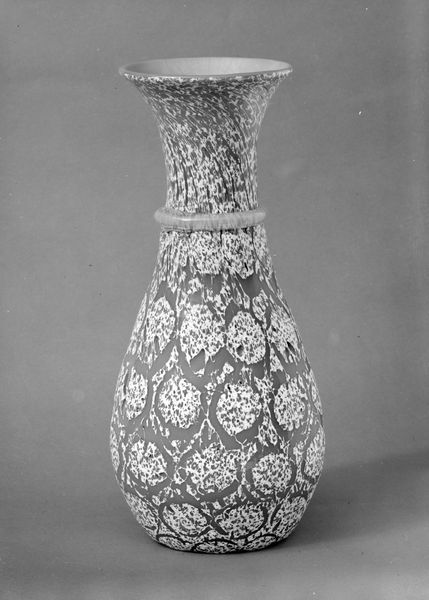
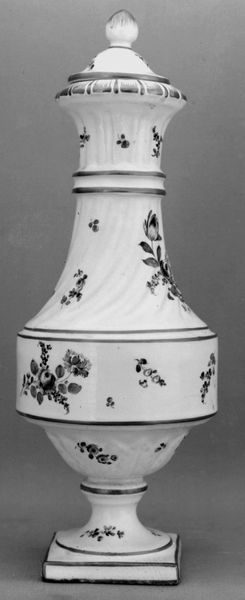
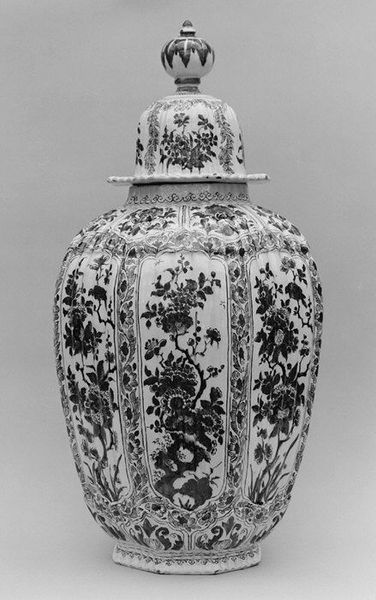
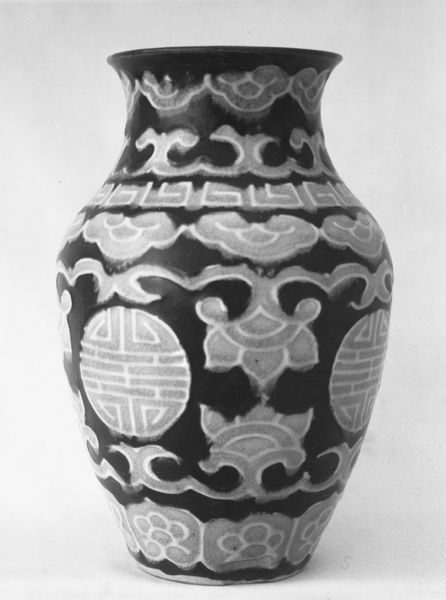
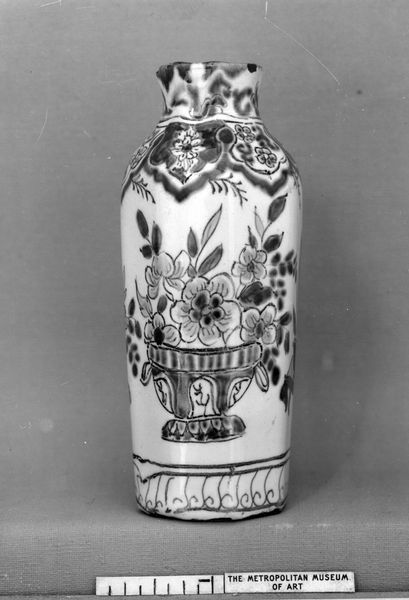
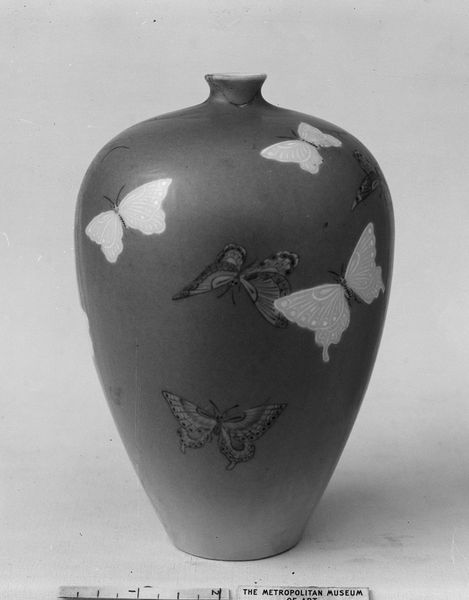
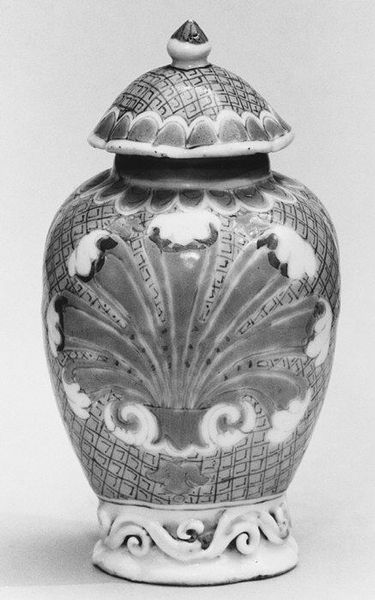
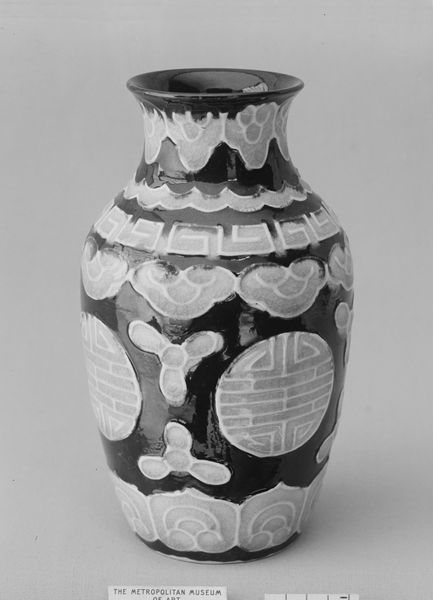
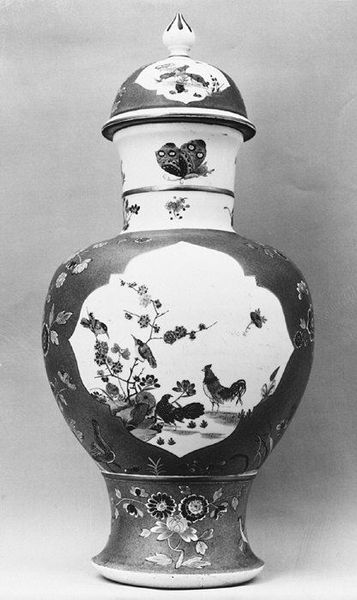
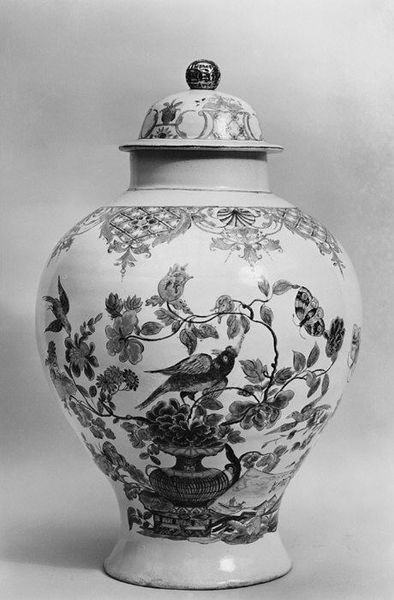
Editor: So this vase, from Haviland & Co., was made between 1882 and 1886. It's ceramic, with floral and geometric decorations, a piece of decorative art. What strikes me is the almost industrial feel despite the floral ornamentation, a sense of mass production trying to masquerade as something unique. What do you see in it? Curator: I see a direct engagement with the means of production. Let's consider Haviland's history; they were known for pioneering mass production techniques in porcelain. This vase embodies that tension: attempting hand-crafted aesthetics, seen in the floral designs, but executed through industrial processes. The floral design and geometric pattern seem almost like added value to a cheaply produced form. Who was the consumer? What aspirations did they have? Editor: That's a great point. So, instead of focusing on the aesthetic beauty, you're drawn to the societal implications of its production? Curator: Precisely! We should question traditional boundaries between art and craft. The division of labor, the accessibility of materials, the intended market – these all are critical elements to understand this piece. Consider the decorative elements themselves; they become signifiers of class, status, perhaps even an aspiration to a lifestyle beyond the reach of the average consumer. Editor: So, it’s less about the vase as a beautiful object and more about what it says about production and consumption in the late 19th century? Curator: Exactly. And how those forces shaped aesthetic choices. We should ask how this object reflects and reinforces existing power structures within that society, while considering labor conditions during that period. Editor: That perspective makes me see it in a completely different light, not just a decorative item, but a record of production and consumption, class aspiration and power structure from that time. Curator: And remember, this critical lens expands to other artworks. The beauty is there, of course, but understanding the "how" and "why" allows us to engage more deeply with any artwork.
Comments
No comments
Be the first to comment and join the conversation on the ultimate creative platform.
 Collect
 React
React Comment
More like this