Dimensions: height 138 mm, width 210 mm
Copyright: Rijks Museum: Open Domain
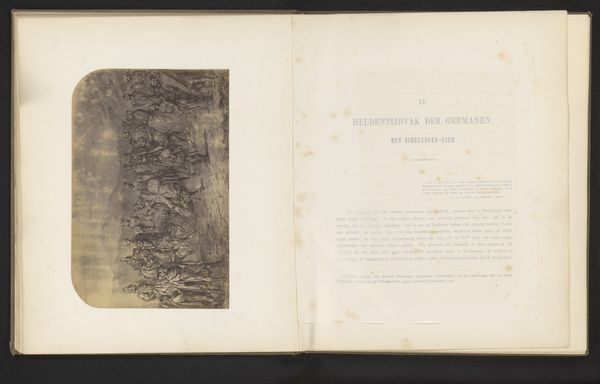
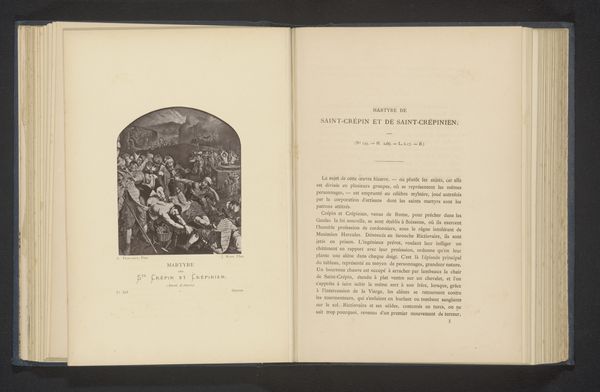
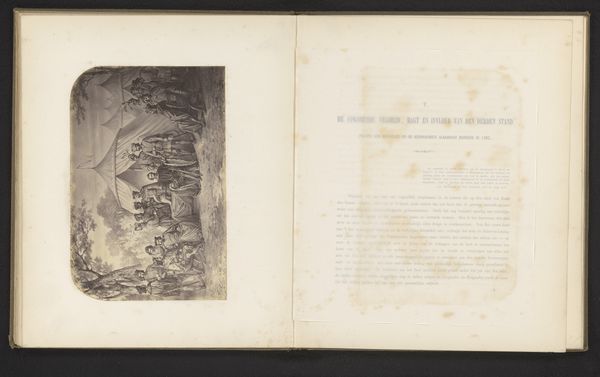
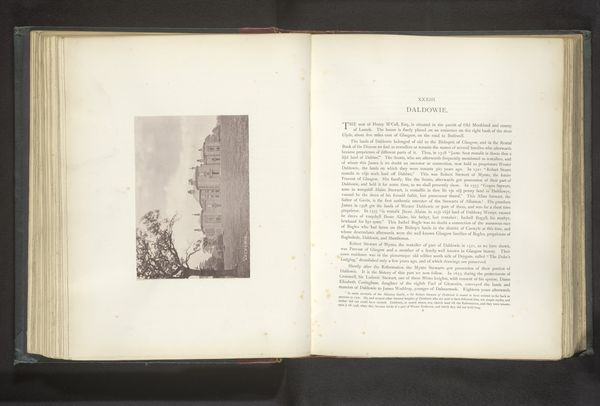
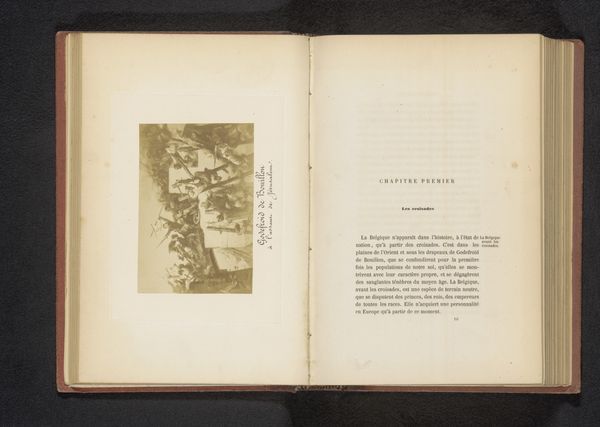
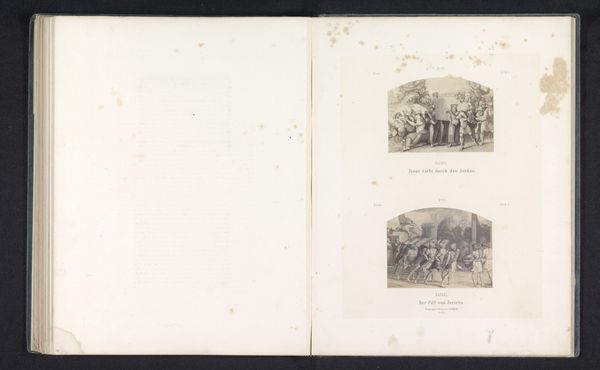
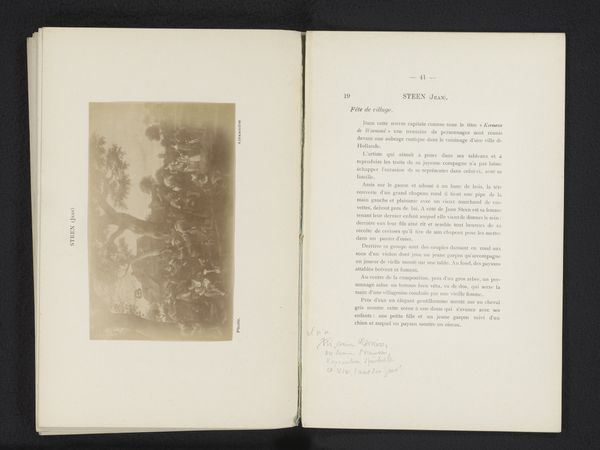
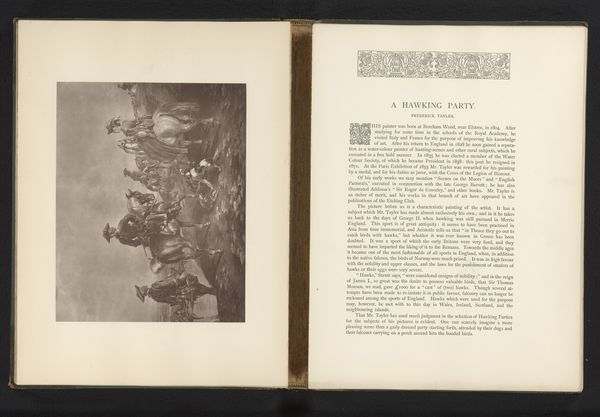
Editor: This is "Fotoreproductie van een prent van Attila en de Hunnen," a photographic reproduction of an engraving, dating from before 1861. There's such a powerful movement depicted; I'm curious about the historical narrative it conveys. How do you interpret this work, especially considering the history of photographic reproduction itself? Curator: The reproduction of an engraving of Attila and the Huns in the 19th century reflects a romanticized, and often Orientalist, view of non-European cultures that shaped European identity. Who gets to tell the story of history? What narrative is centered? Note the contrast between the clear, legible text next to the hazy, indistinct depiction of the Huns, suggesting an emphasis on written, 'civilized' history versus a more 'barbaric' visual record. Editor: That's a fascinating point about whose history is privileged! I hadn't considered the power dynamic embedded in the act of representing a historical event this way. Does the medium – both engraving and then photography – play a role in how this narrative is constructed? Curator: Absolutely! Engravings often served as illustrations of historical narratives in books, shaping popular perceptions. Then, photography's rise gave it an aura of objectivity, even if manipulated. In this case, photographing an engraving gives another layer to the claim to truth that it represents. Consider, also, that "history painting" at the time, in both painting and academic discourse, was being contested to include multiple and diverse narratives. What does this tell us about *this* piece in particular? Editor: So it’s about questioning whose voice is amplified through these art forms, then and now. Curator: Precisely! This image allows us to delve into how historical events are filtered and presented. Understanding the historical lens used in both the original artwork and the photographic reproduction opens conversations about power and perspective. Editor: This has broadened my view, prompting me to think about art as a complex layering of perspectives and media.
Comments
No comments
Be the first to comment and join the conversation on the ultimate creative platform.
 Collect
 React
React Comment
More like this