1720 - 1767
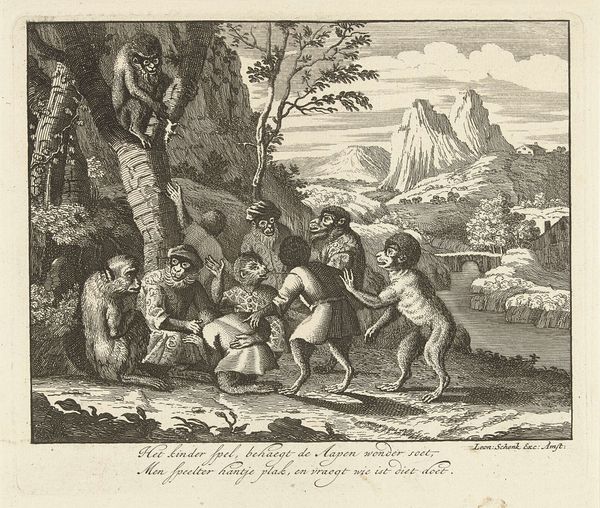
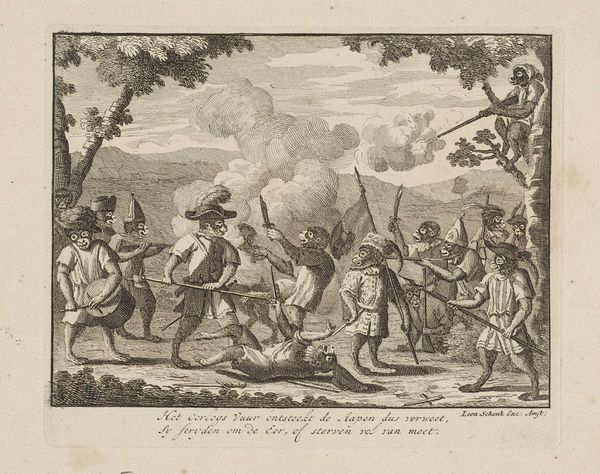
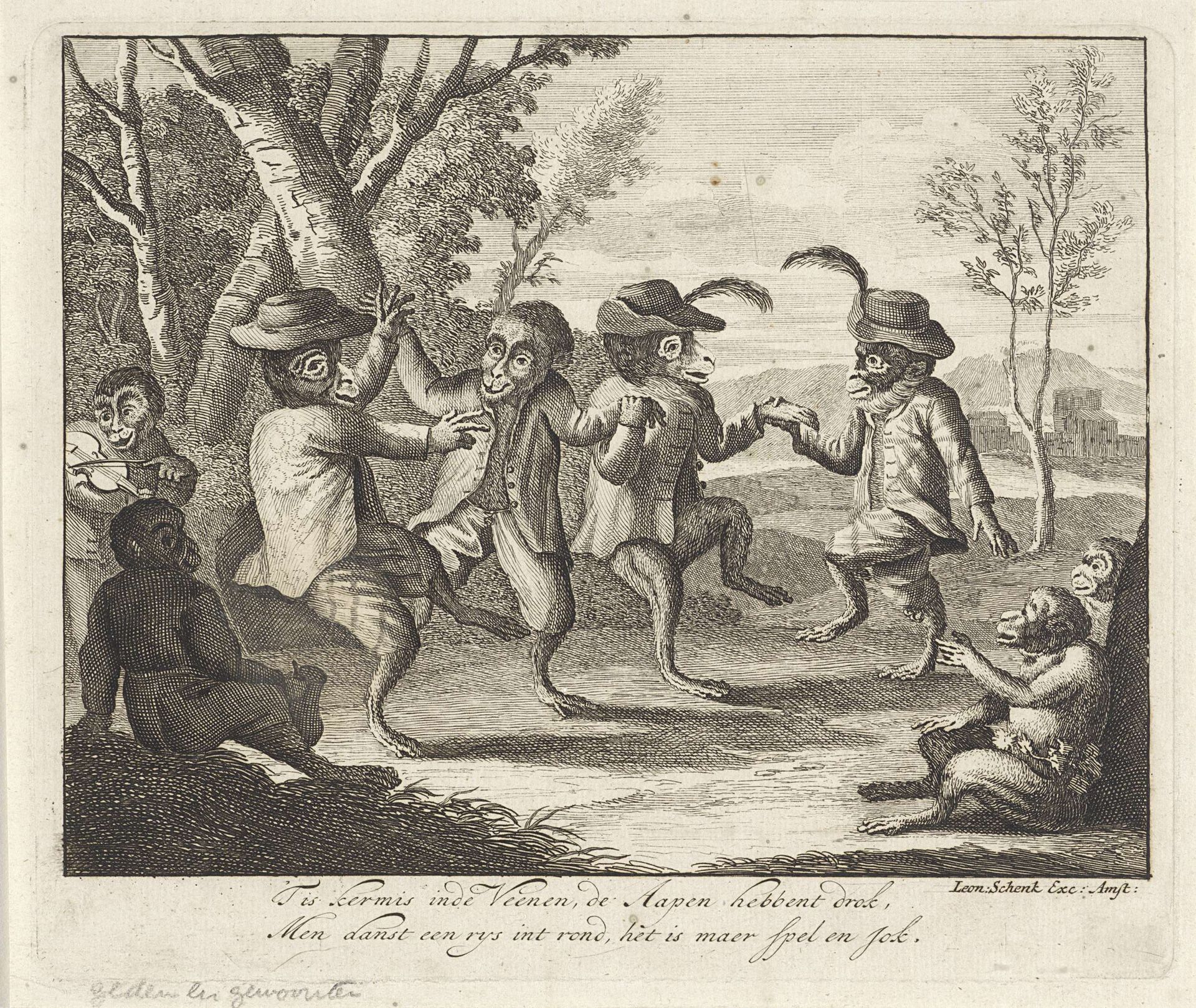
Dansende apen

Leonard Schenk
1696 - 1767Location
RijksmuseumListen to curator's interpretation
Curatorial notes
Leonard Schenk made this print called ‘Dancing Monkeys’ at an unknown time in Amsterdam. It's an engraving, a technique that allows for the mass production of images, which made it ideal for spreading political satire. Prints like this one offer a window into the social attitudes of the Dutch Golden Age. On the surface, it depicts monkeys dressed in human clothes, dancing and making merry. However, it’s a commentary on human behaviour, mimicking and mocking the manners of the time. The print reflects a fascination with the animal world but it also demonstrates the period’s hierarchical thinking, placing humans at the top of the ‘Great Chain of Being.’ It also offers a glimpse into the social life of 18th-century Amsterdam, with its carnivals and celebrations but it’s important to understand the social structures and institutional contexts that gave rise to such imagery. We need to ask about the relationship between humans and animals, the social function of satire, and the institutions that shaped the production and consumption of art.