after 1878
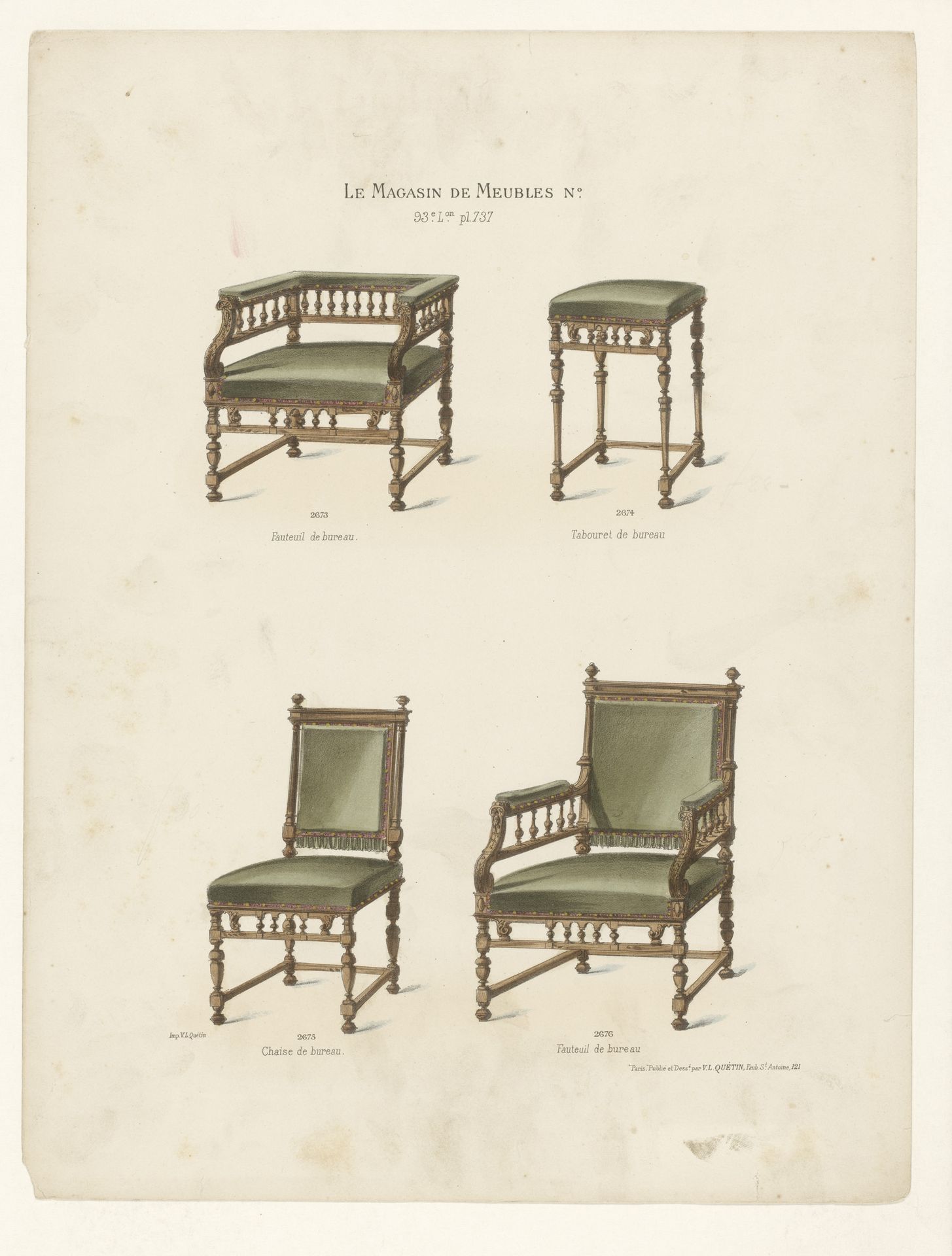
Drie bureaustoelen en tabouret

Listen to curator's interpretation
Curatorial notes
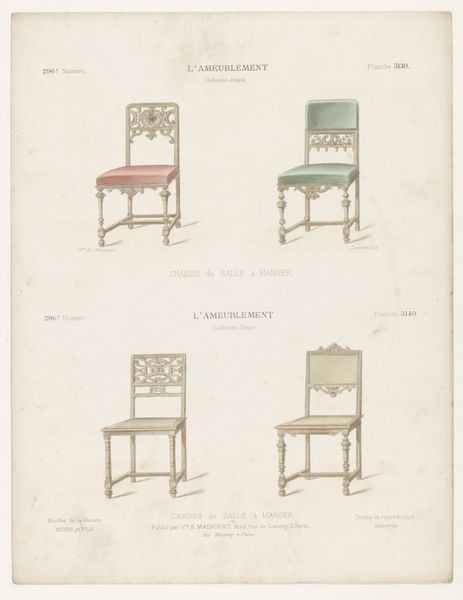
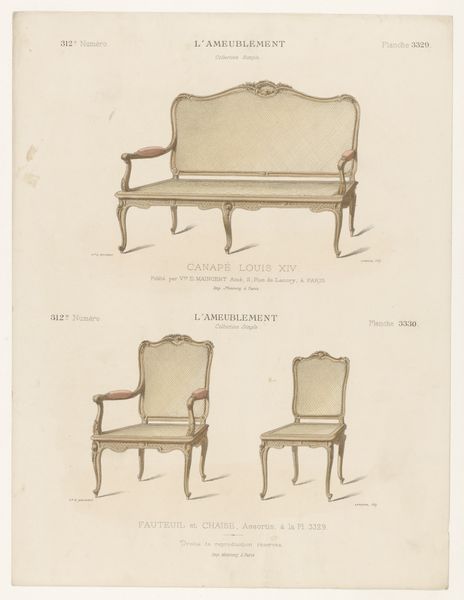
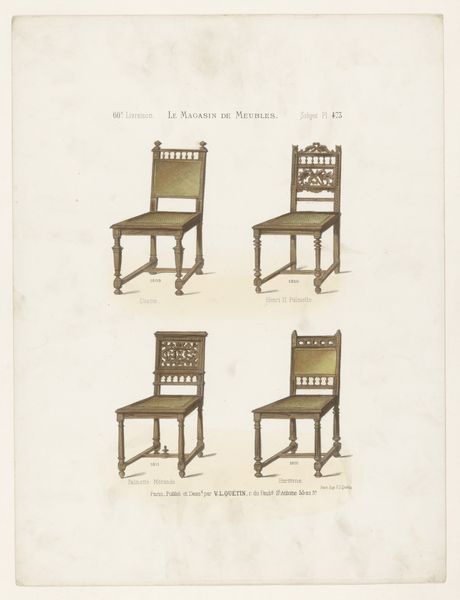
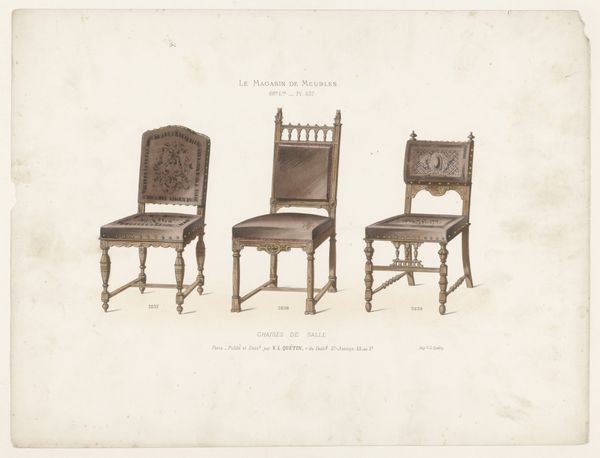
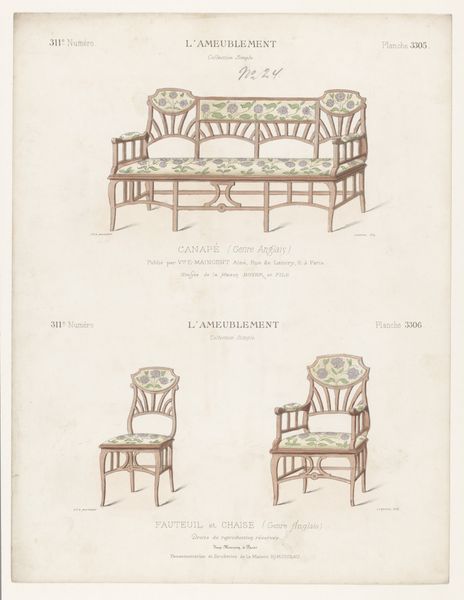
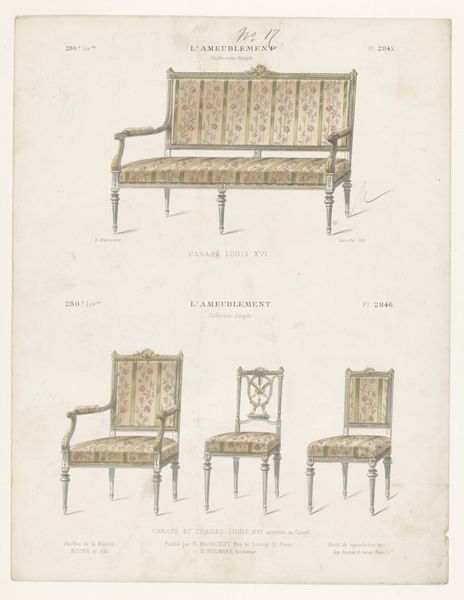
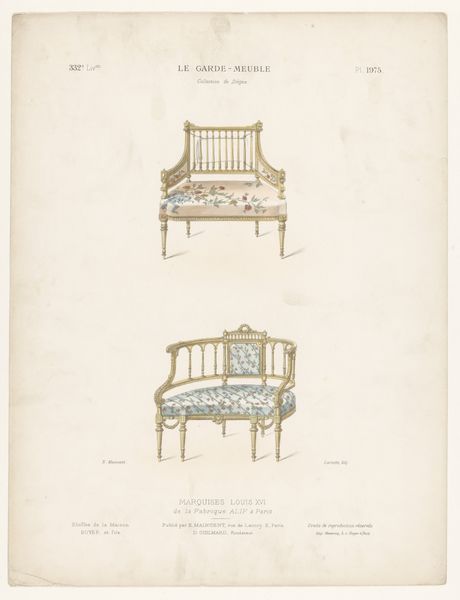
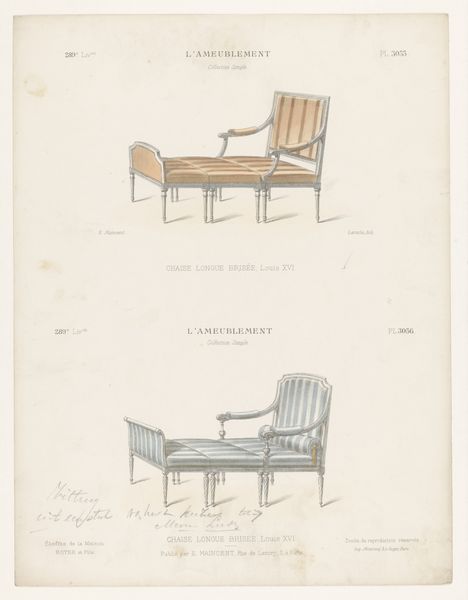
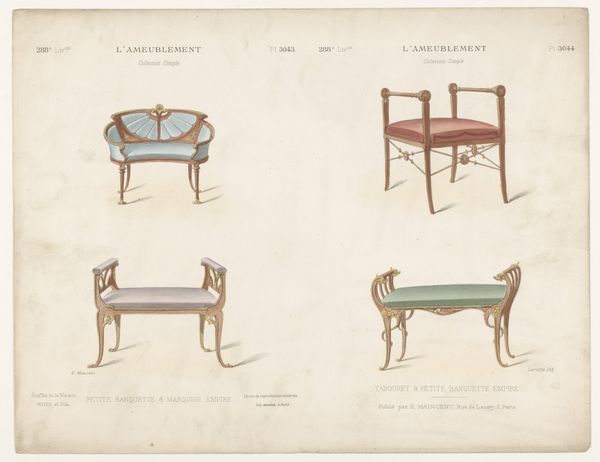
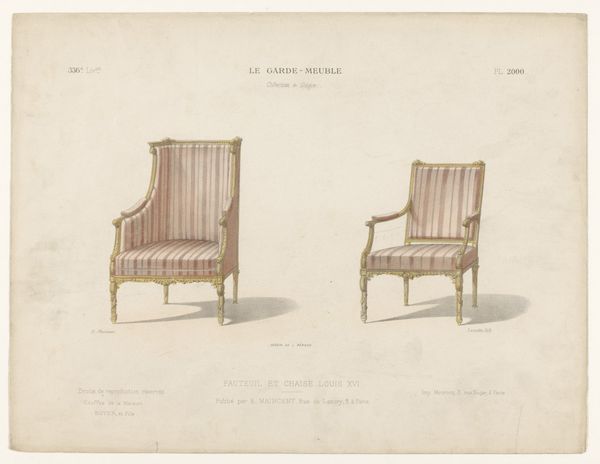
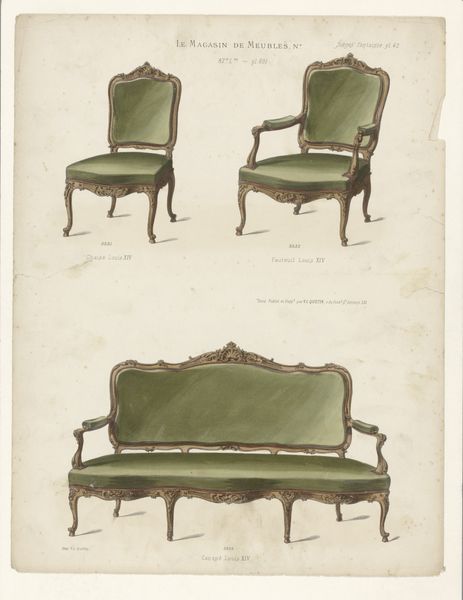
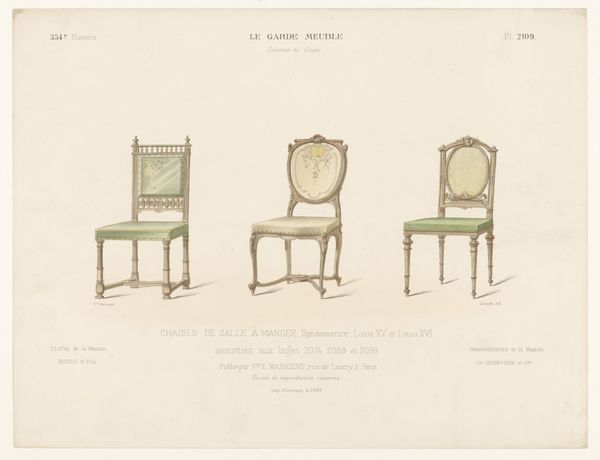
Editor: Here we have “Drie bureaustoelen en tabouret,” or “Three Office Chairs and Stool,” from after 1878, by an anonymous artist. It appears to be a drawing and print of furniture designs. There's something almost forlorn about these chairs, so neatly presented. What stands out to you? Curator: Forlorn is an interesting take! I see a record of aspirations—a kind of elegant functionality. Each chair, with its variations on the carved wooden frame and plush upholstery, whispers of a particular kind of sitter, a particular activity. I wonder, could this image be like a stage set, hinting at the dramas played out around desks and tables? It also makes me consider our own obsessions with interior design. Editor: A stage set! I love that. It’s like each chair is waiting for its character. What do you think these designs tell us about the period they were created in? Curator: There's a tension here, isn't there? Between the handcrafted detail and the impulse to mass-produce, evident in this catalogue-style presentation. We see echoes of historical styles reworked for a new era, maybe mirroring the aspirations of the rising middle class. The regularity speaks to industrialization while the detail speaks to a pre-industrial longing. And that particular green shade – evocative of lush gardens and shadowed libraries. What kind of sitter does this evoke for you? Editor: Someone of status and with time to consider things and an eye for aesthetics, I imagine. I hadn't considered the tension between mass production and handcrafted design - that’s fascinating! Curator: Exactly. I think that duality tells us so much about the late 19th century. It’s in those contrasts that the real stories unfold, wouldn't you agree? Editor: Definitely. Now, I can’t look at these chairs without thinking about who might have sat in them.