About this artwork
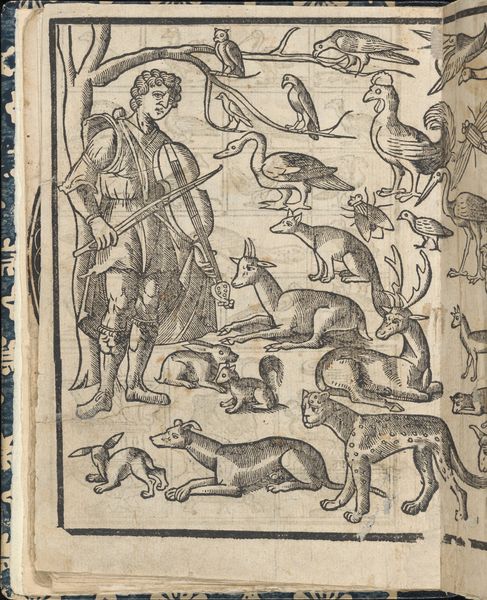
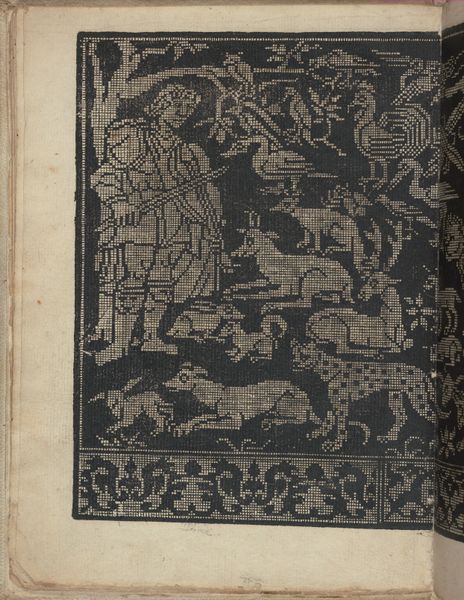
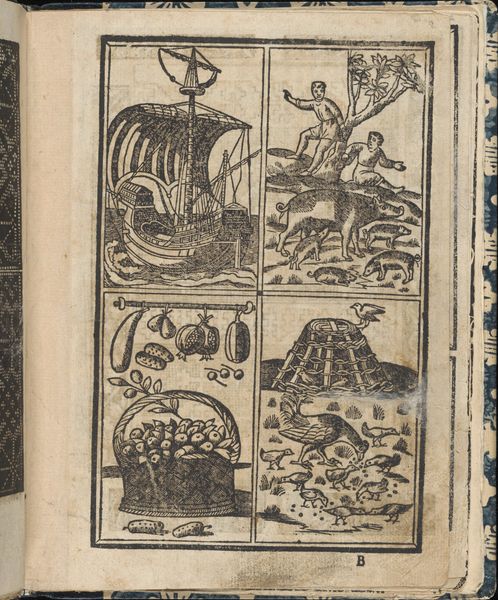
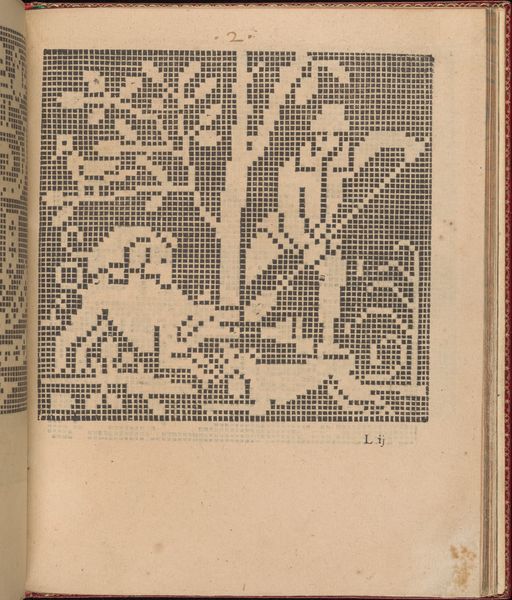
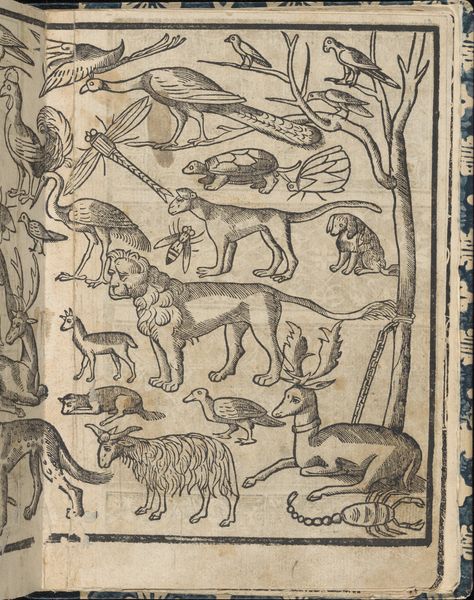
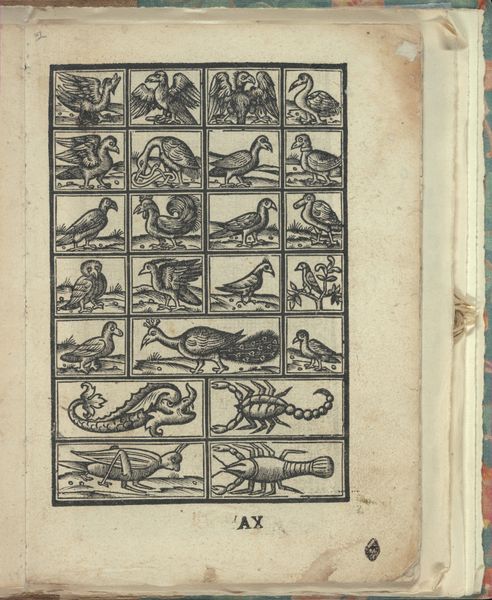
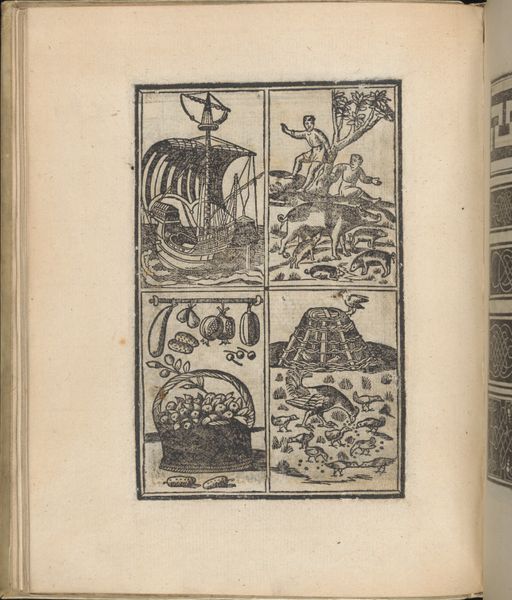
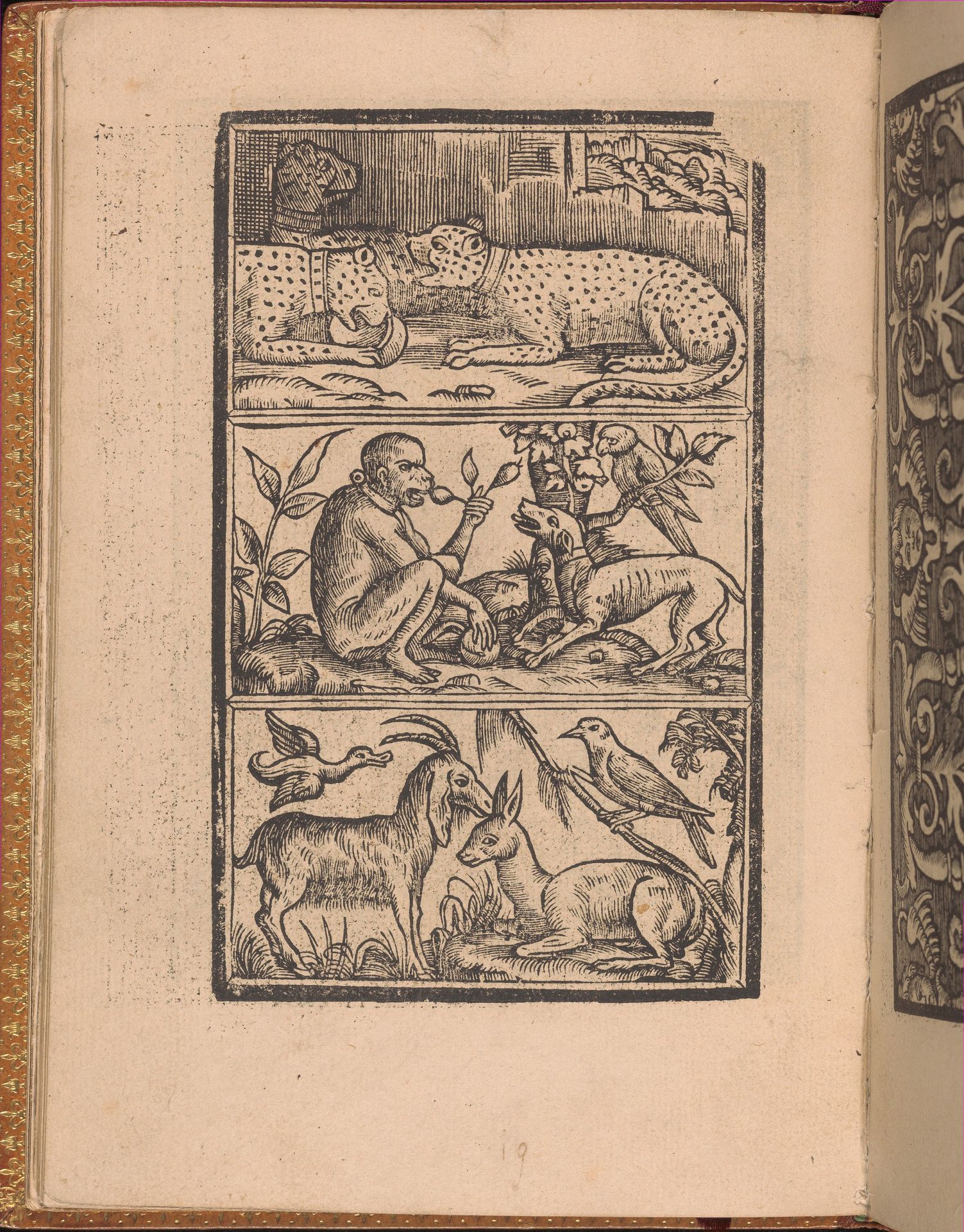
Nicolò Zoppino created this woodcut, titled "Convivio delle Belle Donne, page 11 (verso)," around the early 16th century. The composition is divided into three distinct registers, each presenting a tableau of animals. Consider the stark contrast of the black ink against the white paper. Zoppino's use of line is particularly striking: observe the rigid, unwavering strokes used to define each figure, set against the background textures. This creates a strong sense of volume and depth, pulling the viewer's eye across the vignettes. The animals depicted in each register—leopards, a monkey, and a goat alongside other wild beasts—invite us to consider the structural relationships between these scenes. Do they represent a hierarchy, a moral lesson, or perhaps a commentary on the natural world? The very act of arranging these scenes in a grid challenges our notions of narrative and spatial coherence. The piece encourages us to question how meaning is constructed through the interplay of form and content.
Convivio delle Belle Donne, page 11 (verso)
1532


Artwork details
- Medium
- drawing, print, woodcut, engraving
- Dimensions
- Overall: 7 7/8 x 5 1/2 in. (20 x 14 cm)
- Location
- Metropolitan Museum of Art, New York, NY
- Copyright
- Public Domain
Tags
Comments
Share your thoughts
About this artwork
Nicolò Zoppino created this woodcut, titled "Convivio delle Belle Donne, page 11 (verso)," around the early 16th century. The composition is divided into three distinct registers, each presenting a tableau of animals. Consider the stark contrast of the black ink against the white paper. Zoppino's use of line is particularly striking: observe the rigid, unwavering strokes used to define each figure, set against the background textures. This creates a strong sense of volume and depth, pulling the viewer's eye across the vignettes. The animals depicted in each register—leopards, a monkey, and a goat alongside other wild beasts—invite us to consider the structural relationships between these scenes. Do they represent a hierarchy, a moral lesson, or perhaps a commentary on the natural world? The very act of arranging these scenes in a grid challenges our notions of narrative and spatial coherence. The piece encourages us to question how meaning is constructed through the interplay of form and content.
Comments
Share your thoughts