

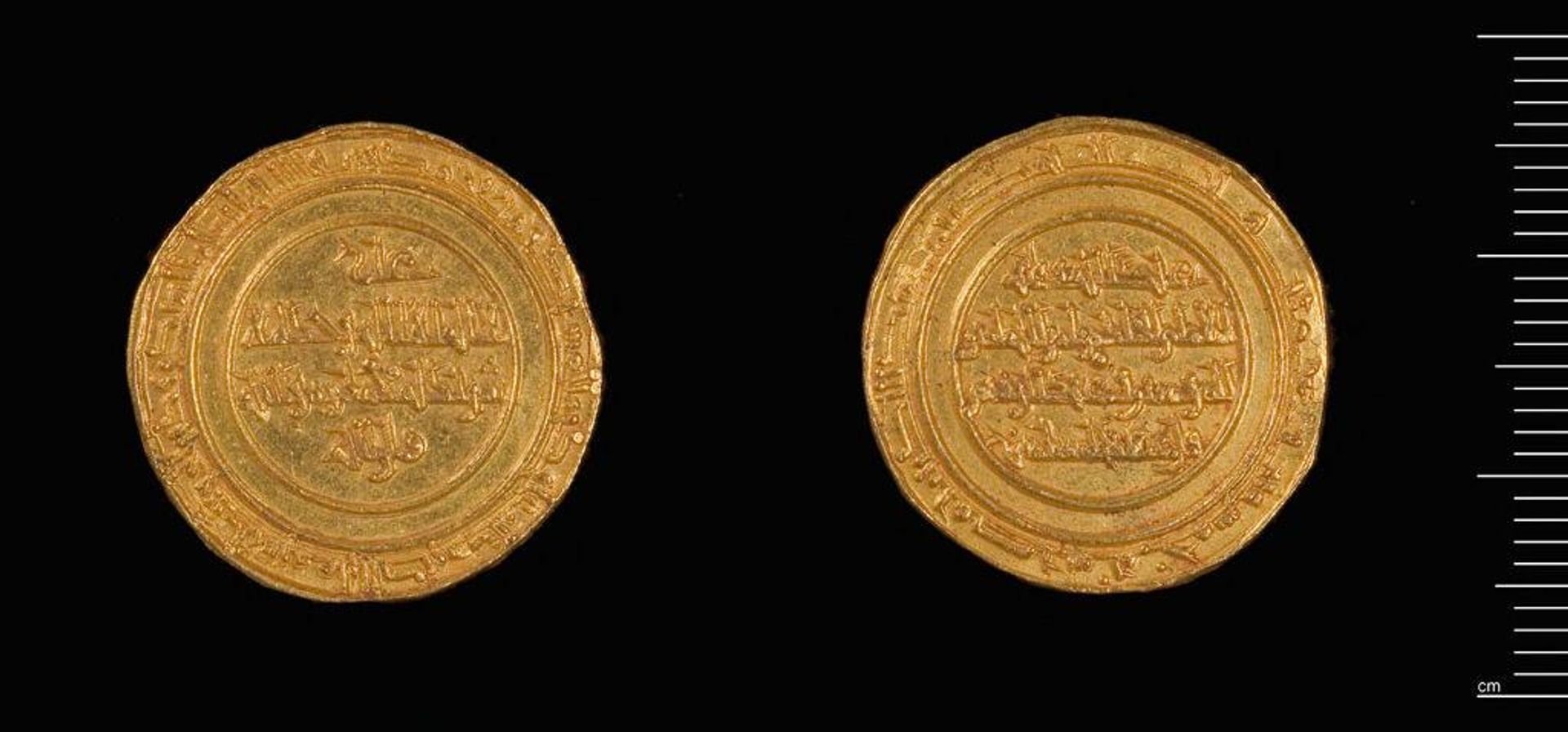
1014 - 1015
Dinar of Al-Hakim, Misr

Listen to curator's interpretation
Curatorial notes
Editor: This is a gold Dinar coin, probably from Misr and created under Al-Hakim. I'm struck by how much information is packed into such a small object, especially the writing. What can you tell me about the symbols at play here? Curator: The inscriptions are powerful symbols of authority and faith. Note the circular arrangement: does that remind you of anything? Think of how the message, radiating outwards, mimics the dissemination of power, like ripples in a pond. Editor: That's a great way to put it! I hadn't considered the shape itself as symbolic. Curator: And consider the script itself. Calligraphy in Islamic art is not merely decorative; it’s a sacred art form, embodying divine words. So, what does it mean when those words are stamped on currency? Editor: It's a way of imbuing everyday transactions with a sense of religious legitimacy, a constant reminder of the ruler's divine mandate. Curator: Precisely! The coin becomes more than just a medium of exchange; it's a symbol of Al-Hakim's power and a visual articulation of his faith. Editor: I will definitely remember that whenever I see a coin from now on. Thank you! Curator: It was my pleasure. Now you know what to look for in other examples of symbolic language in art.