

1810 - 1842
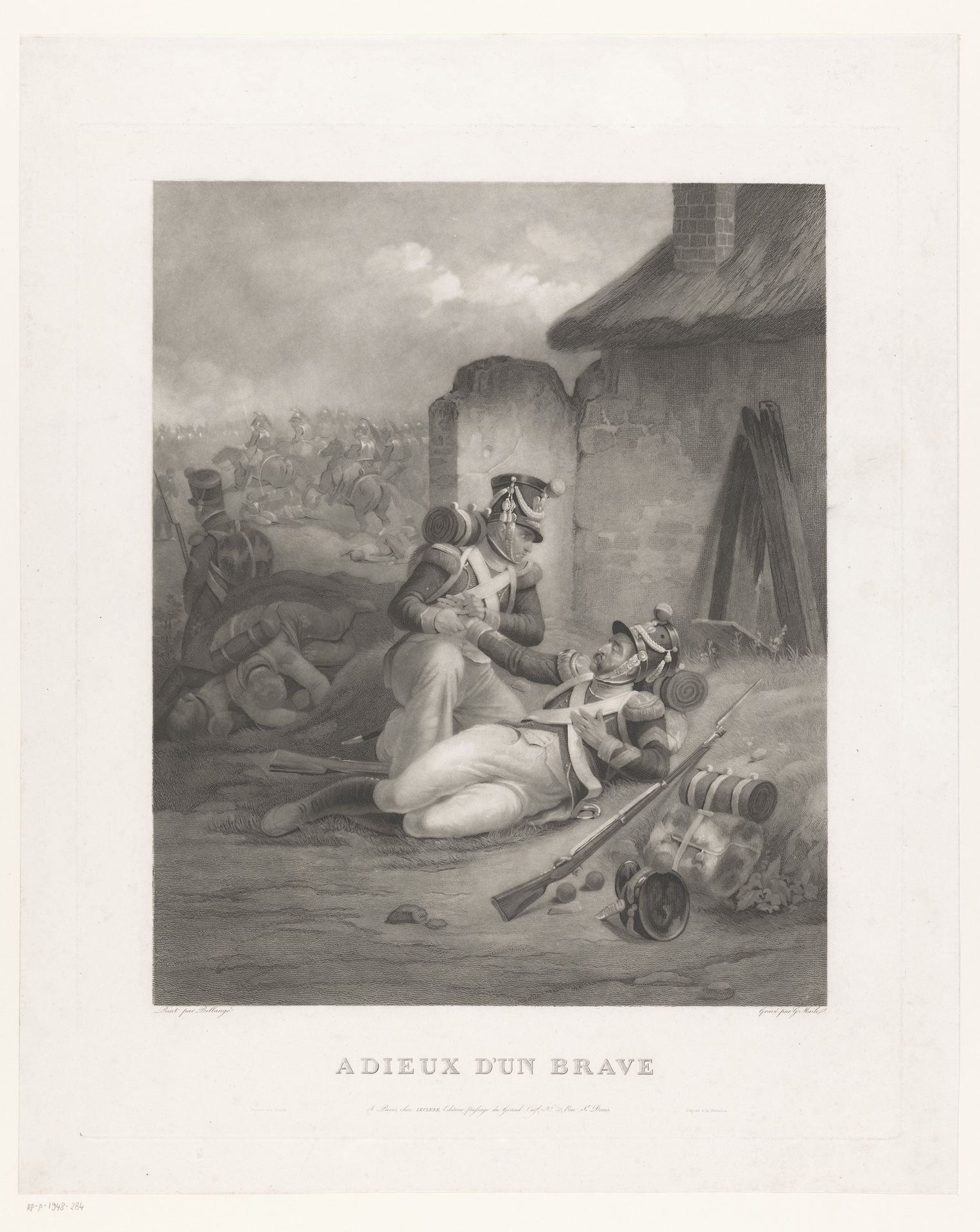
Soldaat neemt afscheid van een gesneuvelde soldaat

George Maile
@georgemaileLocation
RijksmuseumListen to curator's interpretation
Curatorial notes
Curator: Let's consider this moving print, "Soldaat neemt afscheid van een gesneuvelde soldaat," dating from around 1810-1842 and held at the Rijksmuseum. It's attributed to George Maile, rendered primarily in pencil and engraving. What springs to mind for you? Editor: Immediately, a profound sense of loss. The way the soldier cradles his fallen comrade suggests both tenderness and utter devastation. It is clearly a war scene but there's intimacy between these soldiers. Curator: It’s fascinating how a relatively simple medium like pencil and engraving can convey such a potent emotional narrative. I’m drawn to the way the artist uses line and shadow to delineate the textures of their uniforms, and to give depth and contrast to the scene. The lithographic process itself allowed for multiple copies, distributing this visual lament and comment widely. Editor: Yes, notice the way the soldiers are dressed - they appear as members of Napoleon's army. The head covering and posture of the central figure closely mirrors classic depictions of grief. Curator: Thinking about the broader context, printmaking like this provided crucial visual documentation and dissemination of imagery during periods of conflict. Unlike painted battle scenes crafted for elite patrons, printed images held the potential to shape public opinion and disseminate notions about the human costs of war among a far wider range of viewers. This was consumable art for more than elites. Editor: I agree. And those stark white uniforms also work symbolically. Their pristine state contrasts starkly with the death of the recumbent soldier. It makes me think of concepts of sacrifice and honour – or the perceived glory that propagandists would seek to impose on a war like this. Curator: Interesting, that takes us to how ideas of bravery and patriotism become linked to such high material cost. I see that the engraving gives us an image in distribution – the machinery to reproduce the scene again and again helps communicate the intended values associated with this type of heroism. Editor: Ultimately, "Soldaat neemt afscheid van een gesneuvelde soldaat" speaks to a universal experience. Beyond time and the place of death on the battlefield. Curator: Yes. By thinking about the historical moment of its production, and focusing on the artist's choices and his engagement with printmaking techniques, we see something both unique to that period and still strikingly relevant. Editor: Indeed, reflecting on the pathos embedded within visual codes reminds us of the shared burden of loss throughout history. It allows us to understand better that grief has neither borders, nor material worth.