About this artwork
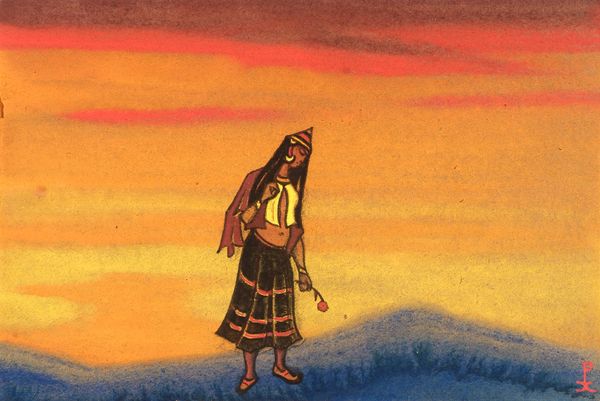
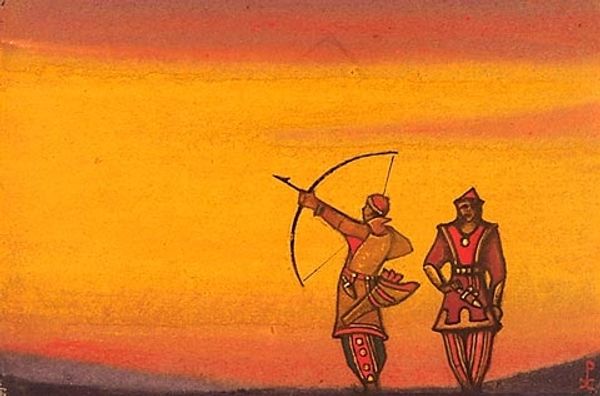
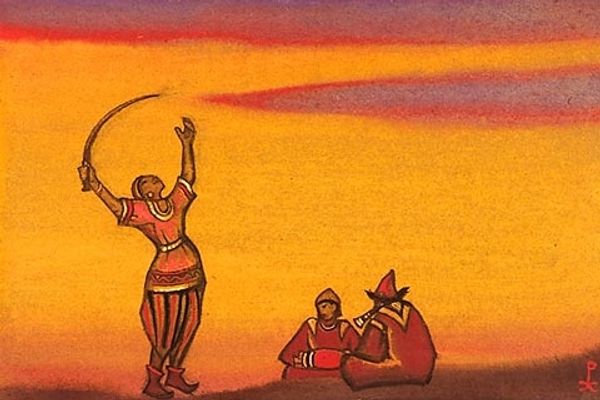
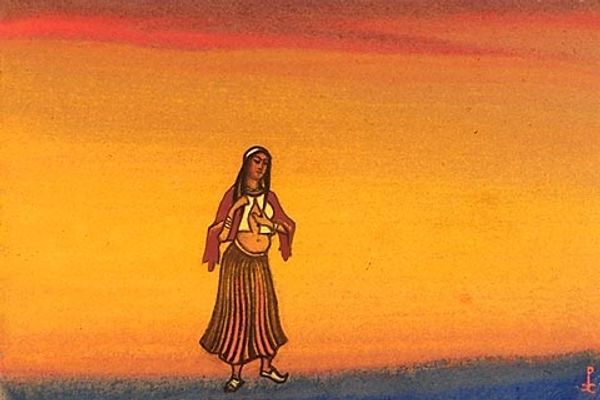
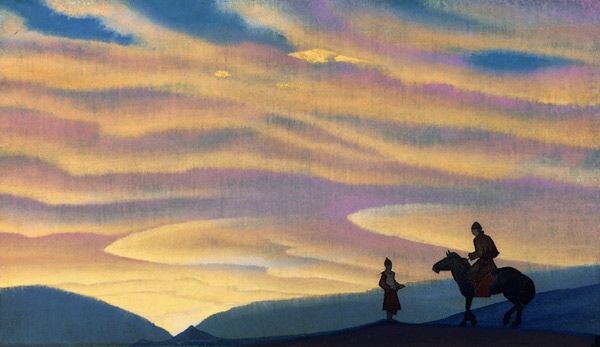
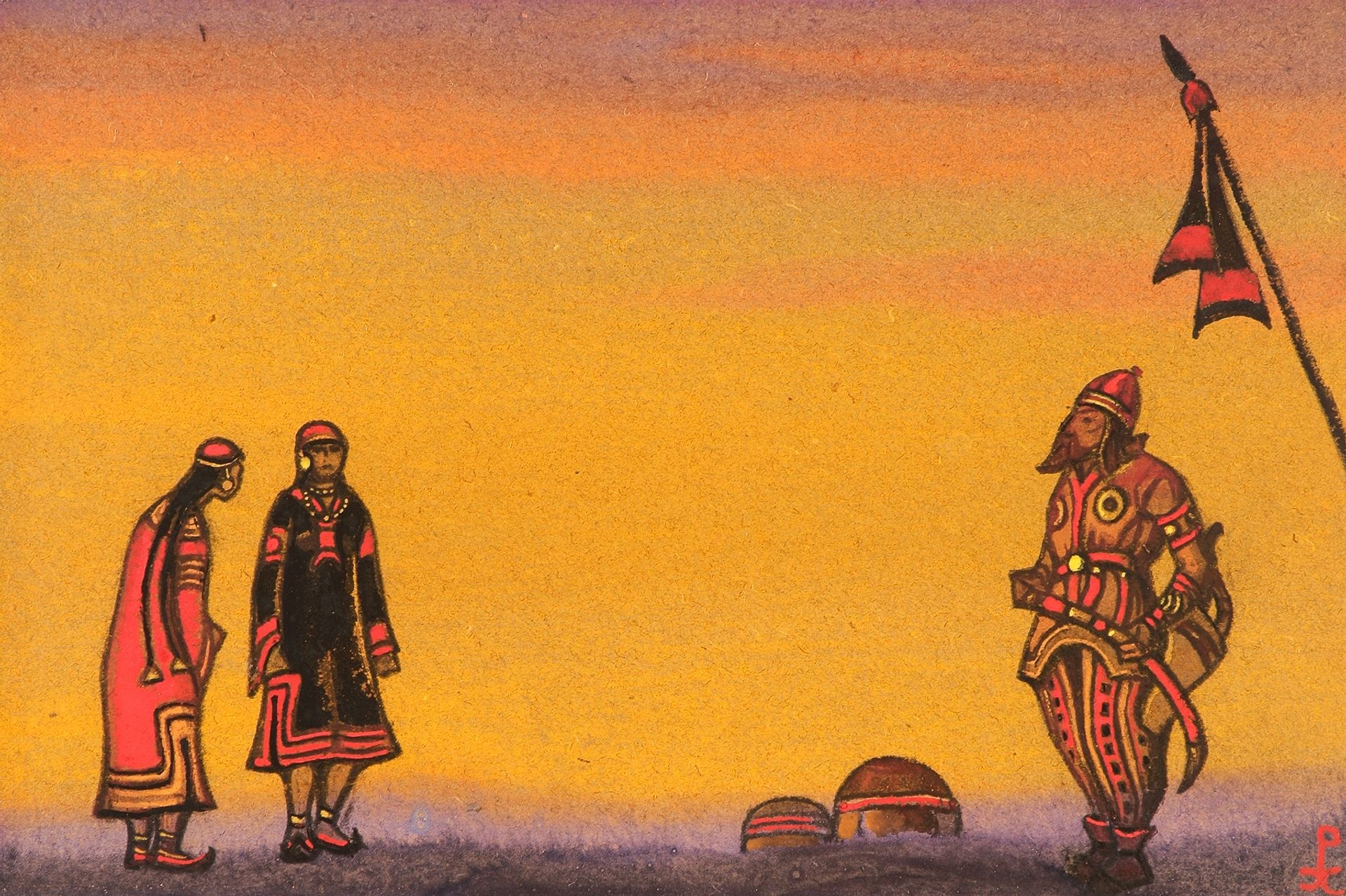
Nicholas Roerich made this painting, Polovets and girls, with tempera, a fast-drying, matte paint, maybe somewhere in the first half of the 20th Century. Roerich’s mark-making feels so intentionally basic, which is why it’s successful. He’s not trying to trick you with illusion, and yet the painting is incredibly evocative. The colours are layered, the ground is almost striated, like the tempera was applied with a dry brush. The sky is a gorgeous warm yellow melting into lilac at the top of the painting, like a memory. The figures on the left are drawn in thin outlines of red and black, like a child’s drawing. They stand with their heads bowed. There's a sentinel to the right with a flag planted behind him. You could say the painting is about looking back to the past, remembering, and the way the past lingers in the present. There’s something of Marsden Hartley in this piece, with his simplified forms and strong colours. Roerich gives you just enough information to let your mind fill in the rest, and like Hartley, embraces the ambiguity of form.

Artwork details
- Medium
- painting, watercolor
- Copyright
- Public domain
Tags
narrative-art
fantasy art
painting
asian-art
landscape
fantasy-art
figuration
watercolor
costume
Comments
No comments
About this artwork
Nicholas Roerich made this painting, Polovets and girls, with tempera, a fast-drying, matte paint, maybe somewhere in the first half of the 20th Century. Roerich’s mark-making feels so intentionally basic, which is why it’s successful. He’s not trying to trick you with illusion, and yet the painting is incredibly evocative. The colours are layered, the ground is almost striated, like the tempera was applied with a dry brush. The sky is a gorgeous warm yellow melting into lilac at the top of the painting, like a memory. The figures on the left are drawn in thin outlines of red and black, like a child’s drawing. They stand with their heads bowed. There's a sentinel to the right with a flag planted behind him. You could say the painting is about looking back to the past, remembering, and the way the past lingers in the present. There’s something of Marsden Hartley in this piece, with his simplified forms and strong colours. Roerich gives you just enough information to let your mind fill in the rest, and like Hartley, embraces the ambiguity of form.
Comments
No comments