About this artwork
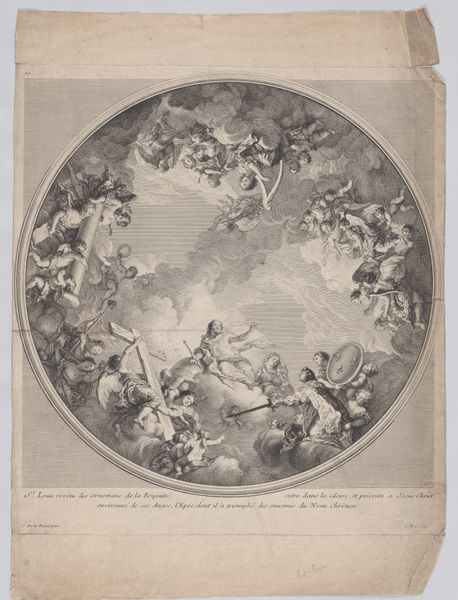
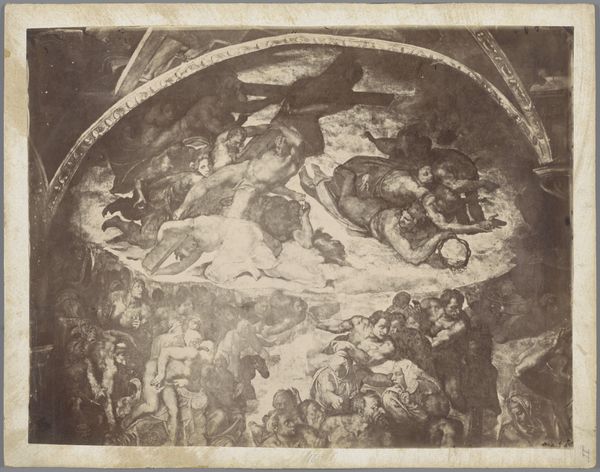
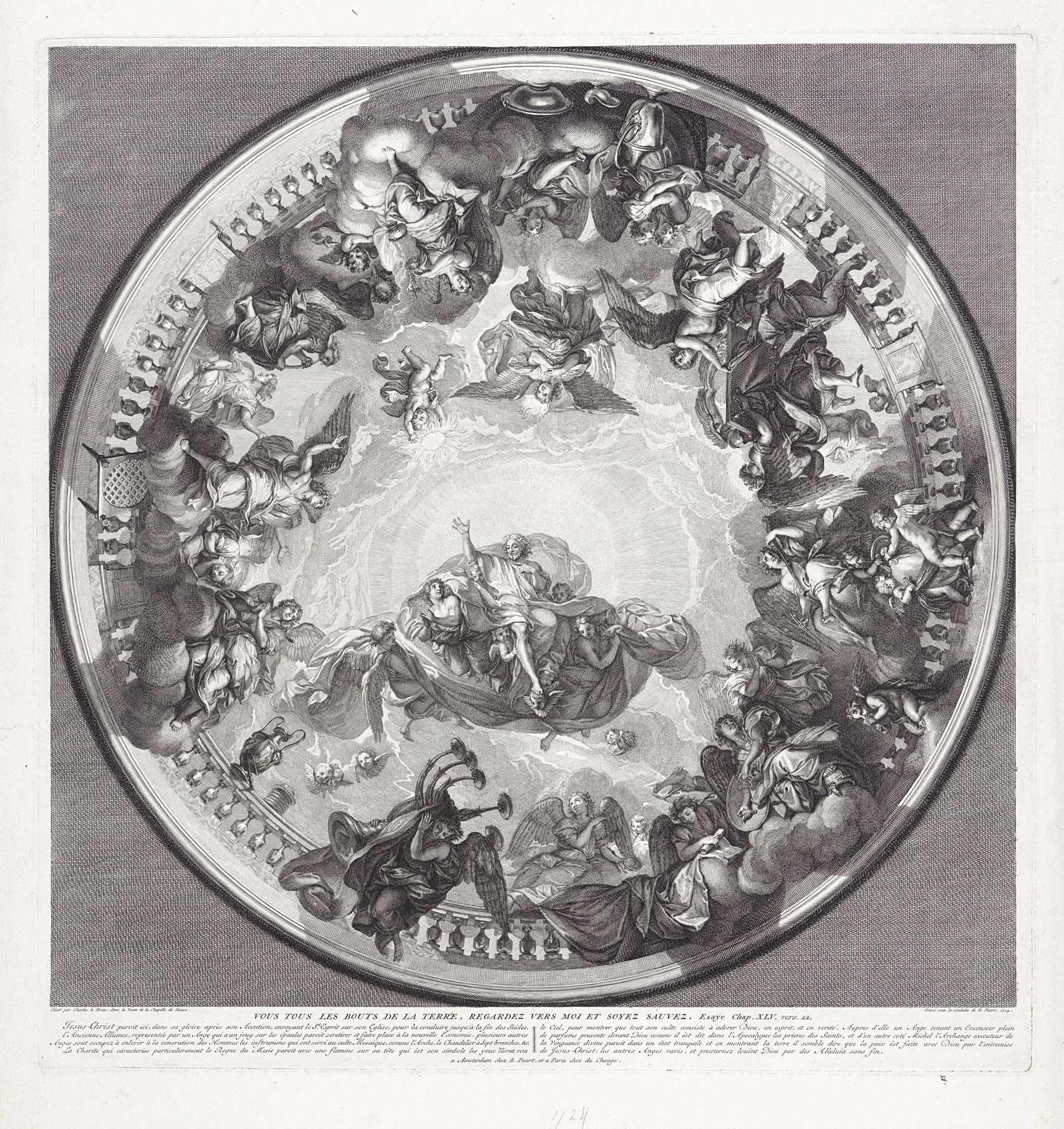
Bernard Picart created this ceiling painting with Christ sending the Holy Spirit to earth, using etching techniques. The print's monochrome palette focuses attention on the lines etched into the metal plate. The etcher's hand coaxes forth clouds, figures, and architectural details with skillful manipulation of light and shadow, building up the image with thousands of tiny marks. The nature of the etching process allowed Picart to achieve a high level of detail and tonal variation, mimicking the look of a painted ceiling fresco. The image's social significance lies in the dissemination of religious ideas through printmaking. Etchings like this made grand religious imagery accessible to a wider audience beyond the walls of churches or palaces. The labor-intensive process of etching and printing meant that each impression carried the mark of the artist's hand, connecting the viewer to a tradition of skilled craftsmanship. Recognizing the artistry and labor involved in its making allows us to appreciate the social and cultural value of this etching.
Plafondschildering met Christus die de Heilige Geest naar de aarde zendt
1724

Bernard Picart
1673 - 1733Location
RijksmuseumArtwork details
- Medium
- engraving
- Dimensions
- height 457 mm, width 438 mm
- Location
- Rijksmuseum
- Copyright
- Rijks Museum: Open Domain
Tags
Comments
Share your thoughts
About this artwork
Bernard Picart created this ceiling painting with Christ sending the Holy Spirit to earth, using etching techniques. The print's monochrome palette focuses attention on the lines etched into the metal plate. The etcher's hand coaxes forth clouds, figures, and architectural details with skillful manipulation of light and shadow, building up the image with thousands of tiny marks. The nature of the etching process allowed Picart to achieve a high level of detail and tonal variation, mimicking the look of a painted ceiling fresco. The image's social significance lies in the dissemination of religious ideas through printmaking. Etchings like this made grand religious imagery accessible to a wider audience beyond the walls of churches or palaces. The labor-intensive process of etching and printing meant that each impression carried the mark of the artist's hand, connecting the viewer to a tradition of skilled craftsmanship. Recognizing the artistry and labor involved in its making allows us to appreciate the social and cultural value of this etching.
Comments
Share your thoughts