graphic-art, print, engraving
#
graphic-art
# print
#
pen sketch
#
pencil sketch
#
old engraving style
#
geometric
#
pen-ink sketch
#
line
#
pen work
#
engraving
Copyright: Oleksandr Aksinin,Fair Use
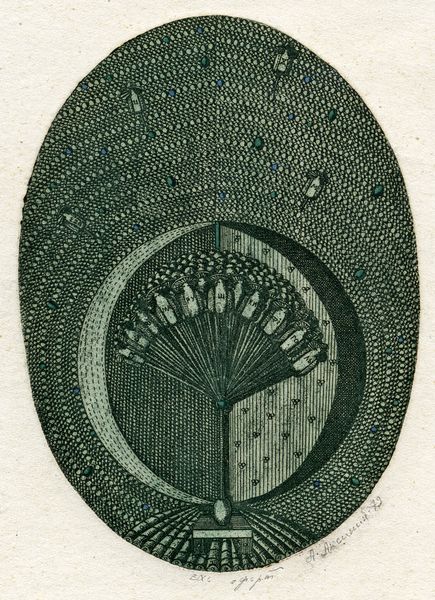
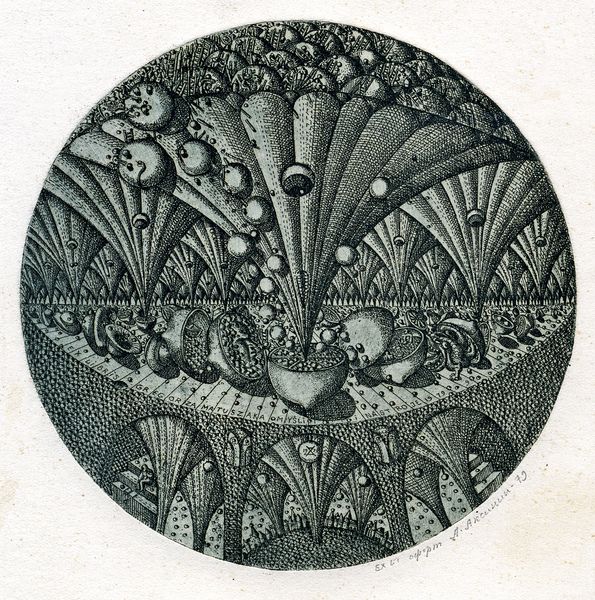
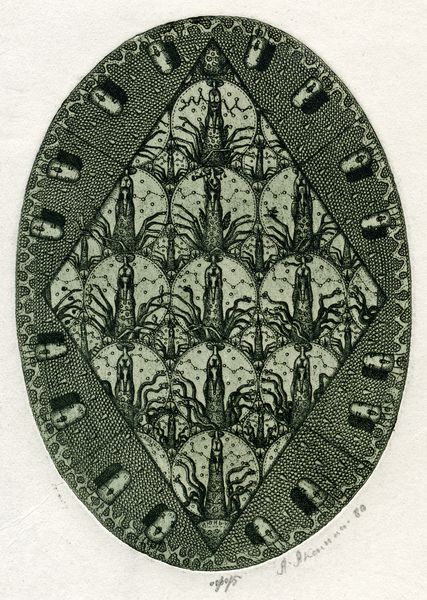
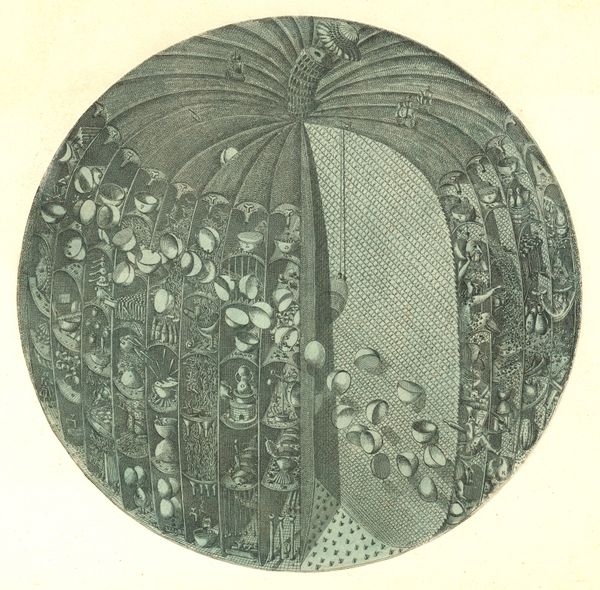
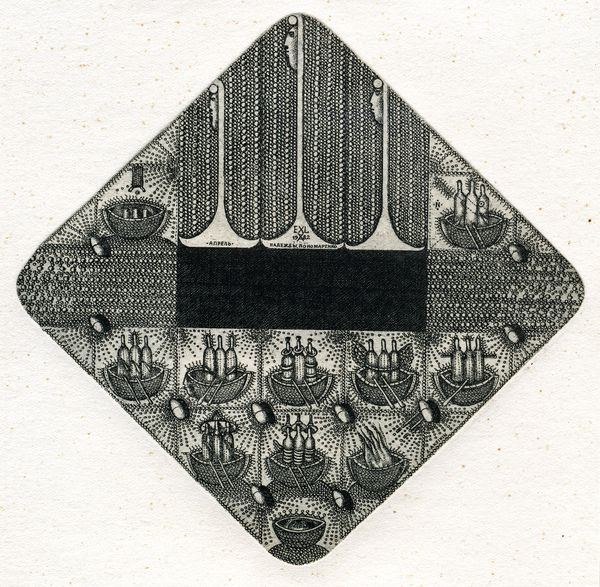
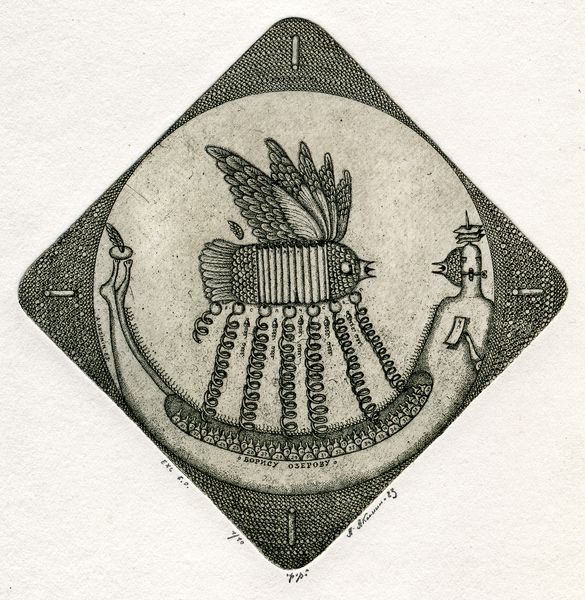
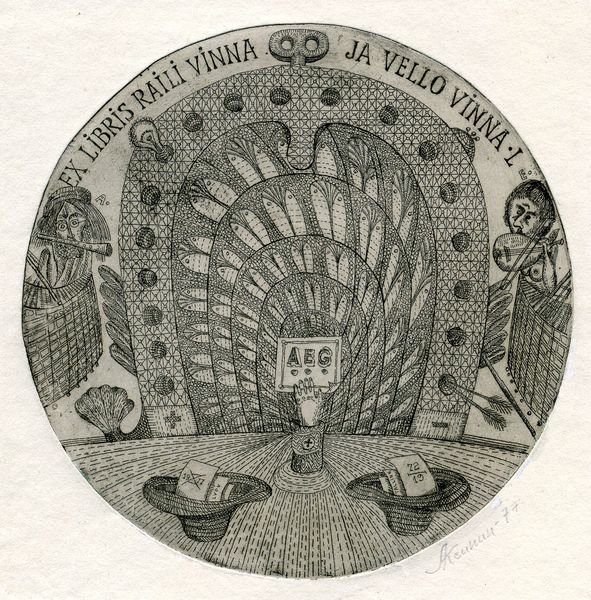
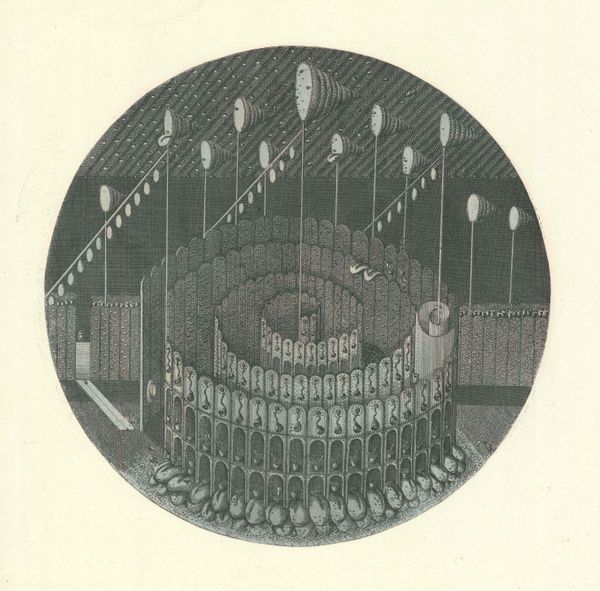
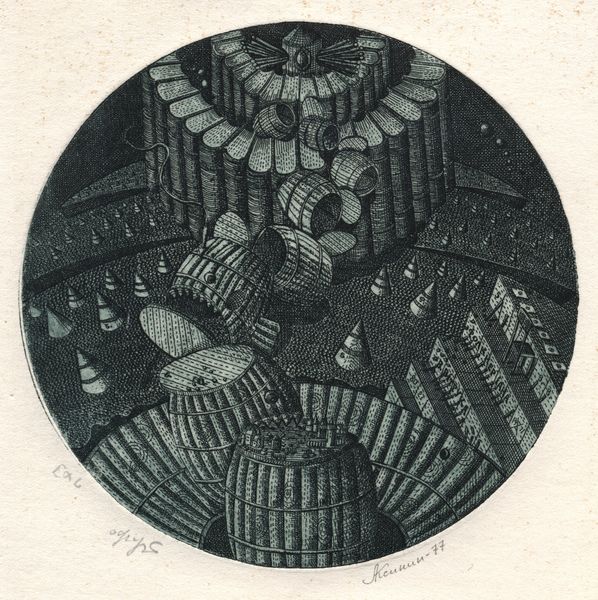
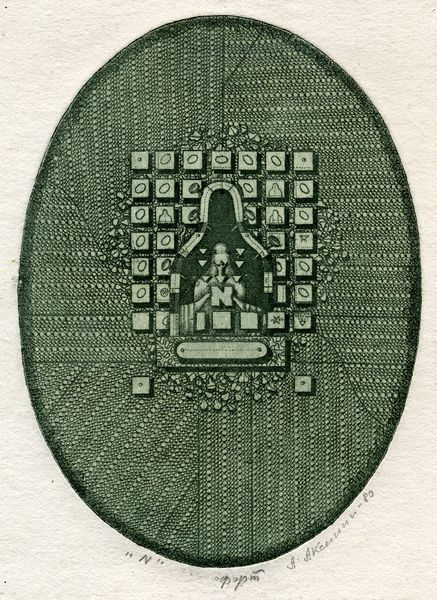
Editor: Here we have Oleksandr Aksinin’s 1978 engraving, “Exlibris of I.Zaytchyk.” It’s an intricate, circular design featuring books, with a leafy border. It gives me the sense of an emblem or seal of some kind. What do you see in this piece? Curator: This "Exlibris," or bookplate, offers a rich tapestry of socio-political context when viewed through the lens of Soviet-era artistic expression. Aksinin, working in 1978, subtly weaves threads of Ukrainian identity into a seemingly innocuous dedication to a Russian author, Tolstoy, specifically commemorating his 150th birth year. The very act of creating such a detailed and personalized bookplate speaks to the value placed on literature, even under a regime that often sought to control it. Notice the geometric arrangement, reminiscent of both classical emblems and constructivist design, creating a dialogue between tradition and the revolutionary spirit. Editor: I see that now, how the artist integrated Ukrainian identity within what seems like a commission honoring a Russian author. What about the leaves forming the circle? Curator: The wreath motif can be interpreted in a multitude of ways. Is it merely decorative, or does it serve as a symbol of enduring Ukrainian culture, subtly asserting its presence despite political constraints? What does it mean to frame a tribute to Tolstoy within this Ukrainian context? These layers of meaning encourage us to think about art as a form of resistance, a way to assert cultural identity in the face of homogenization. Editor: So, the artwork prompts questions about cultural expression and political context? I'm finding new appreciation in looking beyond initial impressions. Curator: Precisely. This small engraving becomes a potent symbol when we explore the cultural landscape in which it was created, leading to crucial insights about art as activism.
Comments
No comments
Be the first to comment and join the conversation on the ultimate creative platform.
 Collect
 React
React Comment
More like this