


Curatorial notes
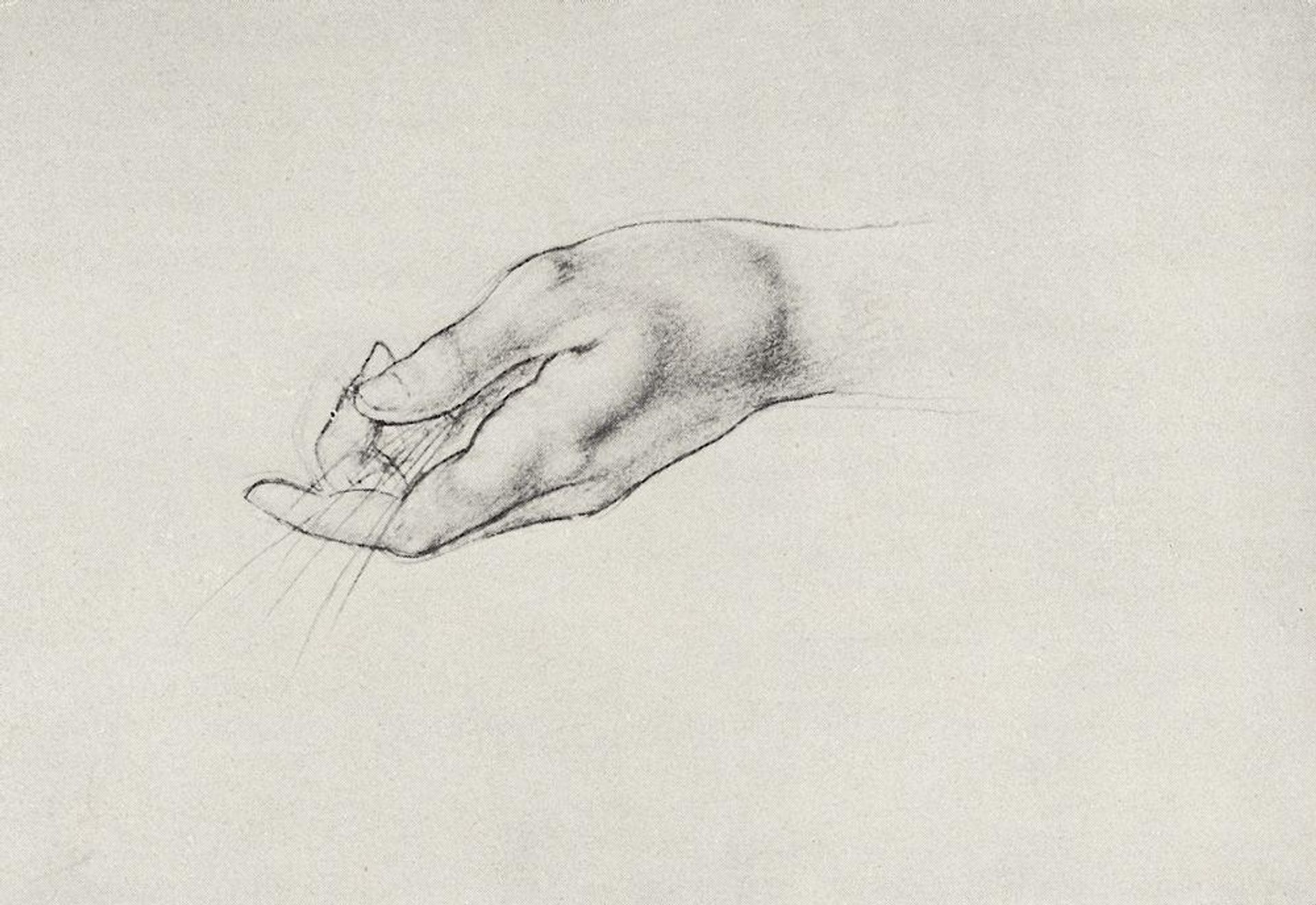
Curator: I'm immediately struck by the delicacy of the line work. It has a quiet, contemplative mood to it, almost like a whisper. Editor: Here we have "Drawing Hands," a graphite drawing attributed to Kuzma Petrov-Vodkin. It's an interesting study in form, capturing a hand holding something that appears to be strands, maybe of thread. Curator: Hands have been used to convey so much throughout art history; power, labor, blessing. The delicate depiction here seems to carry an unusual symbolism. The drawing also focuses on this object that it delicately manipulates, yet we are unable to comprehend it fully; a suggestion that what matters most may often be invisible or intangible. Editor: Absolutely. Within the social context of the time, such focused drawings held significance, emerging during shifts in artistic styles and techniques. The composition, spare as it is, elevates a rather everyday scene into a study on artistry and craftsmanship, offering commentary on the skills considered socially worthy of cultivation. Curator: The rendering style has elements that evoke an iconographic tradition as well. Consider the emphasis on line, on defining form through contour. The shading suggests light is handled not realistically, but for emphasis, highlighting the form's spiritual importance rather than physical volume. The very idea of 'drawing hands' is powerful, hinting towards creation and human capability. Editor: And Petrov-Vodkin wasn't merely focused on formal mastery. He aimed to reflect society, its structures, and its impact on artistic representation. These choices regarding rendering technique emphasize how his hand both creates and critiques cultural expectations and historical continuities. The stark background, isolating the hand, only reinforces the socioeconomic undercurrents that subtly guided his art. Curator: Thinking about these symbolic associations and historic forces certainly enriched my interpretation of those finely rendered lines! Editor: Indeed, it offers a far richer understanding when you place such craftsmanship within a wider socio-historical frame. It ceases being 'just' a hand, and begins to ask critical questions about artistry and the society that views it.