carving, relief, sculpture
#
natural stone pattern
#
carving
#
baroque
#
relief
#
figuration
#
sculpture
#
history-painting
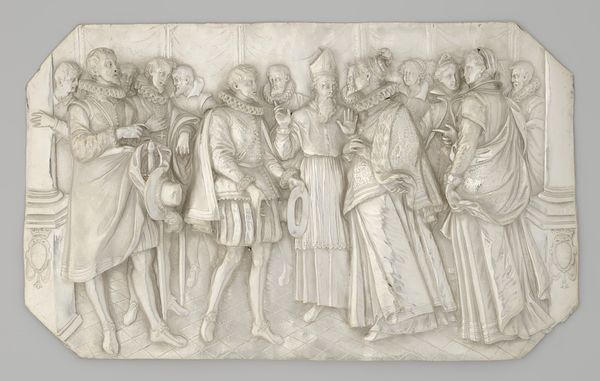
Dimensions: height 23 cm, width 54.5 cm
Copyright: Rijks Museum: Open Domain
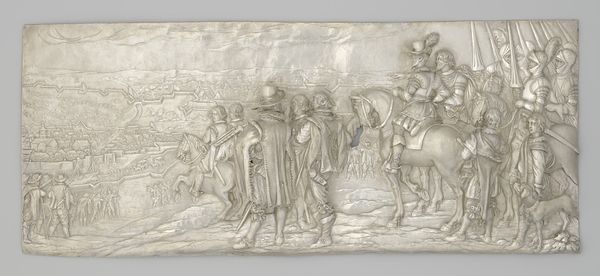
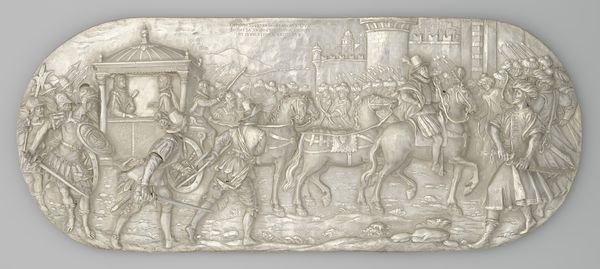
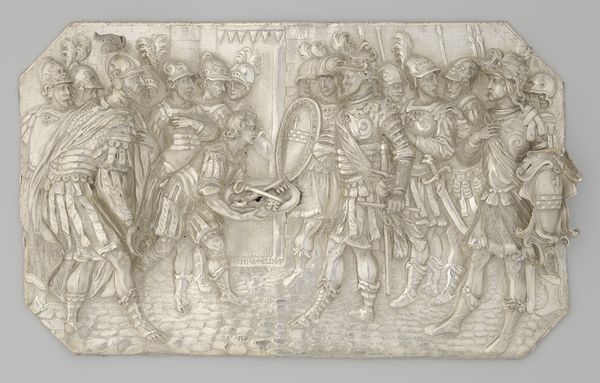
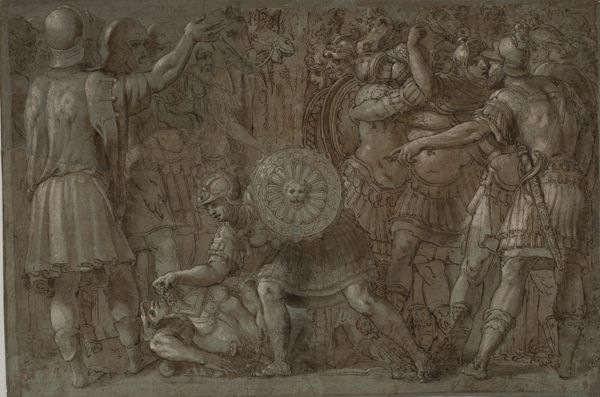
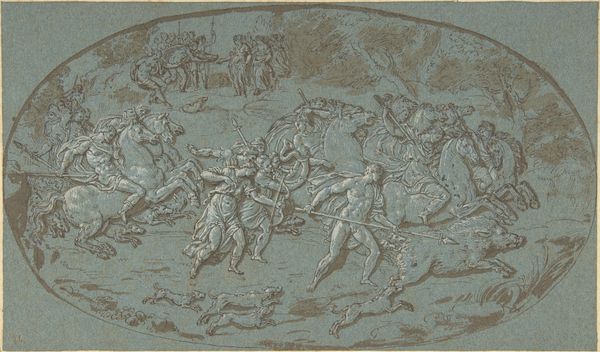
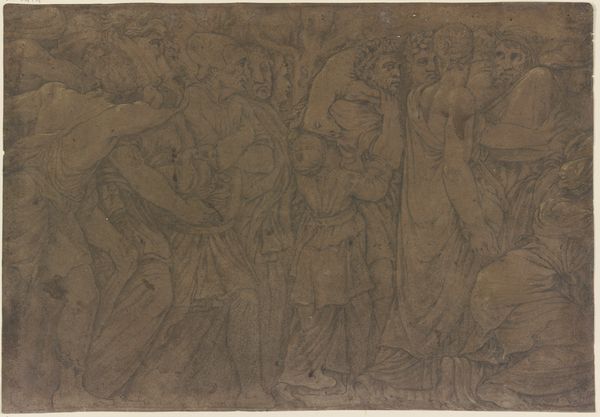
Editor: Here we have a relief sculpture entitled "Box with Episodes from the Life of the Spinola Family," dating back to 1636 by Mattheus Melijn. It is a historical scene, teeming with figures, and the relief carving is so detailed! What narrative threads do you see in this piece? Curator: What I find immediately striking is how this piece functions as a piece of propaganda. Consider who the Spinola family were: powerful, aristocratic, deeply embedded in the socio-political landscape. This carving, likely adorning a box, wasn’t just decorative. It actively constructed and disseminated a specific image of the Spinola family – one of power, success, and legitimacy. Editor: So it's less about historical accuracy and more about crafting a specific public image? Curator: Precisely! Think about where this box might have been displayed, who would have seen it. These details amplify its role in shaping public perception and reinforcing social hierarchies. How might the visual elements contribute to this aim? Editor: I notice the emphasis on order and control on the left versus chaos on the right... a victory perhaps? This contrasts to the jumble of combat further away. Curator: That's a key point. Melijn’s Baroque style amplifies drama and grandeur, ideal for depicting episodes of power. Think about how institutions use art even now to cultivate reputations, further cementing certain beliefs. Editor: So understanding the original function changes how we appreciate this piece entirely! I'll definitely remember to ask who is funding and publicising work moving forward! Curator: Exactly! It allows us to see beyond mere aesthetics and delve into the power dynamics embedded within the art world.
Comments

rijksmuseum over 2 years ago
⋮
In the 17th century various silversmiths from the Netherlands were active in the Italian city of Genoa. They were celebrated for their skills in rendering stories in very high relief. These plaquettes are made by the most famous of these craftsmen, Mattheus Melijn of Antwerp. They feature episodes from the life of the Spinola family, and show how a city can be conquered: Maria Spinola procured a duchy through the power of love, her brother Ambrogio through military might. Ambrogio Spinola was a celebrated military commander serving the Spanish crown and played a crucial role in the war between Spain and the Netherlands. Mounted on horseback, he here surveys the city of Jülich that was besieged by Spanish troops in 1622. He captured the city, which remained in Spanish hands until 1660.


Join the conversation
Join millions of artists and users on Artera today and experience the ultimate creative platform.
 Collect
More like this