1785
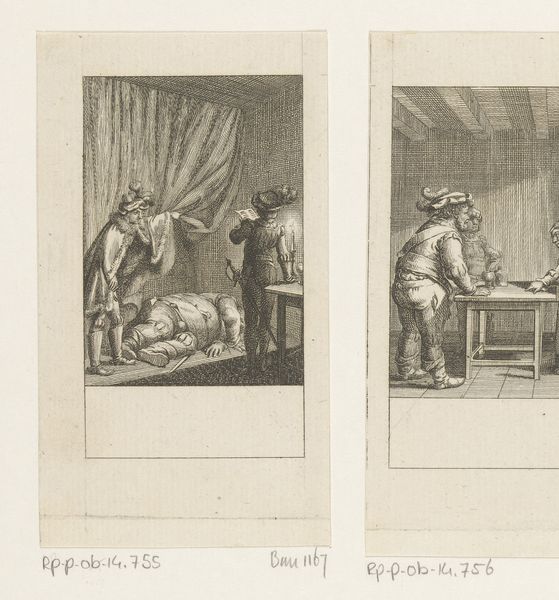
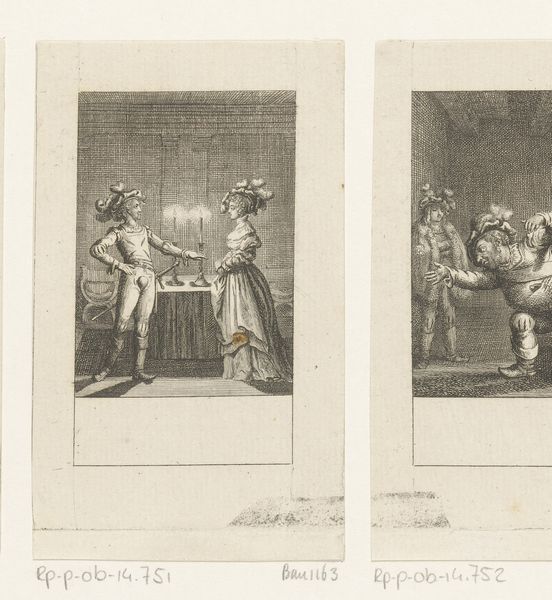
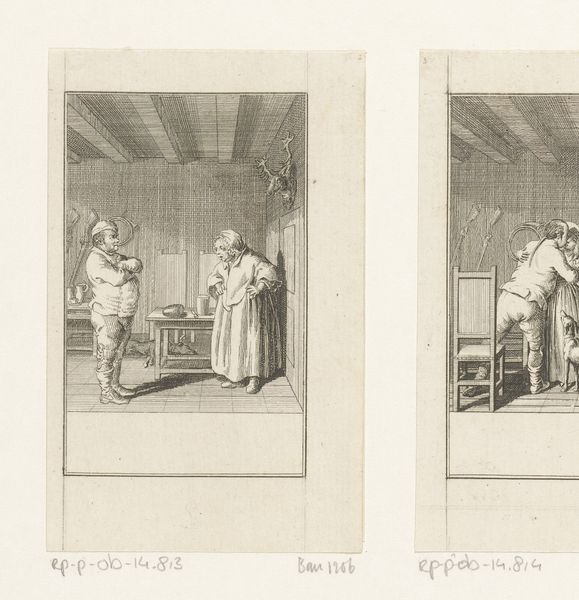
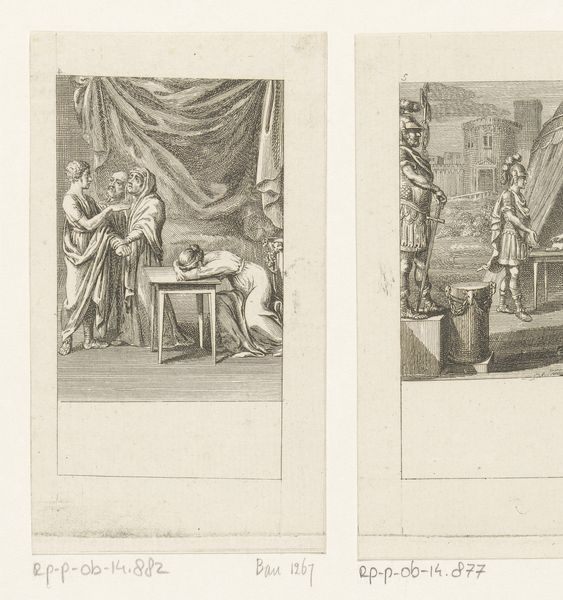
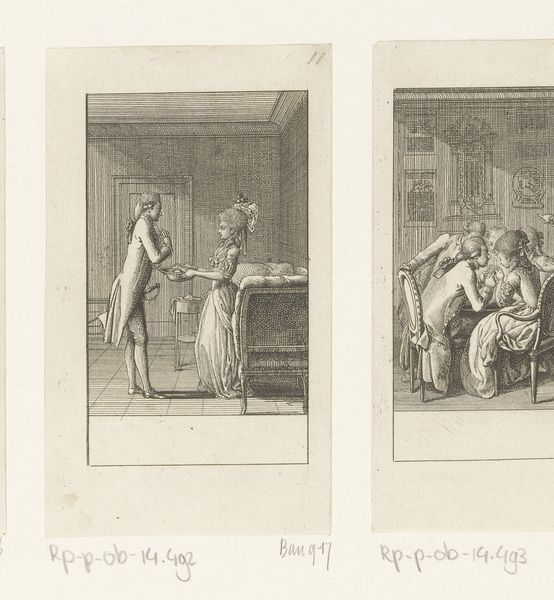
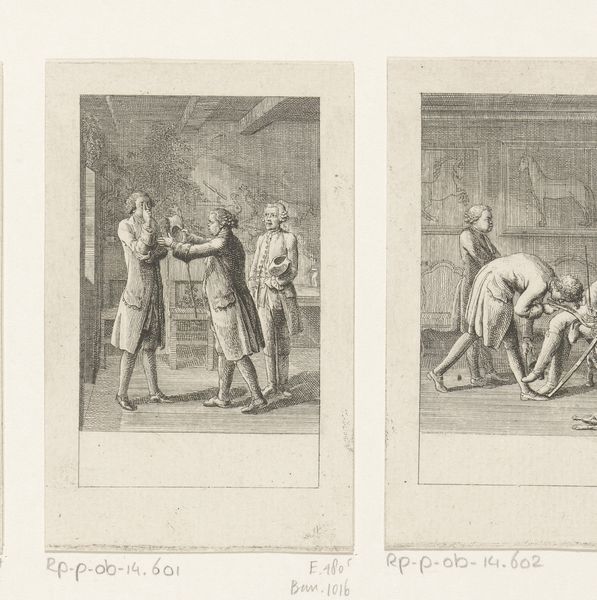
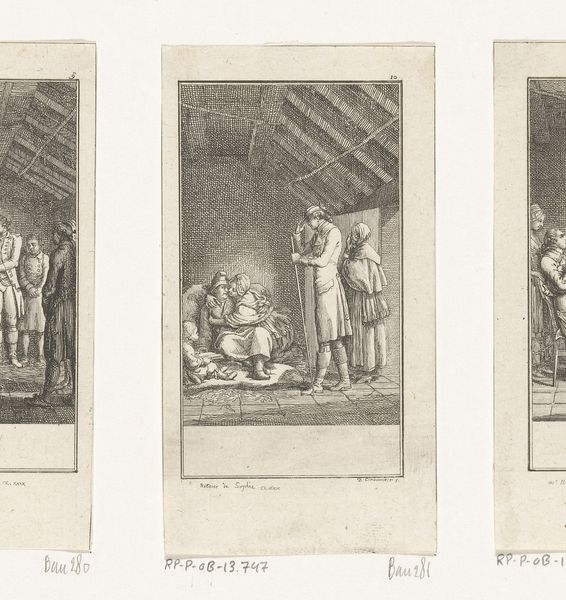
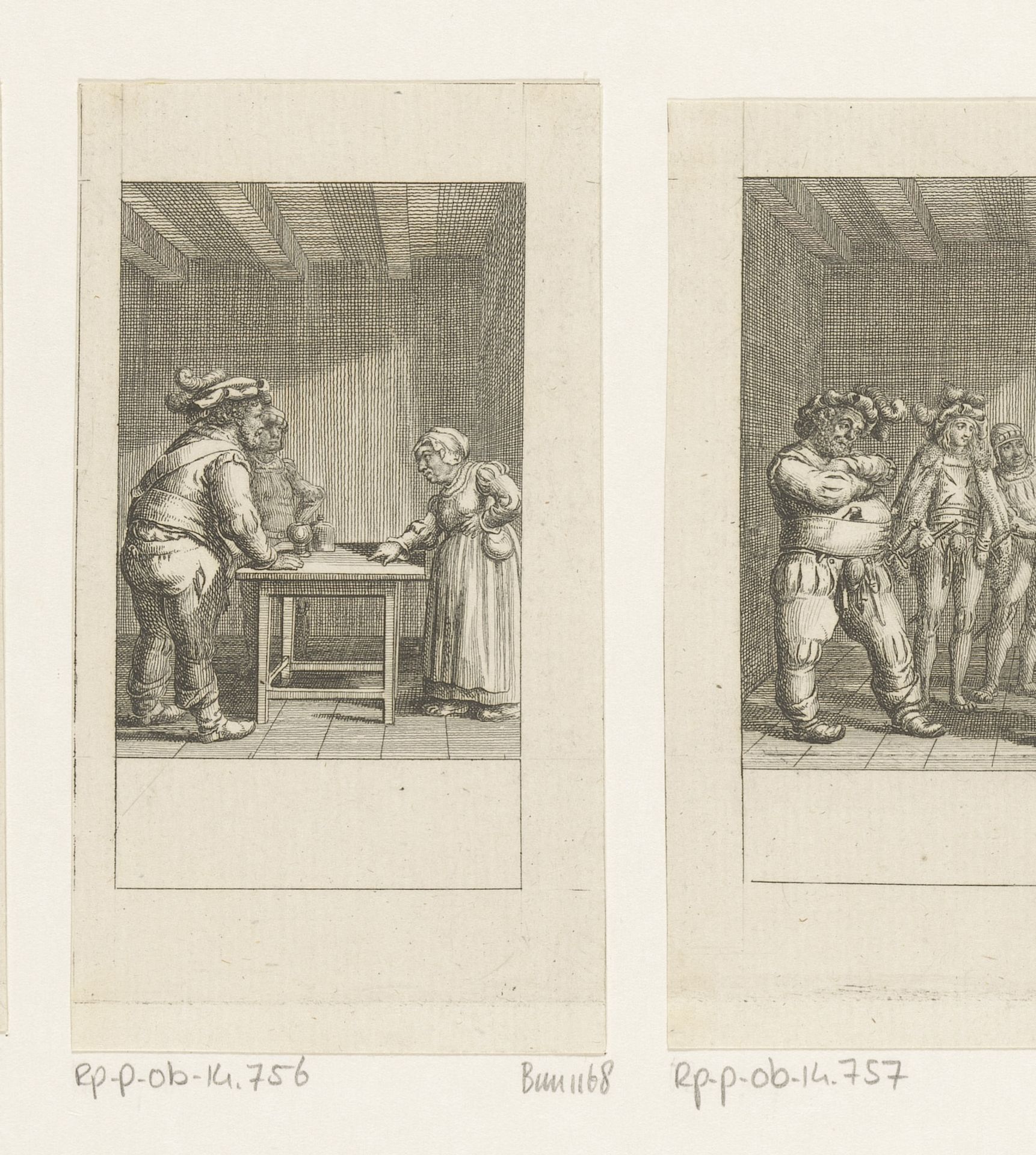
Falstaff beschuldigt de waardin van diefstal

Daniel Nikolaus Chodowiecki
1726 - 1801Location
RijksmuseumListen to curator's interpretation
Curatorial notes
Daniel Nikolaus Chodowiecki created this print, "Falstaff Accusing the Hostess of Theft," sometime in the late 18th century. Prints like these played a crucial public role in shaping social attitudes. Chodowiecki was a master of the small-scale, and his prints were widely circulated and collected, bringing art to a broad audience beyond the traditional elite. The scene depicts a moment of social friction, likely drawn from literature or popular theater. Falstaff, a figure of excess and dubious character, confronts the hostess, suggesting a conflict over money or trust. Made in Germany during the Enlightenment, this work reflects the period’s fascination with morality and social order. The artist's style, with its precise lines and detailed rendering, lends a sense of realism, inviting viewers to reflect on the behaviors and moral implications depicted. Understanding this print fully requires delving into the cultural context of 18th-century Germany. By consulting period literature, theater reviews, and social histories, we can better appreciate how Chodowiecki’s art engaged with, and commented on, the social norms of his time.