


Curatorial notes
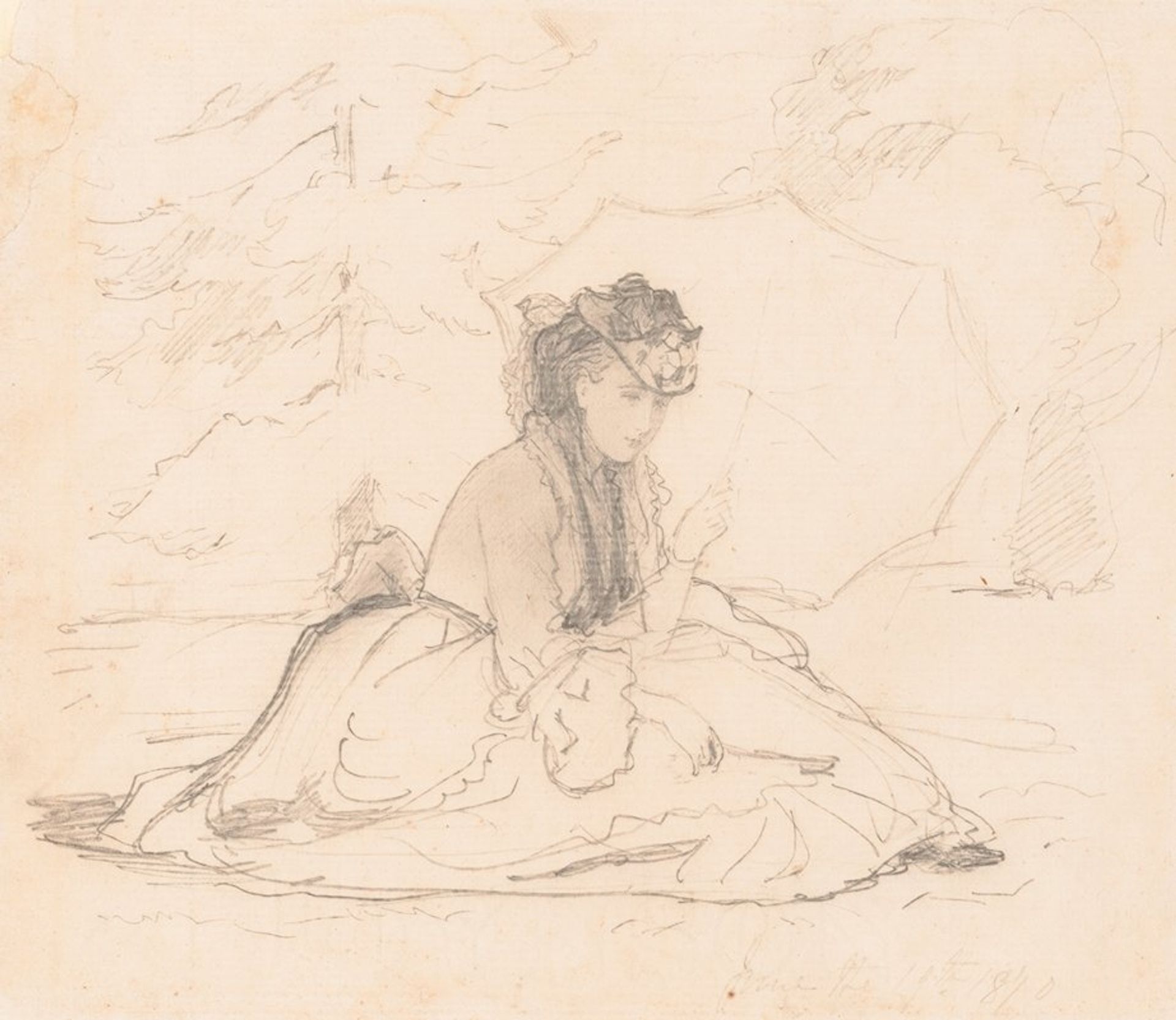
Editor: So, this is James Tissot’s "Woman with a Parasol," done in pencil. There's something delicate and fleeting about it. What really strikes me is the woman seems so lost in her own world. What do you see in this piece? Curator: This image presents a powerful array of visual symbols. Notice how the parasol acts as a shield, not just from the sun, but symbolically from the world's gaze. How might her posture, her downward glance, influence the emotional weight of this piece? Editor: It feels like she’s guarding something, almost. The way she’s holding that paper, is that significant? Curator: Absolutely. The letter, or paper she holds, represents knowledge, communication, maybe even a secret. Do you think the sketch's incomplete nature – the hazy background – amplifies this sense of intimacy? Editor: I do, yes. It almost feels like we're intruding on a private moment, because it is incomplete and has a dream-like quality. But what's with the other figure lurking behind her? Curator: Another fascinating element. A shadow, perhaps? A memory? Or the future encroaching on her present? Consider what that ghostly form could represent about the woman’s psychological landscape. What if we viewed it as societal expectations, always lurking, yet undefined? Editor: I hadn’t thought of that! It gives the piece such a different dimension, considering the symbols in play. It's more than just a portrait; it is a story waiting to unfold! Curator: Precisely. Tissot uses the image as a bridge connecting our collective past and experiences to her quiet intensity, reflecting on how we still navigate the complexities of identity and isolation today.