1649
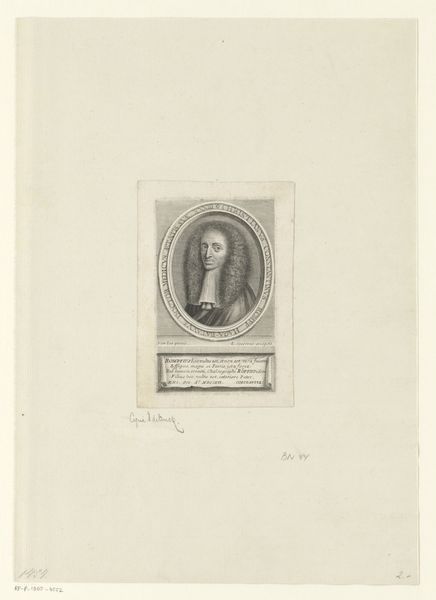
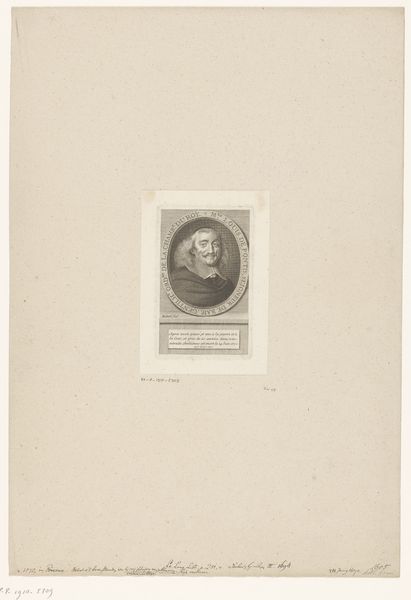
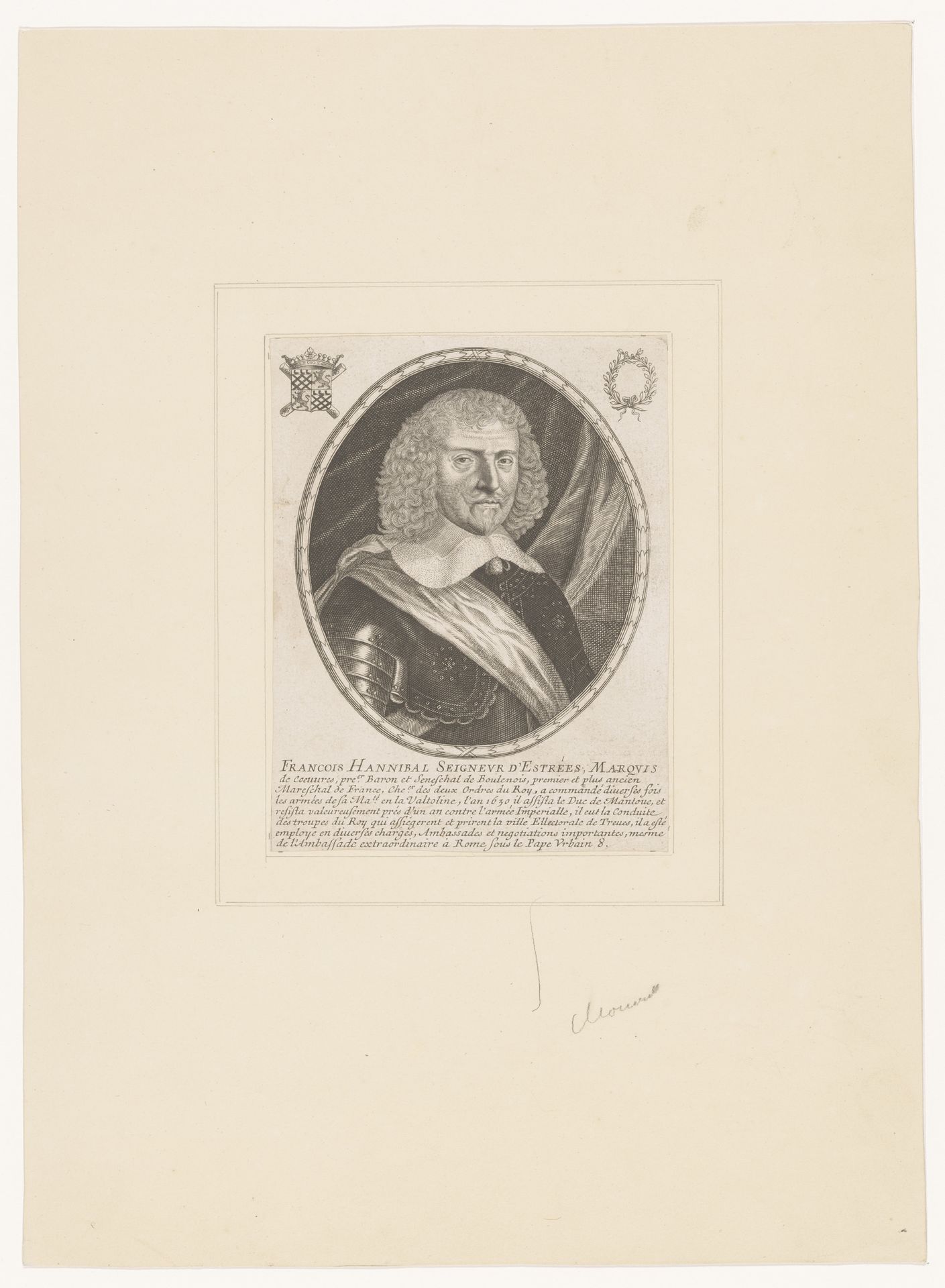
Portret van François Hannibal d'Estrées

Listen to curator's interpretation
Curatorial notes
This is a portrait of François Hannibal d'Estrées, Marquis de Coeuvres, rendered in print by Johannes Valdor II. Note the laurel wreath floating above his head, a timeless symbol hailing back to ancient Greece, awarded to victors and poets. But observe how this classical motif is strategically placed adjacent to a heraldic crest of nobility. The Marquis, adorned in armor, embodies martial prowess. The laurel, typically associated with intellectual and artistic achievement, here takes on a new meaning; it signifies honor and triumph in battle, an evolution of its symbolic power across the ages. Consider how the display of power evokes a deep, subconscious response. We are compelled by the image of the Marquis. The wreath acts as a bridge connecting classical ideals with the specific aspirations and status of a 17th-century nobleman, a potent visual language designed to resonate with viewers across time. The image reminds us that symbols may evolve, but they are never truly lost.