1548
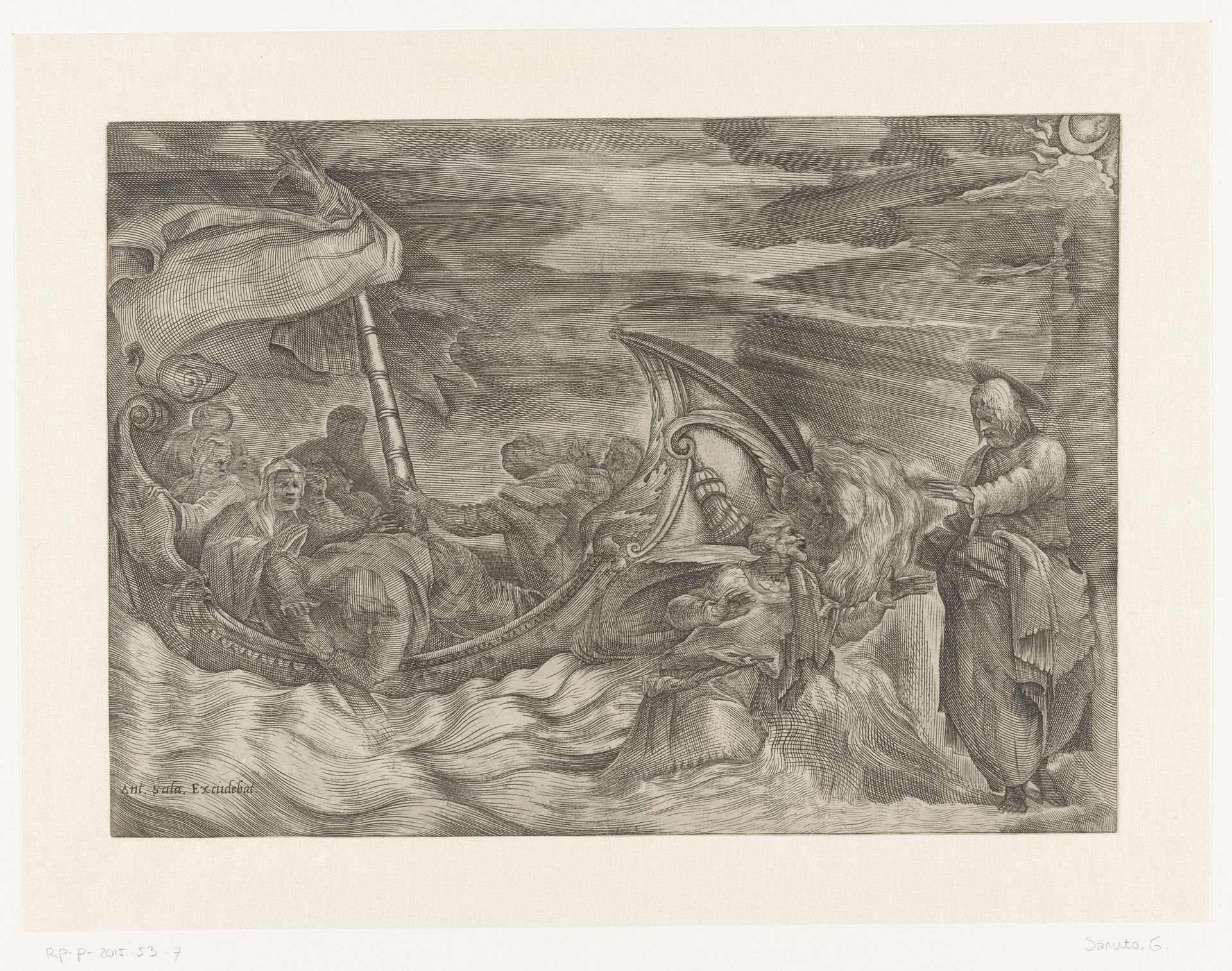
Christus lopend over het water

Giulio Sanuto
1540 - 1588Location
RijksmuseumListen to curator's interpretation
Curatorial notes
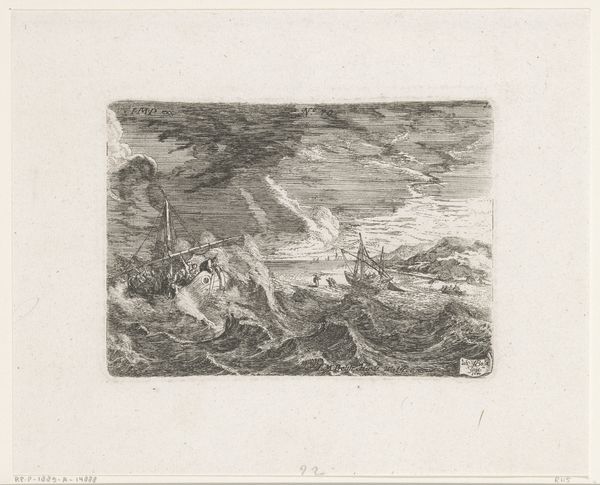
Editor: So, this is Giulio Sanuto's "Christ Walking on Water," created in 1548. It’s a pen and ink drawing. The scene is quite turbulent; everyone in the boat looks so distressed! How do you interpret this work, given the era it was created in? Curator: Looking at this image through the lens of the mid-16th century, it’s difficult to ignore the context of religious upheaval. The dramatic, almost chaotic composition, isn't simply about a biblical miracle. It also reflects the anxieties of a society grappling with shifting religious and political landscapes during the Reformation. Consider the symbolism: Christ, seemingly detached, while those in the boat – representing the Church and its followers – struggle against the stormy waters, against doubt, and persecution. Editor: That’s a powerful reading. So, the “storm” isn't just a literal storm? Curator: Exactly. The tempest becomes a metaphor for the challenges to religious authority. Who is truly in control, and whose faith will prevail? Note how the artist has rendered light and shadow; it really underscores the prevailing uncertainty. Where does ultimate salvation truly lie, according to Sanuto’s print? Is it in earthly power or the divine? Editor: The expressions on the people's faces… some look terrified, some pleading. Do you think the artist takes a position or merely reflects the tumult? Curator: Sanuto avoids a clear-cut endorsement. By presenting the scene this way, he encourages viewers to engage with these questions themselves. The artwork becomes a mirror, reflecting their own hopes, fears, and convictions in a fractured, conflicted world. Think of it as a call for societal reflection on issues that affect everyone regardless of religious background: the nature of belief and the responsibility leaders owe the collective. Editor: I never considered the socio-political climate, and it definitely brings a deeper meaning to this piece. Curator: Precisely. Art doesn't exist in a vacuum. By understanding its historical and social context, we see its full potential. Hopefully it inspires reflection for us, even today.