1858
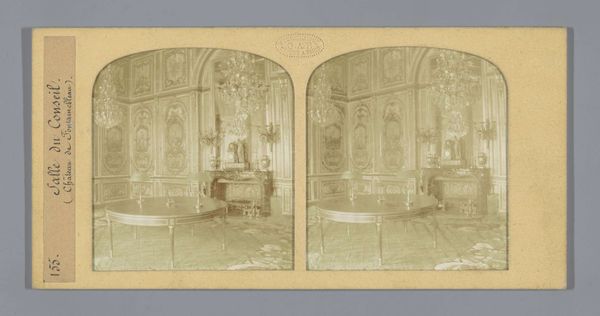
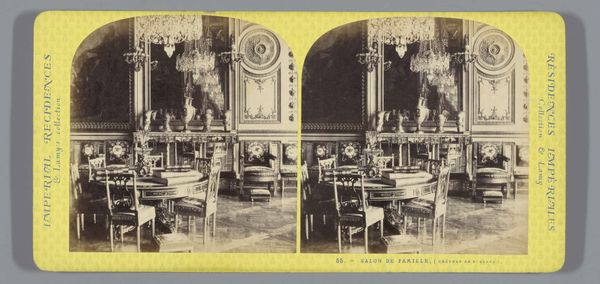
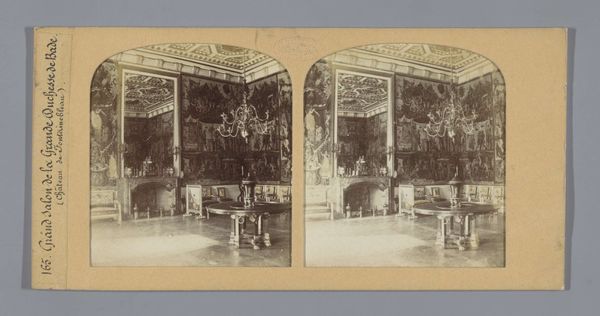
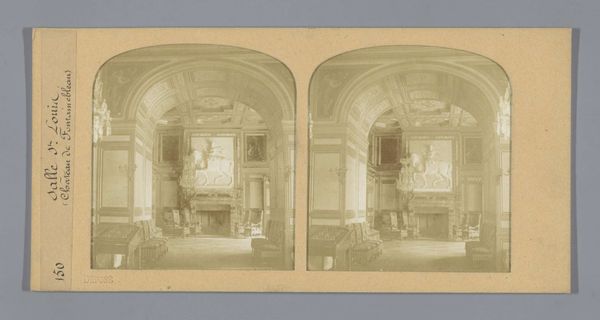
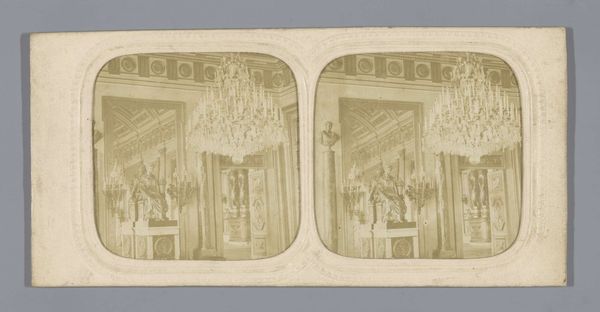
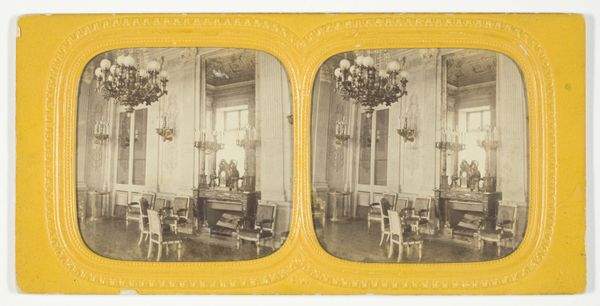
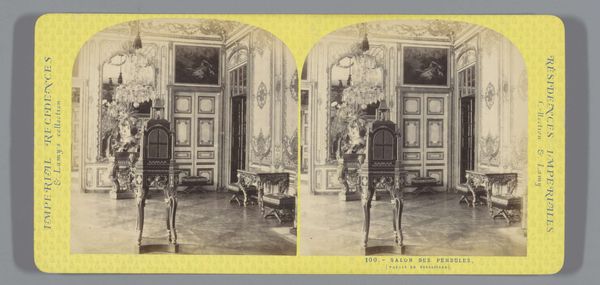
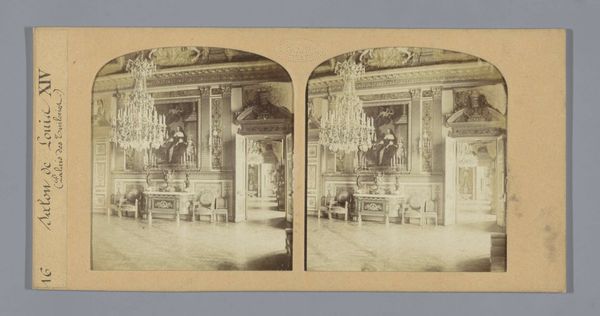
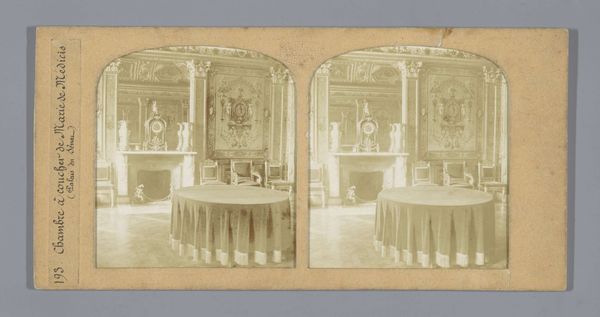
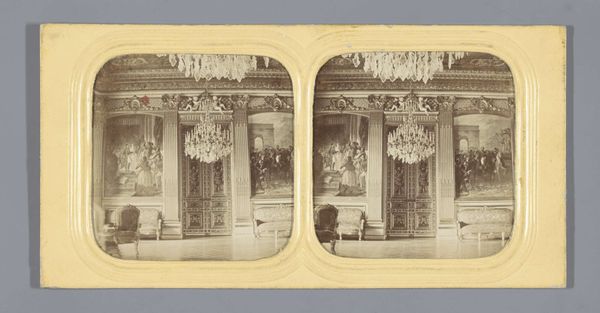
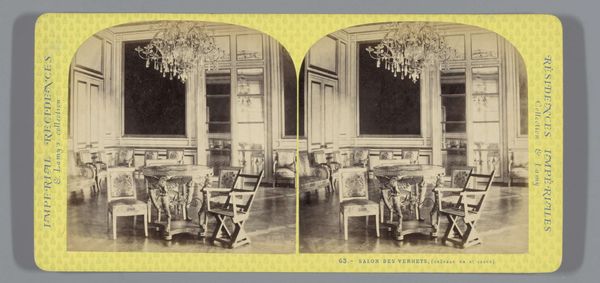
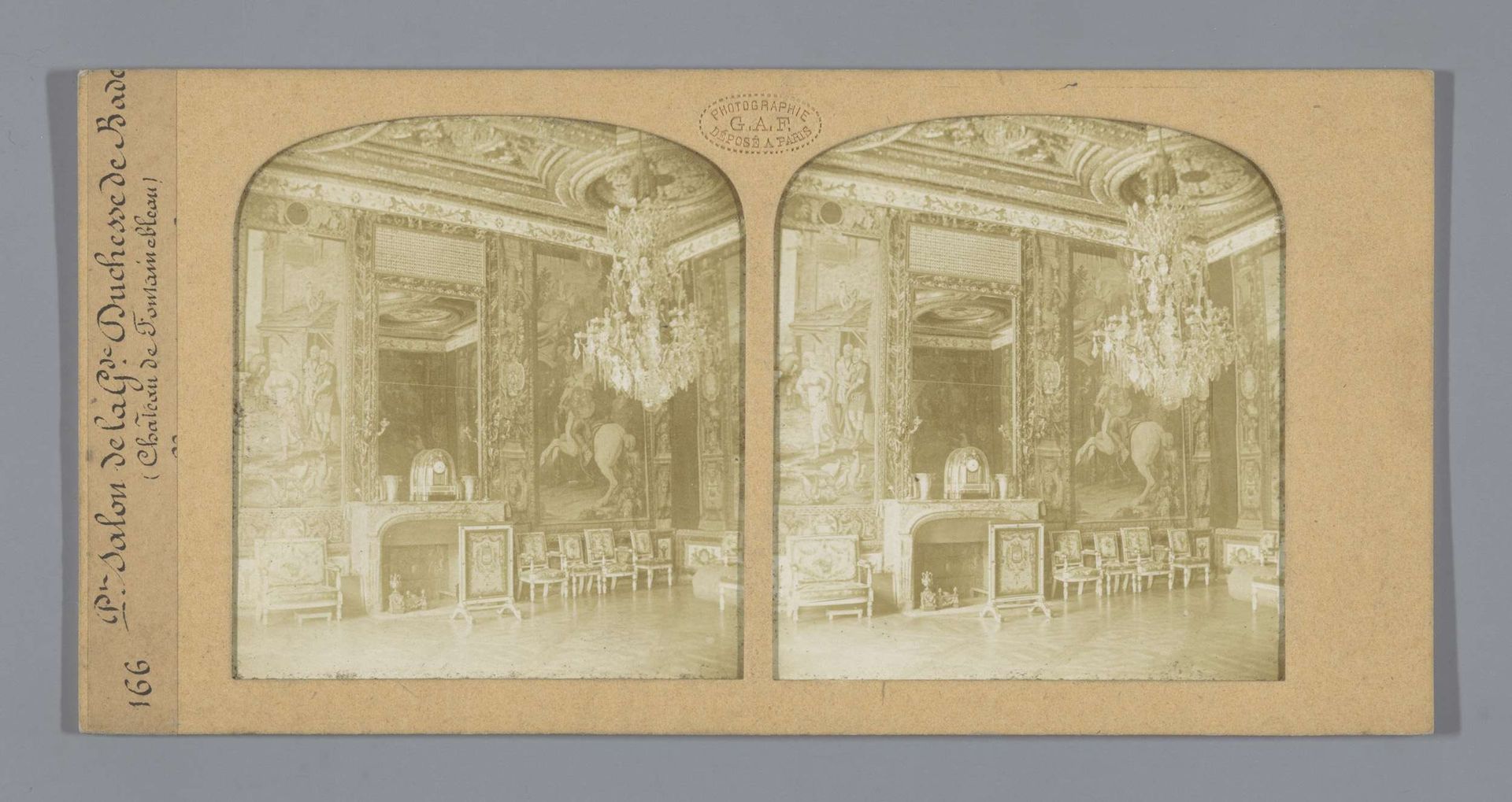
Kleine salon van Stéphanie de Beauharnais, de groothertogin van Baden, in het kasteel van Fontainebleau

Listen to curator's interpretation
Curatorial notes
Editor: This is "Kleine salon van Stéphanie de Beauharnais, de groothertogin van Baden, in het kasteel van Fontainebleau," taken in 1858. It's a print of a photograph showing an interior, and the ornate style strikes me. How do you interpret this work, especially considering the salon's purpose? Curator: This salon provides a fascinating glimpse into the constructed world of 19th-century European aristocracy. Let's consider Stephanie de Beauharnais, an adopted daughter of Napoleon; her identity was significantly shaped by the political maneuverings of the time. This isn't just about aesthetic luxury but about power, gender and how they intertwine. The salon represents a carefully curated space designed to project a specific image. What kind of stories do you think this room tells? Editor: It does seem staged, less about comfort and more about displaying status. It makes me wonder about the absence of people. Are we meant to see the room as a stage awaiting its actors? Curator: Exactly. And think about the act of photographing it, the photograph being a print, further distancing us from any "reality". Who was this image meant for? Was it about celebrating a certain lifestyle while reinforcing class divisions, considering those outside of such opulence? It challenges us to look at the power dynamics inherent in such representation. Editor: I didn't think about it that way at first. The romantic style seemed inviting, but now I see the layers of social and political context at play. It’s a good reminder to question what stories are being told and whose voices are missing. Curator: Precisely! It encourages us to understand these artworks not as isolated objects but as artifacts deeply embedded in complex cultural narratives.