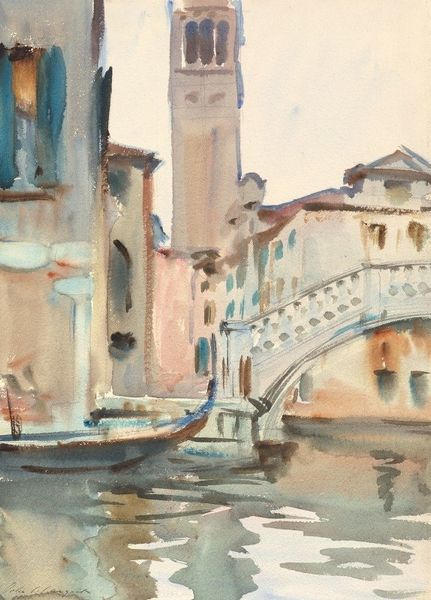
Dimensions: 50.8 x 34.29 cm
Copyright: Public domain
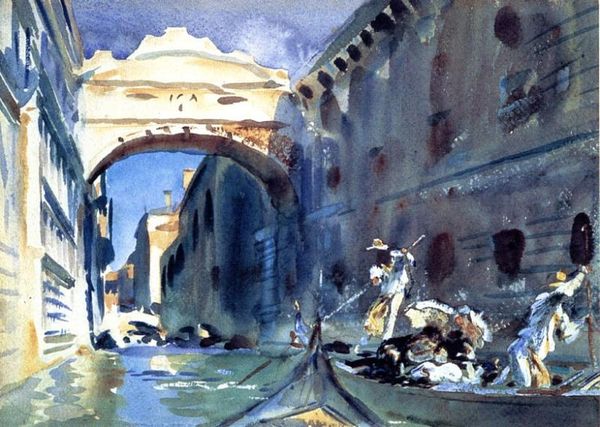
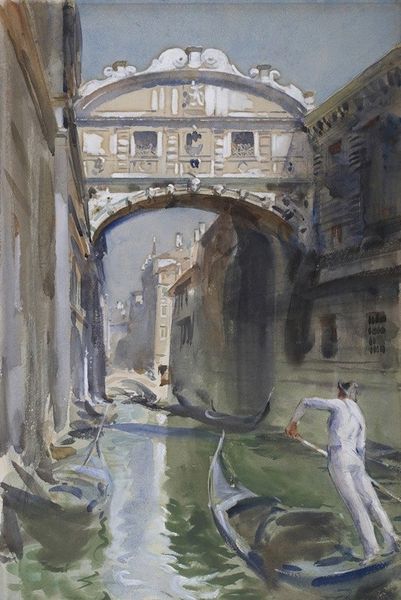
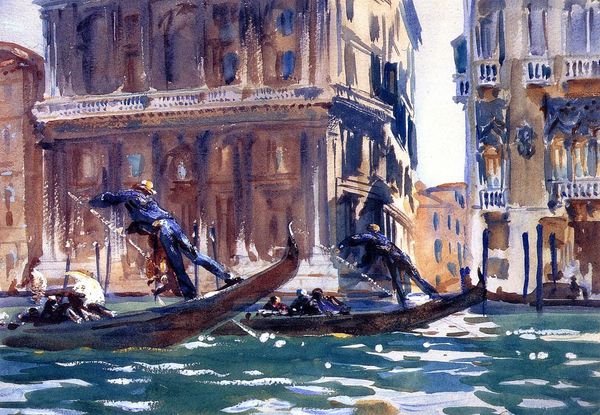
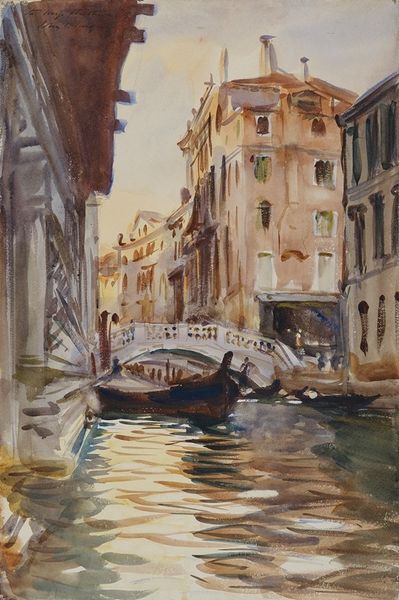
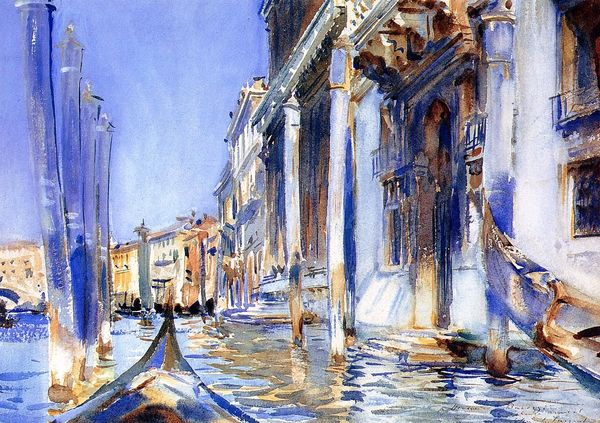
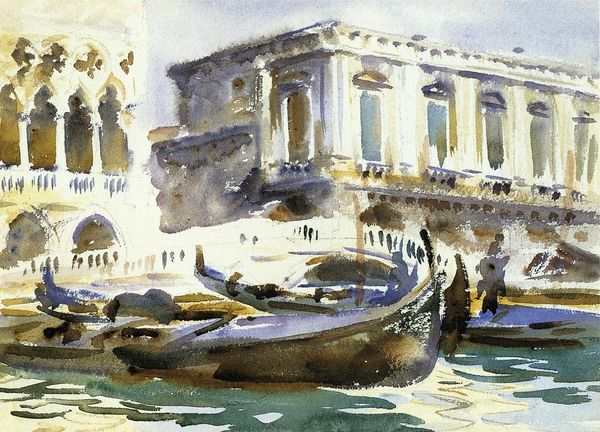
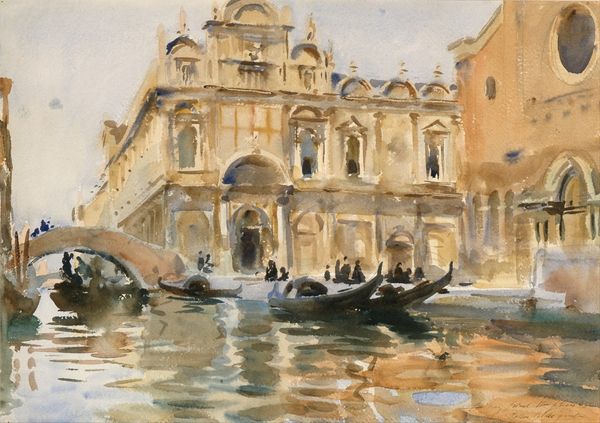
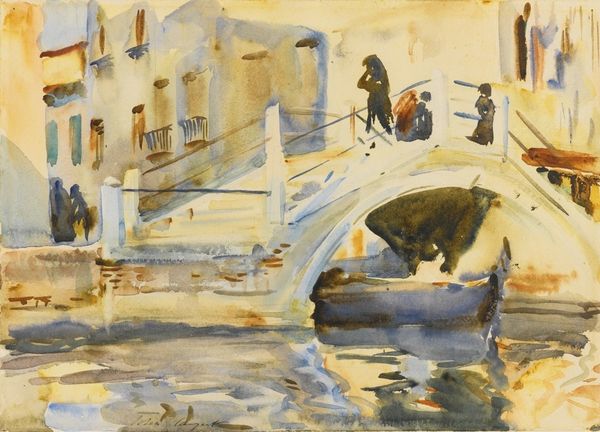
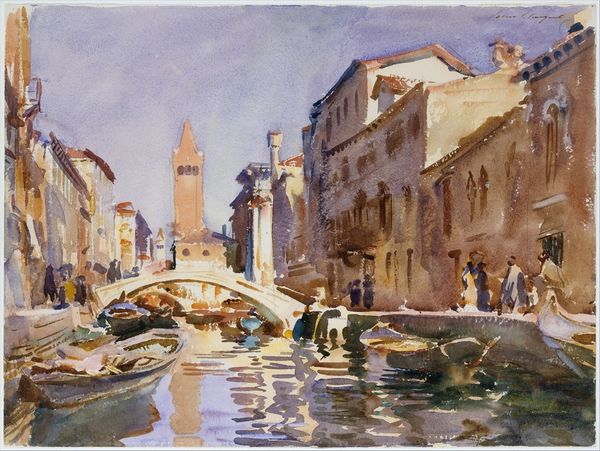
Editor: We’re looking at John Singer Sargent’s "The Rialto. Venice," created around 1911. It seems to be watercolor on paper. The mood feels so dreamy and ephemeral – it’s Venice, after all, but almost a ghost of Venice. What grabs your attention in this piece? Curator: Ah, yes, Venice. It always whispers, doesn't it? What truly seduces me here is how Sargent manages to capture the very light bouncing off the water – the shimmer, the movement – and then transfers that fleeting quality onto paper. I like to imagine him *becoming* the light, if that makes sense. Do you sense the plein-air style? It’s almost as if the scene simply bloomed right there, in front of us. Editor: Definitely! It's so immediate. But does he romanticize it a little too much? Curator: Romanticize? Perhaps. But isn't that the artist's prerogative, really? To find the poetry, even where others might only see, well, postcard clichés? I mean, look at the buildings; they seem to breathe, don't they? Slightly decaying, yet undeniably magnificent. They are real, after all! Editor: True. I see the detail differently now, noticing the texture. I suppose the light makes the ordinary, extraordinary, right? Curator: Precisely! Sargent's ability wasn’t just in depicting Venice, but revealing its soul, its *ache*. This watercolor is less about visual accuracy and more about emotional truth. Editor: I'm walking away from this with a much richer idea of what impressionism can do. Thank you. Curator: The pleasure was all mine! Maybe, if you let your soul breathe freely you’ll understand the way Sargent was painting.
Comments
No comments
Be the first to comment and join the conversation on the ultimate creative platform.
 React
React Comment