1870 - 1891
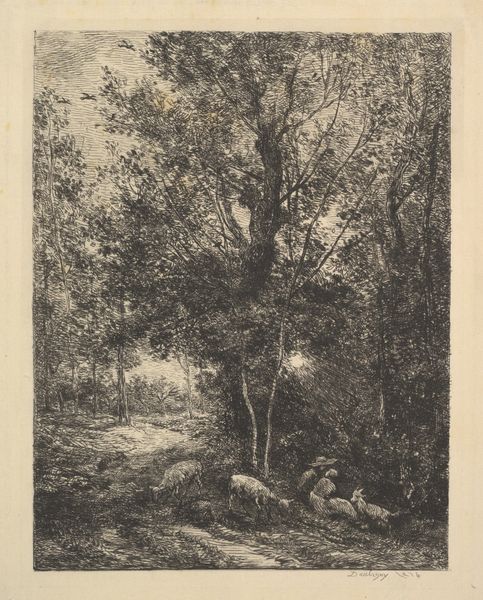
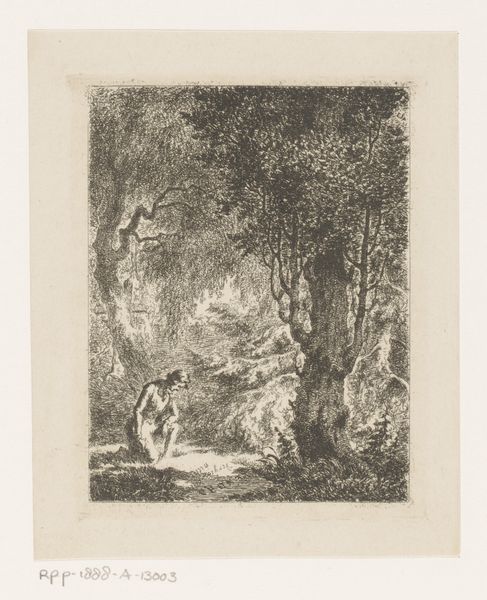
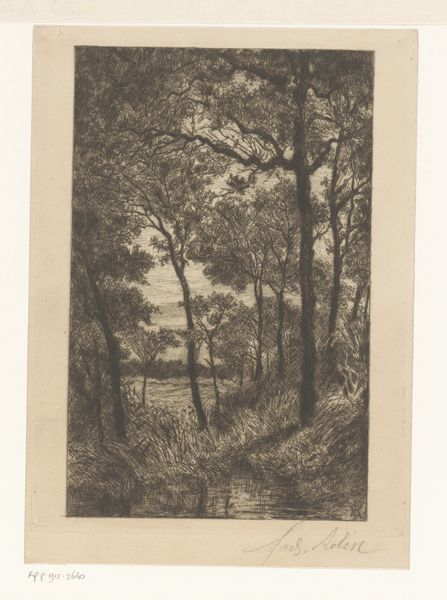
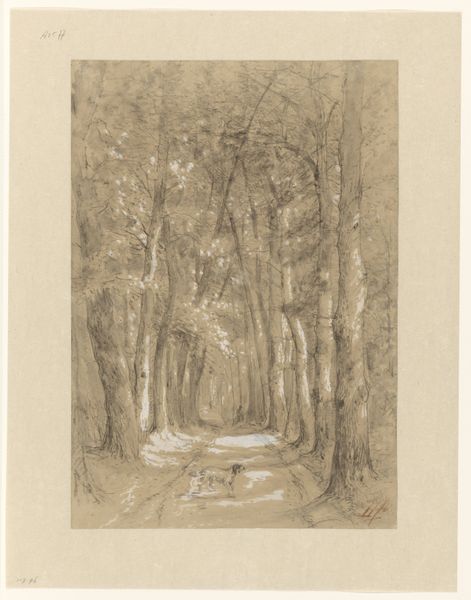
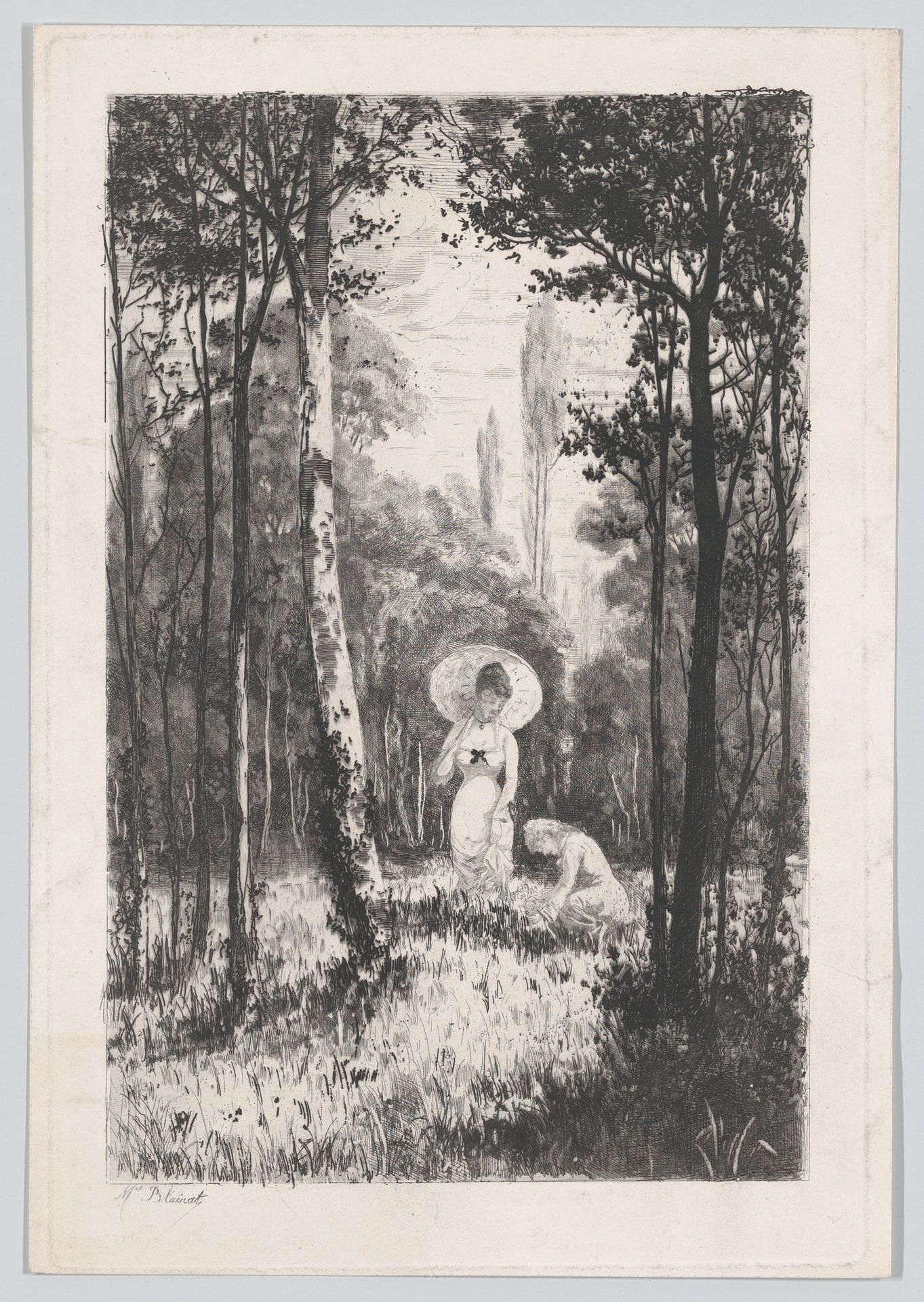
Two women in a clearing in the woods, one holding a parasol, the other seated in the grass


Listen to curator's interpretation
Curatorial notes
Curator: Looking at this, I immediately think of a hushed intimacy. It's rendered in such careful lines; there’s an understated tension in how close yet separate these figures are. Editor: Marcel Blairat created this ink drawing and print, "Two women in a clearing in the woods, one holding a parasol, the other seated in the grass," sometime between 1870 and 1891. Its current home is the Metropolitan Museum of Art. To me, it highlights the shift in printmaking's role as a medium; its function transcending the limitations of simple replication. Curator: Absolutely. And the forest, rendered with almost overwhelming detail, creates an enclosed space, a retreat. Parasols, during this era, are so heavy with significance. Beyond a practical use to avoid sunburn, here it acts as almost like a symbolic screen, between them and the outside world, as a barrier defining social interaction. Editor: Agreed. Consider too, how much the drawing captures this particular moment in industrial capitalism; labor moving further outside the home and the print facilitates wider accessibility. Blairat's technique with the ink and his approach to mark-making blurs those conventional distinctions of 'high' and 'low' art as such, forcing one to reconsider where value is actually made. Curator: Speaking of value, even something as simple as their dresses are deeply embedded within a Victorian context. They tell of modesty, constraint, and a particular feminine ideal but almost in contrast is the one without the parasol seated directly on the ground! Blairat's playing with ideas of conventional feminine roles set against a backdrop of pastoral nature and perhaps an underlying yearning for more simplistic times, prior to industry and social expectation. Editor: Yes, these figures and the location were manufactured via tools available for drawing, as well as tools to make prints for larger production; each figure placed on the page, carefully, as part of a mechanical operation. Blairat takes nature and the women's relationship and then reproduces these images for a consumer. What value exists in the original moment versus the consumption of printed matter? Curator: I see a visual record loaded with Victorian notions of decorum but the composition invites more reading below the surface. It's that play that captures our eye. Editor: Indeed, from the method to the social themes portrayed, there's an important story embedded in both form and content.