About this artwork
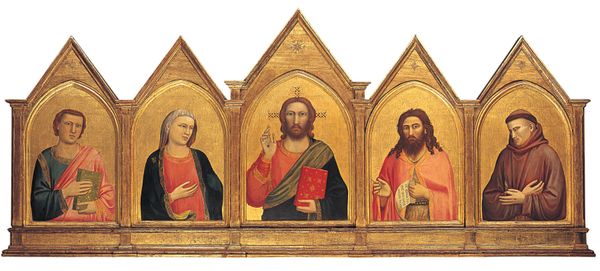
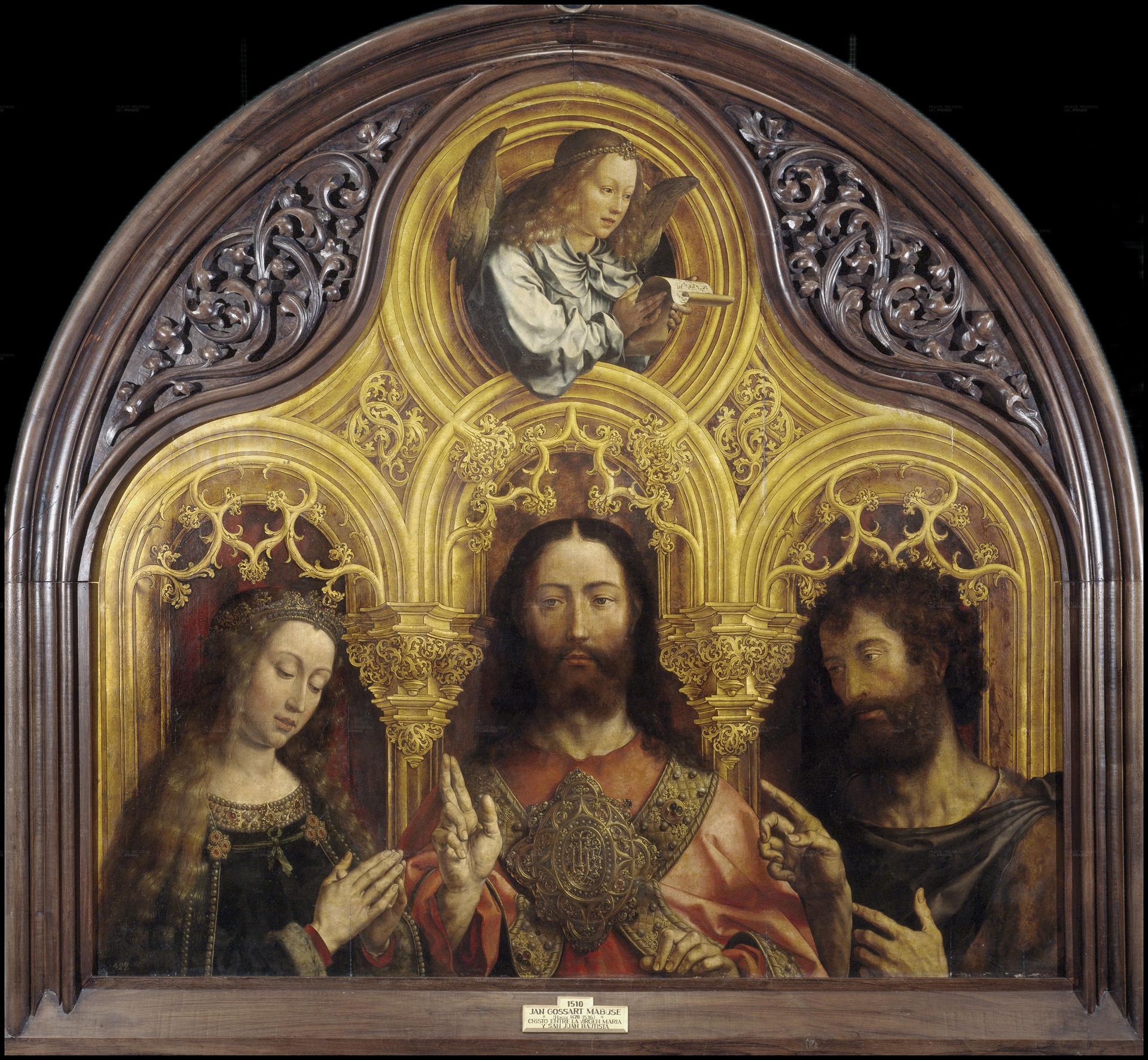
Mabuse painted this Deesis, now in the Museo del Prado, evoking a powerful plea for mercy and intercession. At its heart is Christ, raising his hand in a gesture of benediction, a symbol seen across millennia from ancient Roman emperors to Byzantine icons. To his right, Saint John the Baptist points towards Christ, guiding the viewer's gaze, much like the prophets of old directing attention to the divine. On the left, the Virgin Mary is depicted with hands clasped in prayer, a posture that transcends its religious context, tapping into a universal expression of supplication and hope. This very arrangement, the Deesis, reappears throughout history, bearing witness to humanity's eternal quest for salvation. The emotional intensity embedded in the figures, their solemn faces, draws viewers into a contemplative space, inviting reflection on mortality, redemption, and the enduring power of faith. These symbols are not static; they evolve, adapt, and resurface, echoing through time.

Artwork details
- Medium
- painting, oil-paint
- Dimensions
- 133 x 122 cm
- Location
- Museo del Prado, Madrid, Spain
- Copyright
- Public domain
Tags
portrait
painting
oil-paint
sculpture
figuration
christianity
history-painting
italian-renaissance
Comments
No comments
About this artwork
Mabuse painted this Deesis, now in the Museo del Prado, evoking a powerful plea for mercy and intercession. At its heart is Christ, raising his hand in a gesture of benediction, a symbol seen across millennia from ancient Roman emperors to Byzantine icons. To his right, Saint John the Baptist points towards Christ, guiding the viewer's gaze, much like the prophets of old directing attention to the divine. On the left, the Virgin Mary is depicted with hands clasped in prayer, a posture that transcends its religious context, tapping into a universal expression of supplication and hope. This very arrangement, the Deesis, reappears throughout history, bearing witness to humanity's eternal quest for salvation. The emotional intensity embedded in the figures, their solemn faces, draws viewers into a contemplative space, inviting reflection on mortality, redemption, and the enduring power of faith. These symbols are not static; they evolve, adapt, and resurface, echoing through time.
Comments
No comments