About this artwork
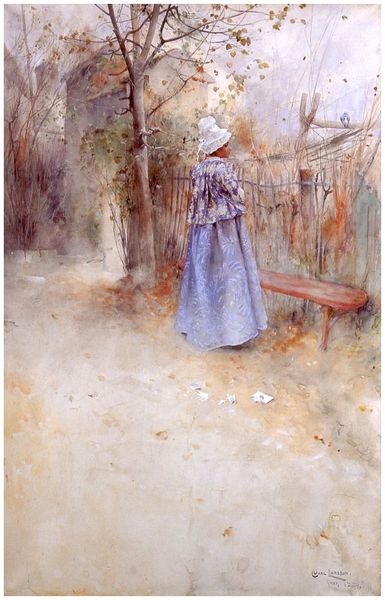
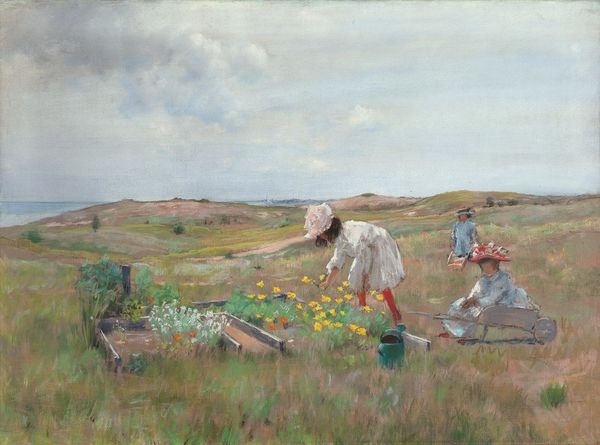
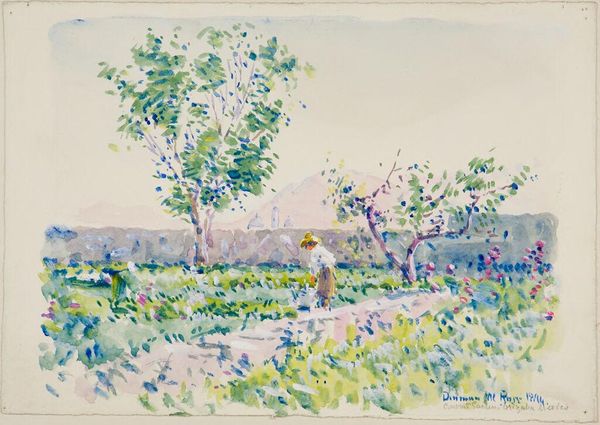
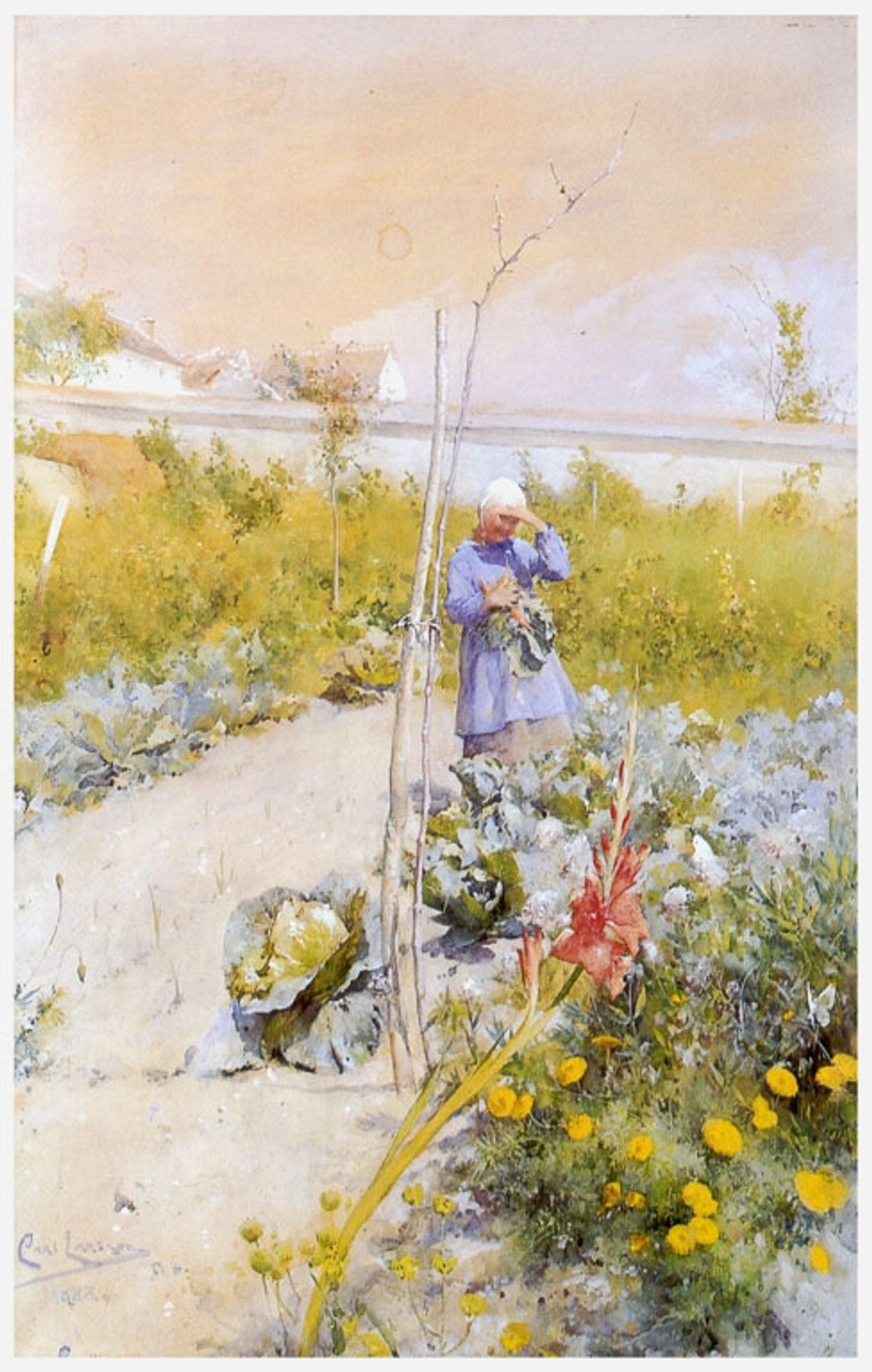
Editor: Here we have Carl Larsson’s "In the Kitchen Garden," a watercolor painting from 1883 currently housed in the Nationalmuseum in Stockholm. I’m really struck by the light. It feels like it perfectly captures that hazy, sunny warmth of a late summer afternoon. How do you interpret this piece? Curator: This watercolor offers a glimpse into the social construction of idyllic domesticity in late 19th-century Sweden. Larsson cultivated an image of a happy family life closely tied to nature. Consider the painting's function: it wasn't just a personal artwork; it contributed to a visual language about Swedish identity that resonated with the burgeoning national romanticism of the era. Editor: So, the garden isn’t just a garden; it's also a symbol? Curator: Precisely. The careful cultivation, the presence of the woman perhaps shielding her eyes from the sun… it evokes labor, connection to the land, and a certain national ideal of rural life, promoted at the time in contrast to increasing industrialization. What do you think, then, about its relationship to Impressionism? Editor: Well, the loose brushstrokes and emphasis on light are definitely there, but it feels… I don't know, more purposeful than a purely optical study. It's like the impressionistic technique is serving a specific narrative. Curator: Indeed. Larsson wasn't solely interested in capturing a fleeting moment. He uses impressionistic techniques, but embeds them within a genre painting tradition to present a narrative steeped in cultural and societal values. The work itself is part of a bigger picture, showcasing the ideal Swedish society to its contemporary viewers. Editor: That makes so much sense! I always just saw the pretty garden scene. Now I realize it’s connected to broader cultural ideas about national identity. Curator: Exactly. Art rarely exists in a vacuum; its meaning is shaped by its social and historical context. Editor: I'll definitely look at Impressionism with a broader view now, keeping in mind the sociopolitical implications.
In the Kitchen Garden
1883


Artwork details
- Medium
- painting, plein-air, watercolor
- Dimensions
- 61 x 93 cm
- Location
- Nationalmuseum, Stockholm, Sweden
- Copyright
- Public domain
Tags
Comments
Share your thoughts
About this artwork
Editor: Here we have Carl Larsson’s "In the Kitchen Garden," a watercolor painting from 1883 currently housed in the Nationalmuseum in Stockholm. I’m really struck by the light. It feels like it perfectly captures that hazy, sunny warmth of a late summer afternoon. How do you interpret this piece? Curator: This watercolor offers a glimpse into the social construction of idyllic domesticity in late 19th-century Sweden. Larsson cultivated an image of a happy family life closely tied to nature. Consider the painting's function: it wasn't just a personal artwork; it contributed to a visual language about Swedish identity that resonated with the burgeoning national romanticism of the era. Editor: So, the garden isn’t just a garden; it's also a symbol? Curator: Precisely. The careful cultivation, the presence of the woman perhaps shielding her eyes from the sun… it evokes labor, connection to the land, and a certain national ideal of rural life, promoted at the time in contrast to increasing industrialization. What do you think, then, about its relationship to Impressionism? Editor: Well, the loose brushstrokes and emphasis on light are definitely there, but it feels… I don't know, more purposeful than a purely optical study. It's like the impressionistic technique is serving a specific narrative. Curator: Indeed. Larsson wasn't solely interested in capturing a fleeting moment. He uses impressionistic techniques, but embeds them within a genre painting tradition to present a narrative steeped in cultural and societal values. The work itself is part of a bigger picture, showcasing the ideal Swedish society to its contemporary viewers. Editor: That makes so much sense! I always just saw the pretty garden scene. Now I realize it’s connected to broader cultural ideas about national identity. Curator: Exactly. Art rarely exists in a vacuum; its meaning is shaped by its social and historical context. Editor: I'll definitely look at Impressionism with a broader view now, keeping in mind the sociopolitical implications.
Comments
Share your thoughts