About this artwork
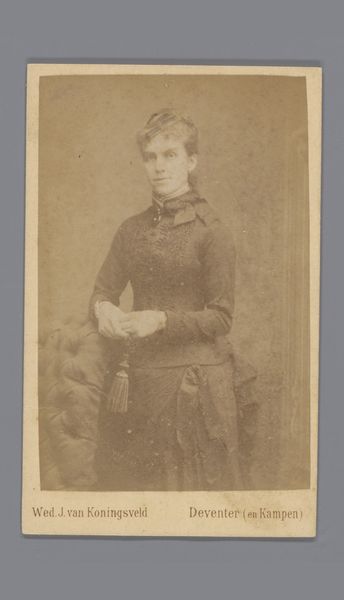
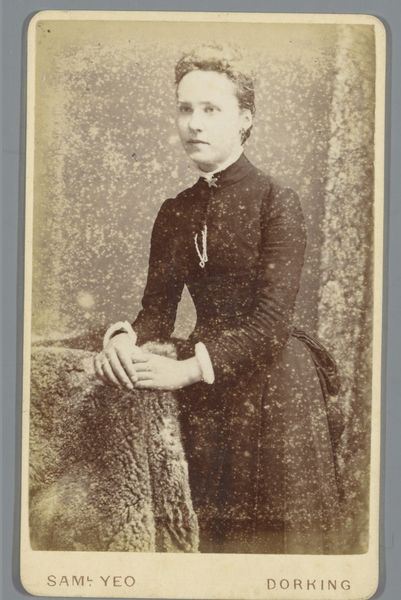
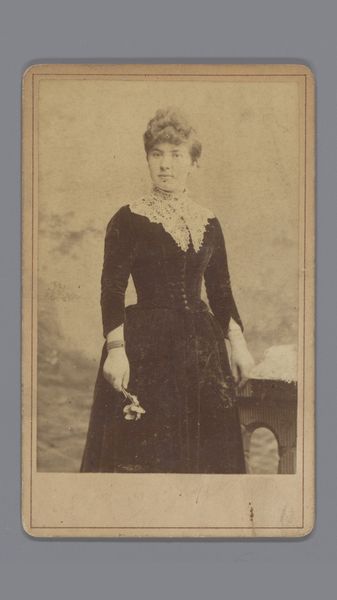
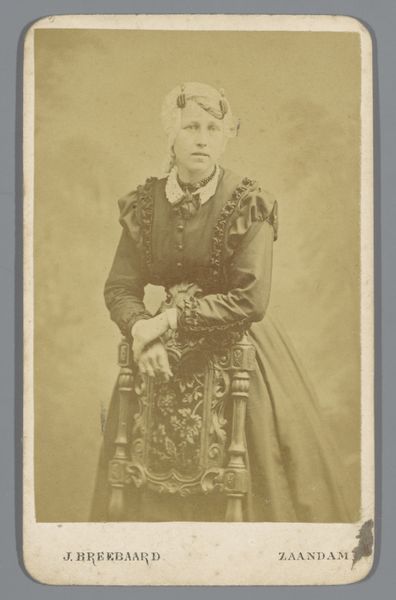
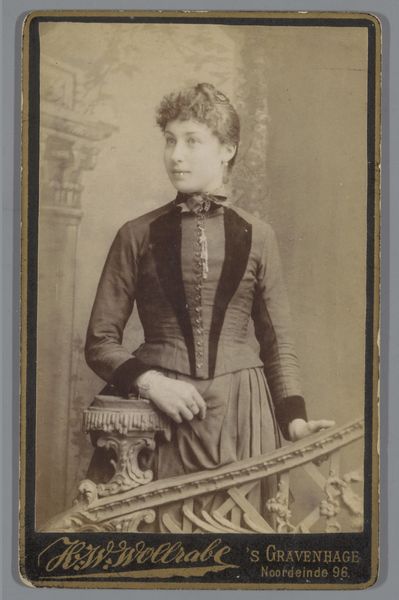
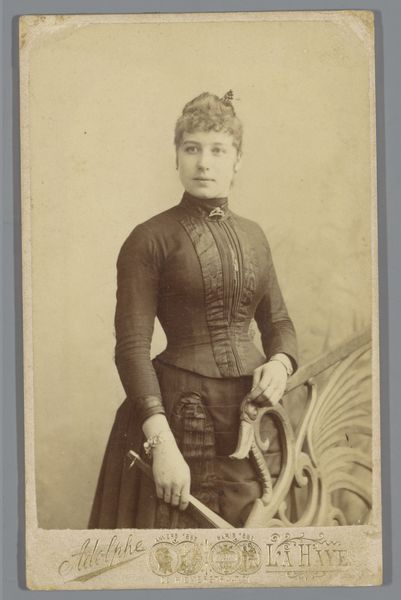
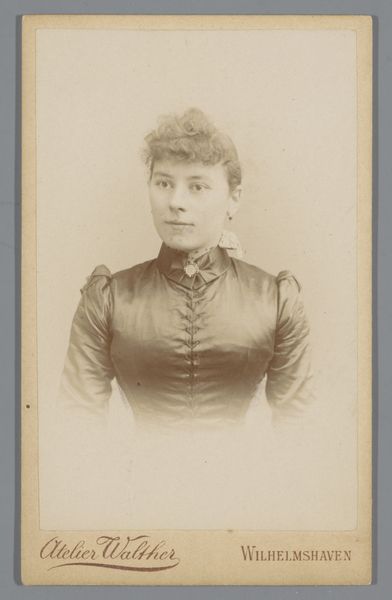
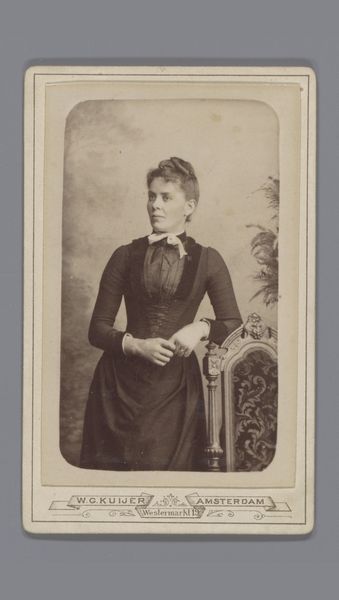
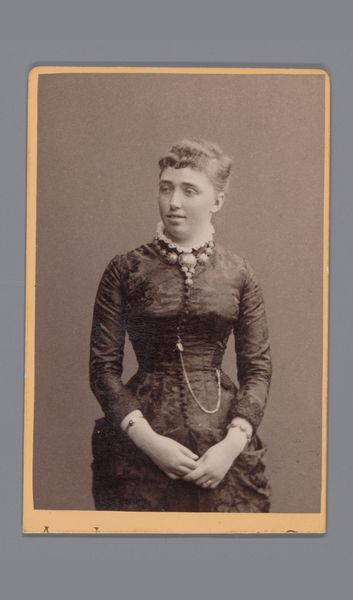
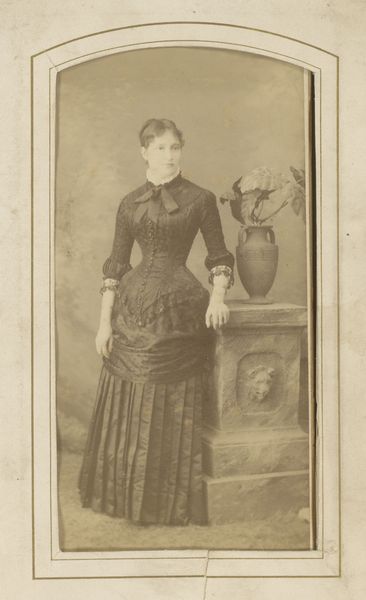
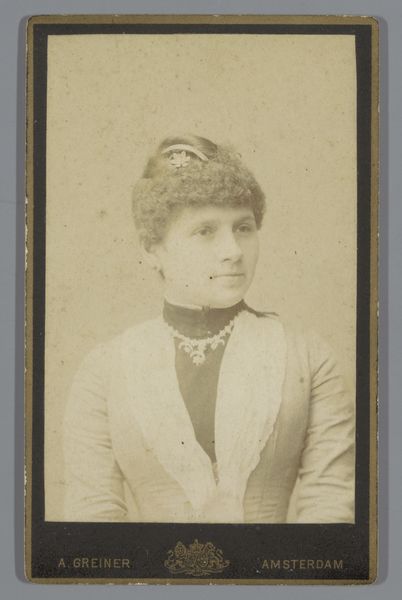
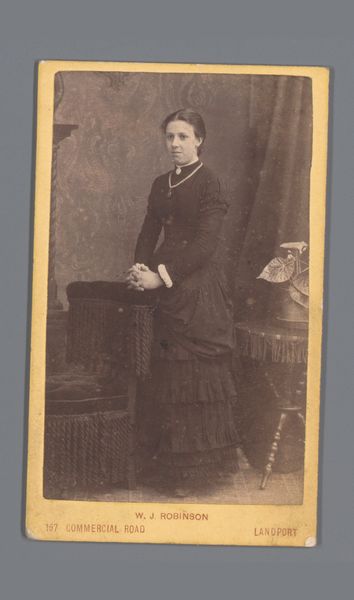
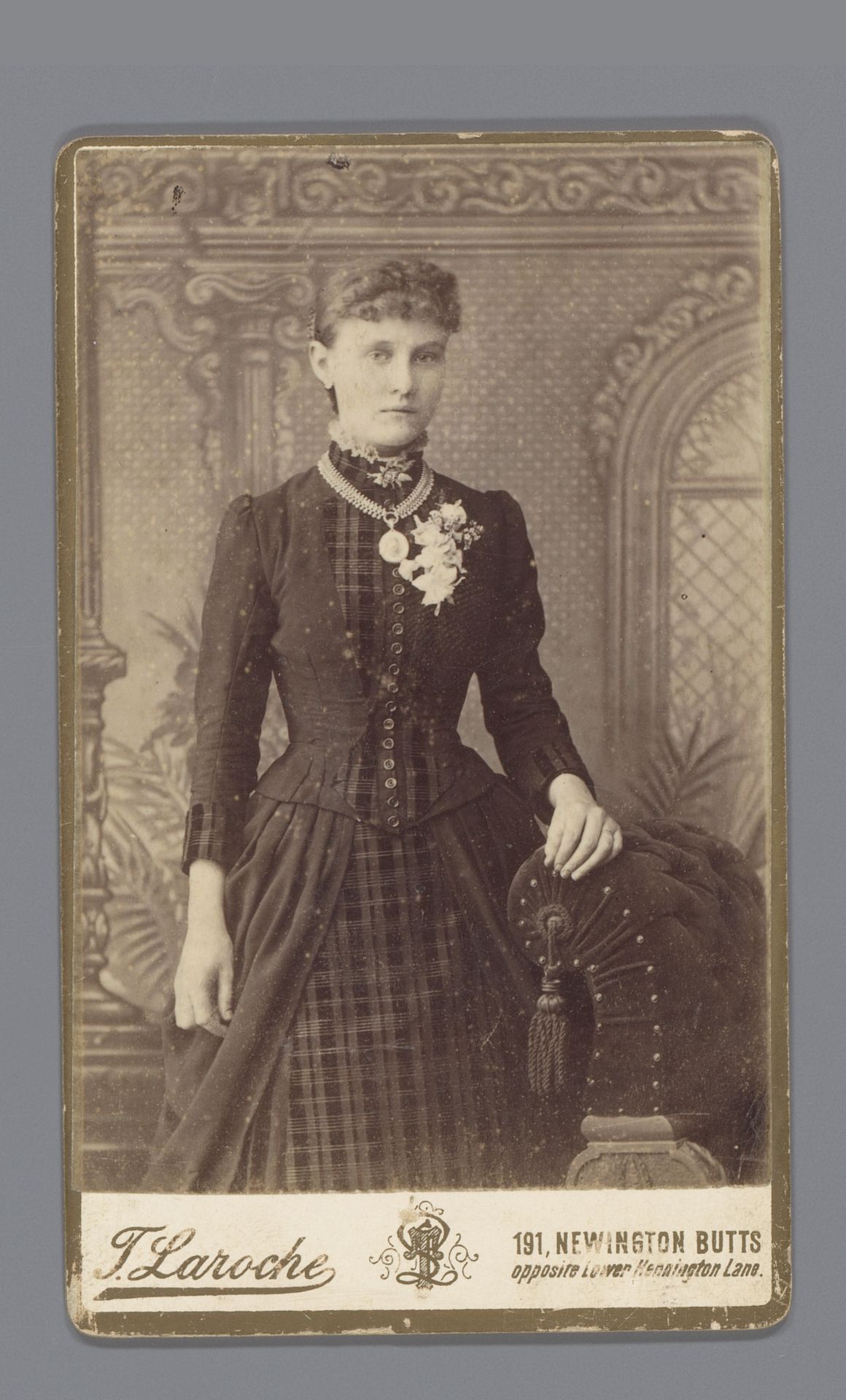
T. Laroche made this photograph of an unknown woman in London, perhaps in the 1880s. Though we don't know her name, the sitter's clothing and jewelry tell us something about her place in London society. This studio portrait presents her as a respectable woman of the middle class, a social category on the rise in late 19th century England. Notice the trappings of wealth that would have been accessible to this class: an elaborate necklace, ring, and a dress of patterned fabric, set against the backdrop of a well-appointed parlor. Consider, too, the implicit function of the photograph itself. The sitter would likely have exchanged it with friends and relatives, or perhaps kept it as a memento of a particular stage in life. It might also have been produced as a calling card, designed to convey respectability, taste, and social standing. To understand such an image, a social historian might research the changing status of women in the period, or the rise of a commercial photography industry in London. What other histories might this photograph tell?

Artwork details
- Medium
- photography, gelatin-silver-print
- Dimensions
- height 105 mm, width 63 mm
- Copyright
- Rijks Museum: Open Domain
Tags
Comments
Share your thoughts
About this artwork
T. Laroche made this photograph of an unknown woman in London, perhaps in the 1880s. Though we don't know her name, the sitter's clothing and jewelry tell us something about her place in London society. This studio portrait presents her as a respectable woman of the middle class, a social category on the rise in late 19th century England. Notice the trappings of wealth that would have been accessible to this class: an elaborate necklace, ring, and a dress of patterned fabric, set against the backdrop of a well-appointed parlor. Consider, too, the implicit function of the photograph itself. The sitter would likely have exchanged it with friends and relatives, or perhaps kept it as a memento of a particular stage in life. It might also have been produced as a calling card, designed to convey respectability, taste, and social standing. To understand such an image, a social historian might research the changing status of women in the period, or the rise of a commercial photography industry in London. What other histories might this photograph tell?
Comments
Share your thoughts