1835 - 1837
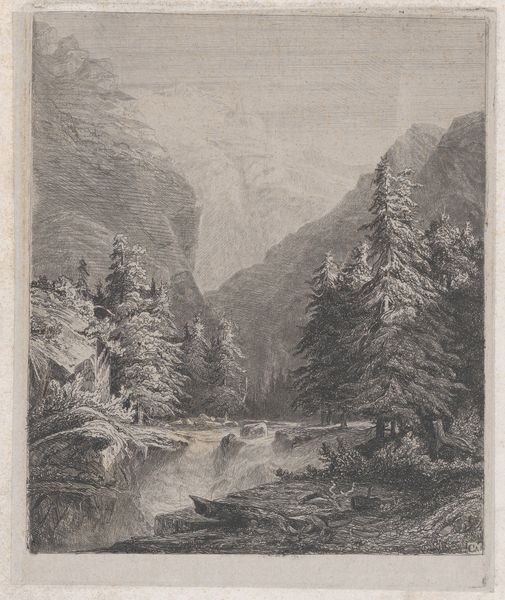
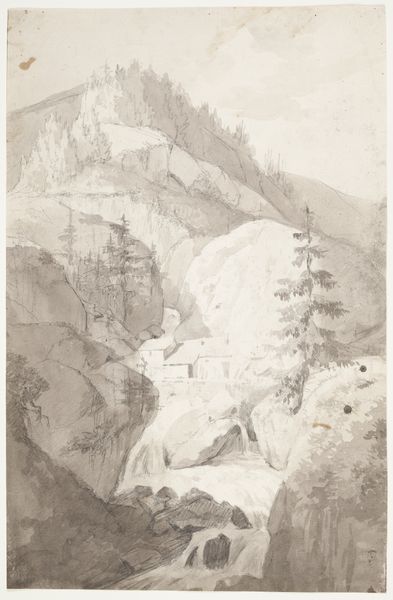
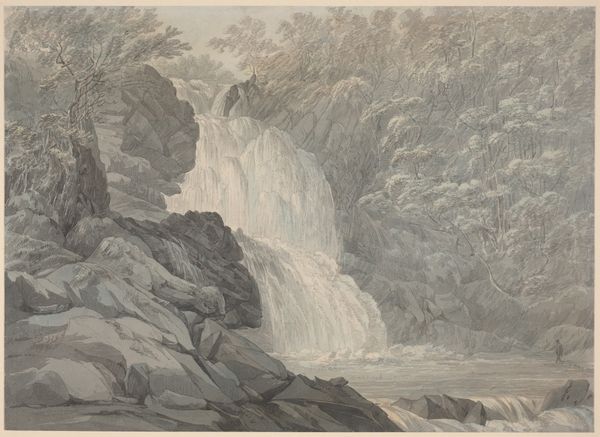
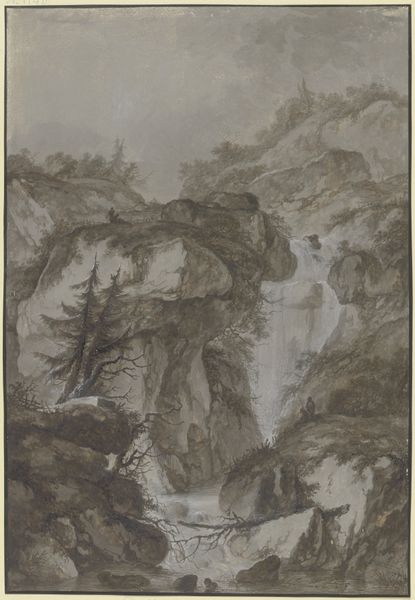
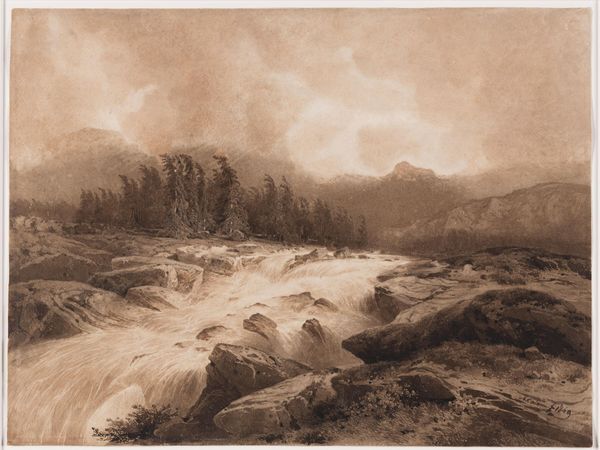
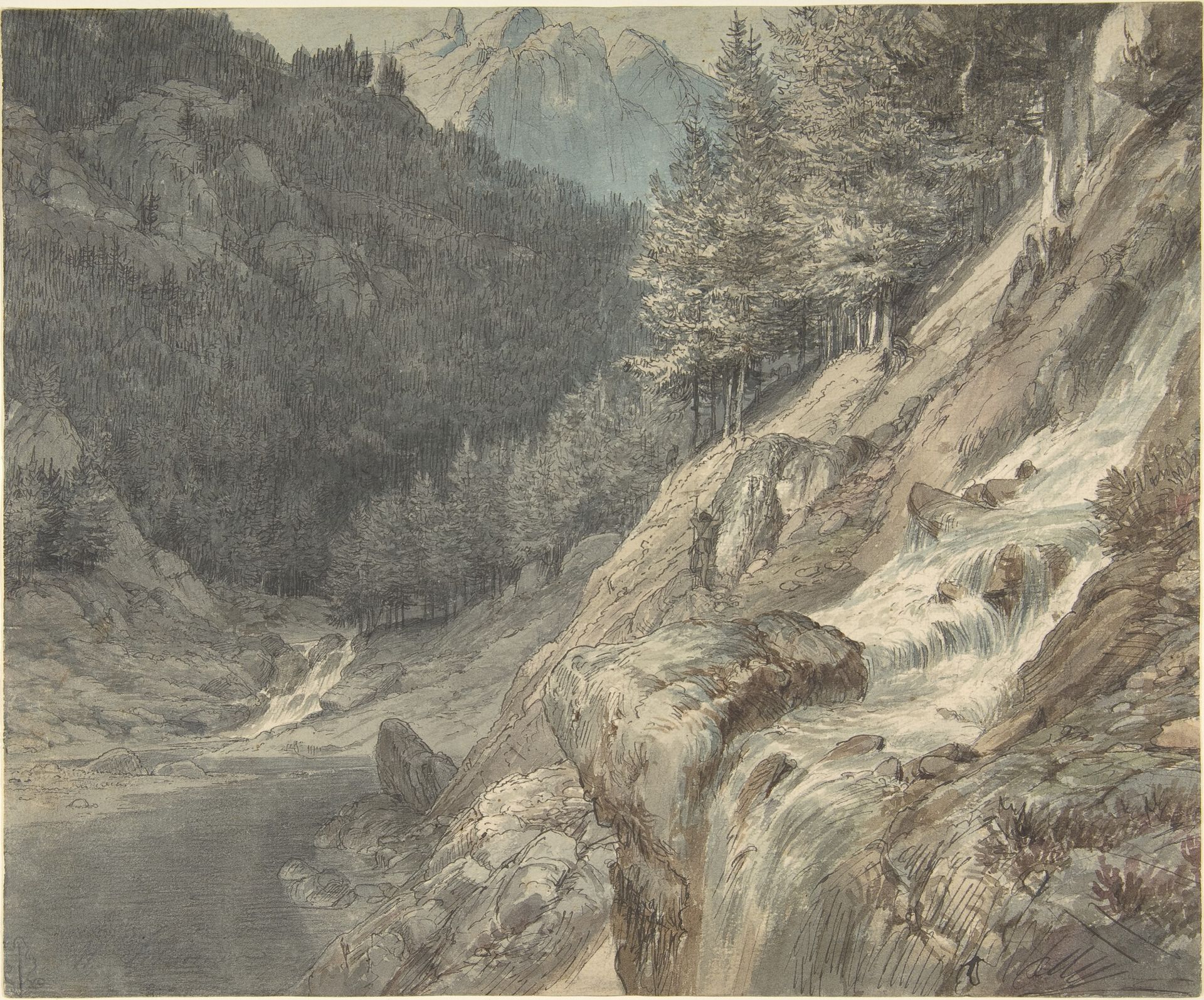
Mountainous Landscape with a River

Johann Wilhelm Schirmer
1807 - 1863
The Metropolitan Museum of Art
Metropolitan Museum of Art, New York, NYListen to curator's interpretation
Curatorial notes
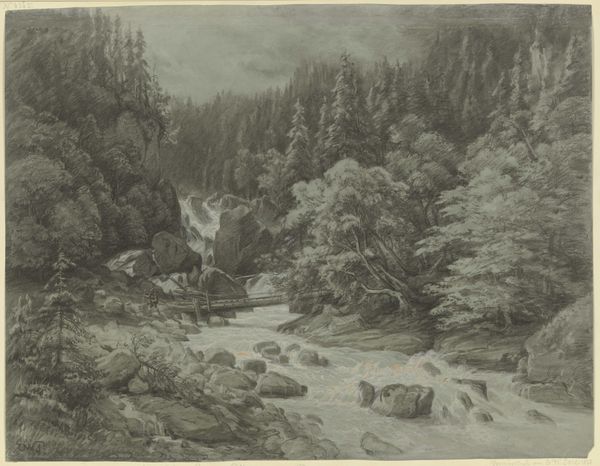
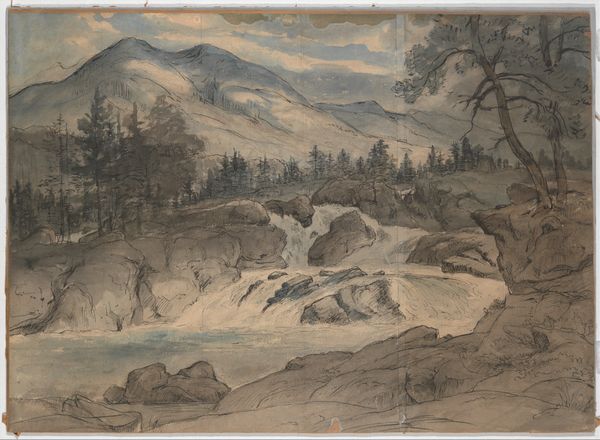
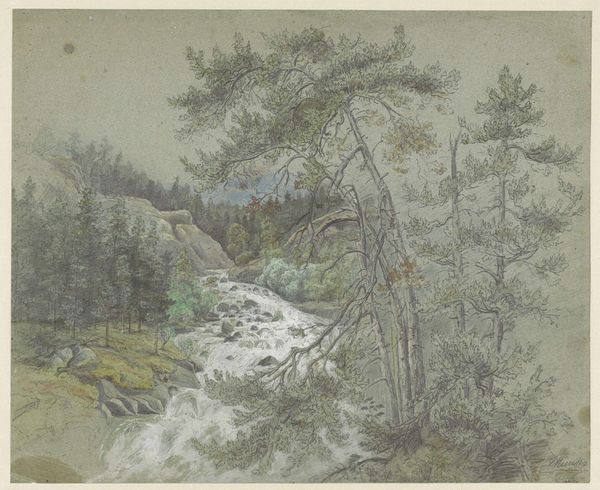
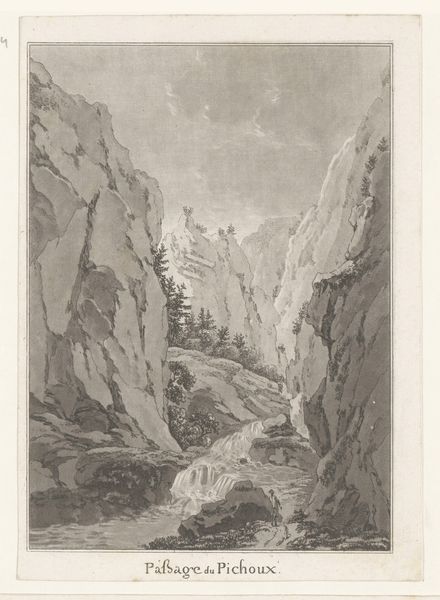
Johann Wilhelm Schirmer made this watercolor and graphite work, Mountainous Landscape with a River, sometime in the first half of the 19th century, a period marked by significant social and political upheaval in Europe. Looking at it now, we might consider the way landscapes during this time became a canvas for projecting national identity and cultural values. Schirmer, who came of age during the rise of Romanticism, here captures nature as sublime and untamed. Yet, this depiction also implicitly reinforces a particular vision of German cultural identity rooted in the beauty and strength of its natural landscapes. Consider how the small figure standing by the riverbank enhances the grand scale of nature, which was a popular theme for artists like Schirmer. Through his technical skill in watercolor, Schirmer invites viewers to connect with the emotional and spiritual qualities of nature. Schirmer’s Mountainous Landscape then, is not just a depiction of scenery; it's an exploration of cultural identity and the complex relationship between humanity and the natural world.