
Curatorial notes
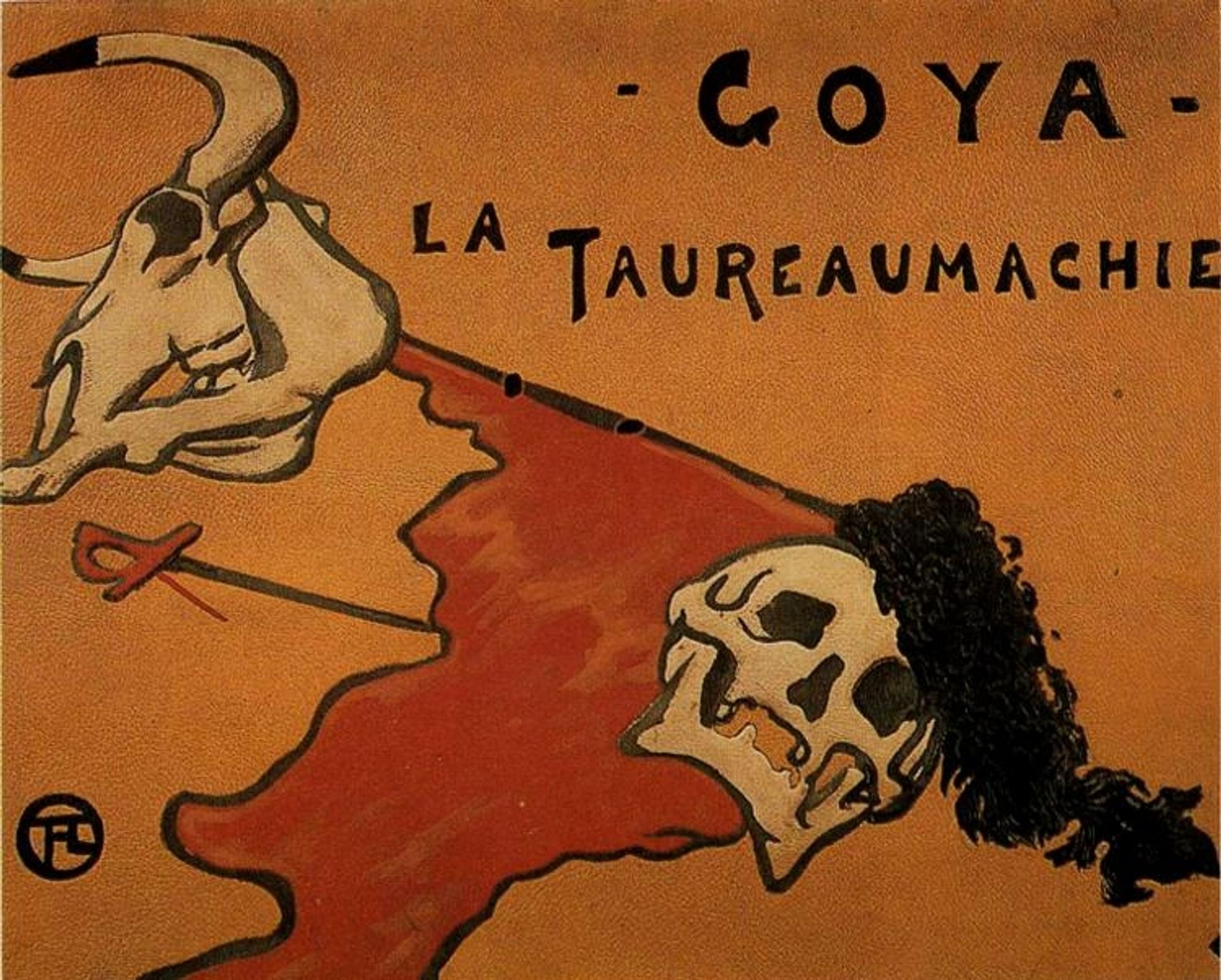
Editor: This striking lithograph is entitled *Tauromaquia* by Henri de Toulouse-Lautrec. It features skulls and blood-red colors, with the words “Goya” and “La Tauromaquia." It feels macabre and theatrical, almost like a poster for a play about death. What symbols are most apparent to you when you look at it? Curator: Instantly, I recognize the potent symbolism of the bullfight, or *Tauromaquia,* as a metaphor for the human condition: struggle, mortality, the dance between life and death. The skull is so central. Considering our collective cultural memory, dating back millennia, the skull signifies death. It's also interesting that there are *two* skulls here. Do you notice how one is adorned with what appears to be hair? Editor: Yes, that skull almost appears like it's mocking conventional depictions of beauty in portraits. And I never considered why there were two skulls! Curator: Exactly! And consider, too, that this image refers to Goya, placing Lautrec in direct conversation with the Spanish master of the macabre. Lautrec invites us to consider Goya's work and legacy in a new light. Do you see the impaled picador lance? Editor: I do. It reinforces the violence, the struggle... Curator: Precisely. It pierces both literally and figuratively, speaking to the deep anxieties present at the *fin de siècle*, a period marked by uncertainty and social upheaval. The bullfight becomes a stage for exploring humanity's confrontation with its own fragility and eventual demise, while also recalling the spectacle of human mastery over the animal world. Editor: This poster does seem so much more than just an advertisement. The use of these very specific and dark symbols transforms what I initially thought was simply a "macabre" artwork. Thank you for showing me more than what’s on the surface!