c. 1664
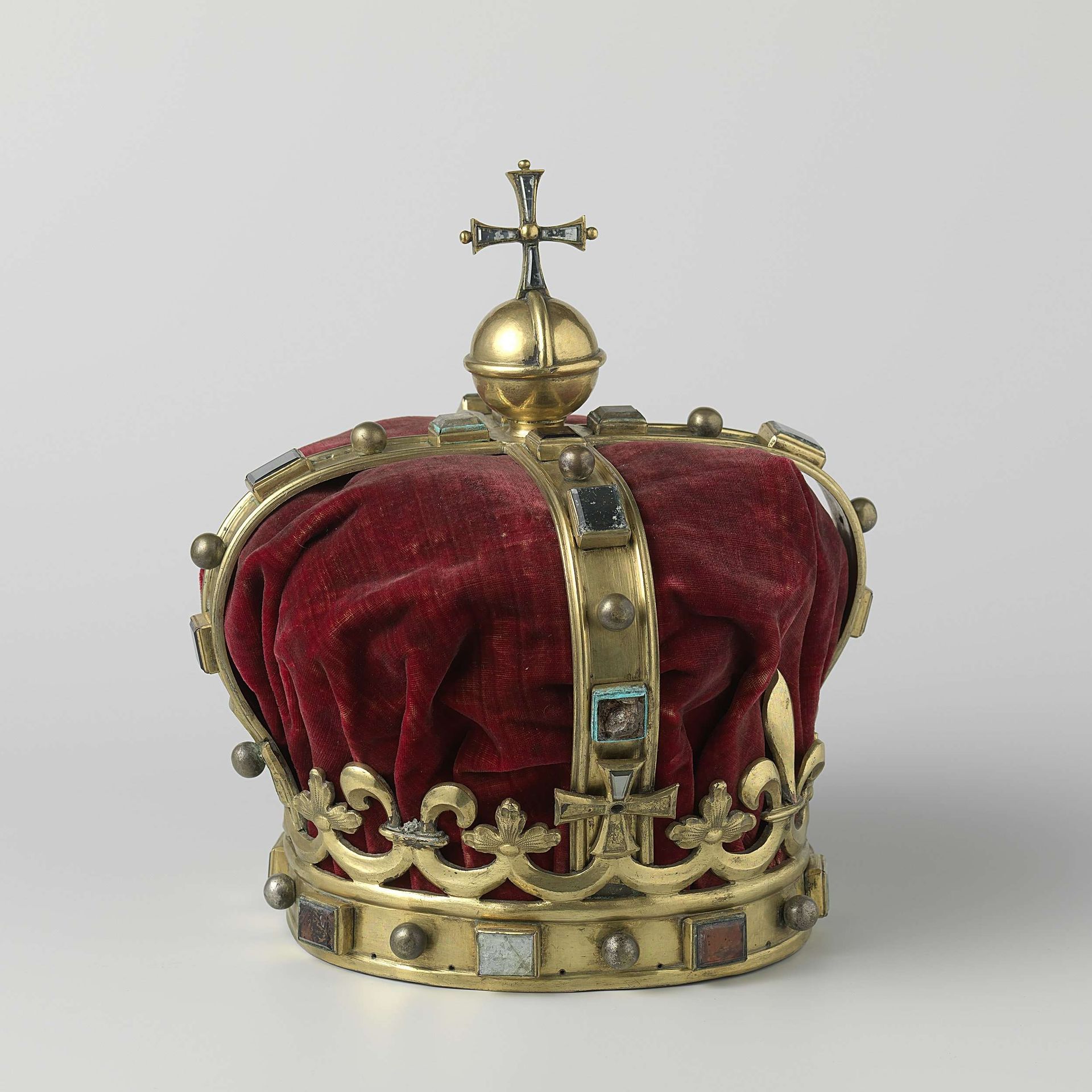
Crown for the King of Ardra

Anonymous
@anonymousLocation
RijksmuseumListen to curator's interpretation
Curatorial notes
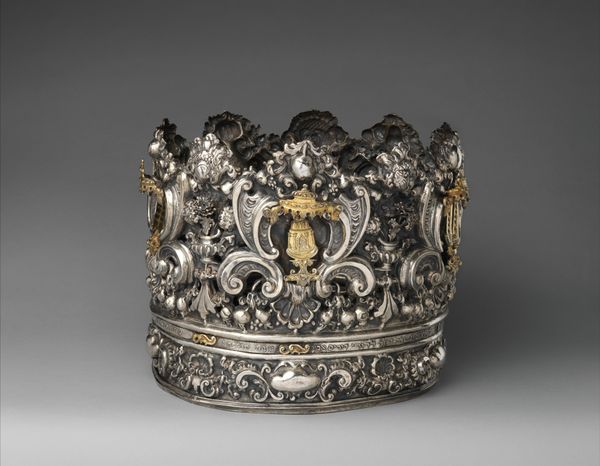
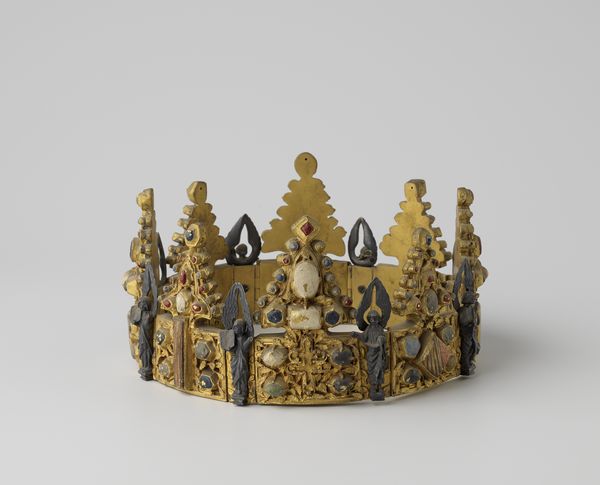
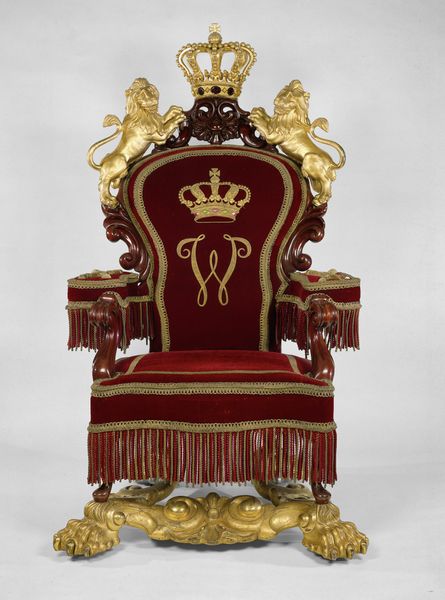
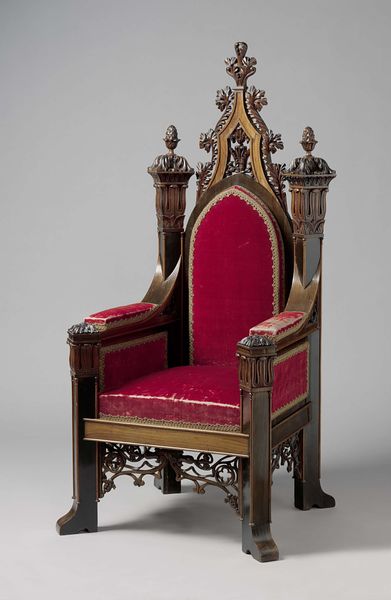
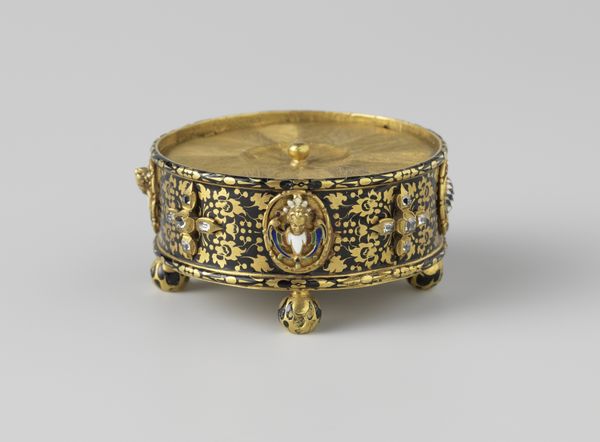
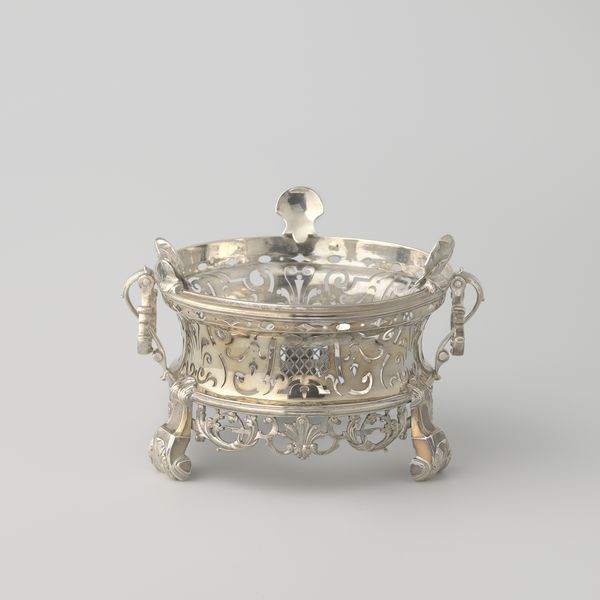
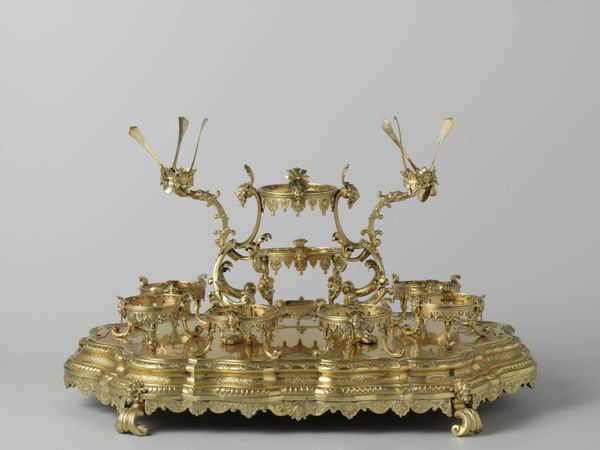
Curator: This dazzling object before us, titled "Crown for the King of Ardra," dates back to approximately 1664. Forged from brass and other metals, complemented with textile elements, it resides here at the Rijksmuseum. What is your initial read of it? Editor: Opulence. Utter opulence. The deep crimson velvet practically vibrates against the cool, precise brasswork. There’s a deliberate, almost aggressive display of wealth here. Curator: Indeed. Consider, though, how crowns traditionally function. They aren't mere symbols of earthly power, but earthly manifestations of a divinely sanctioned ruler. The cross at the apex reinforces this, suggesting not just political but also spiritual authority, anchoring the king within a cosmos of meaning. Editor: A contested cosmos, I would argue. Context matters. This was created during an intense period of colonial expansion and the transatlantic slave trade. How might that influence our reading of "divinely sanctioned rule?" It brings to mind structures of power built on systemic exploitation. Curator: That’s a crucial lens. But even within that frame, note the blend of cultural iconography. While the crown itself may be fashioned in a style echoing European regalia, it also incorporates design elements indicative of African metalworking traditions. This reveals the intersection of cultural influences and symbol-making processes. The velvet might be European, but the knowledge of brass casting is distinctly local. Editor: Absolutely. And by recognizing that entanglement, we complicate simplistic narratives of domination. The inclusion of African artistic techniques challenges any assertion of unilateral imposition; instead it speaks of appropriation, negotiation, and a resilience of cultural expression despite immense pressure. Power is rarely unidirectional. Curator: So, in your view, what does this object ultimately communicate to a modern viewer? Editor: A reminder that symbols, especially those denoting authority, are never neutral. They carry centuries of historical weight and must be constantly interrogated in the context of evolving ethical frameworks. Curator: I concur. And by understanding these material artifacts and the symbolism, and tracing back the continuity, it is essential that we comprehend cultural heritage of this time period.