About this artwork
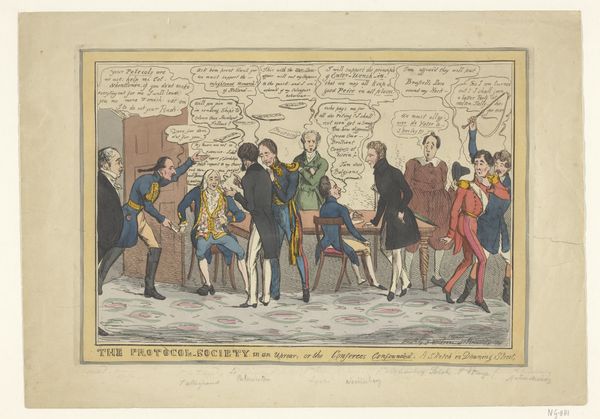
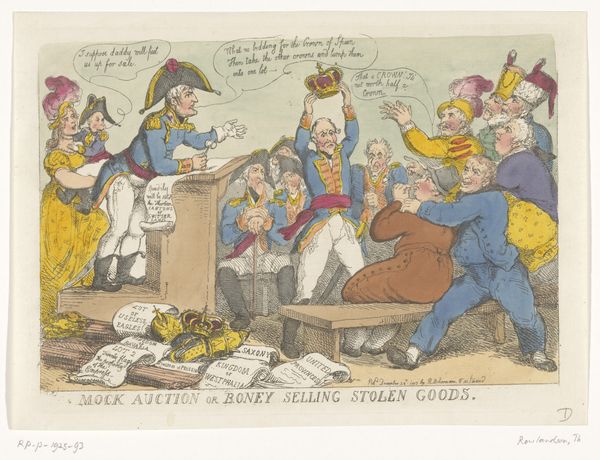
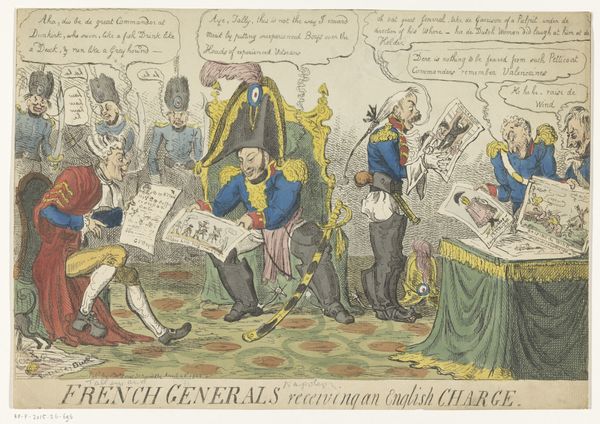
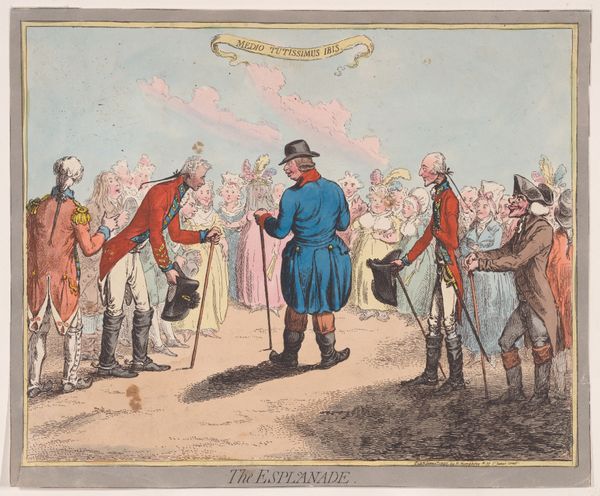
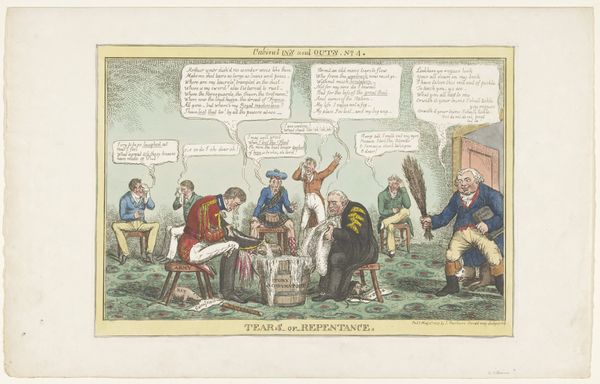
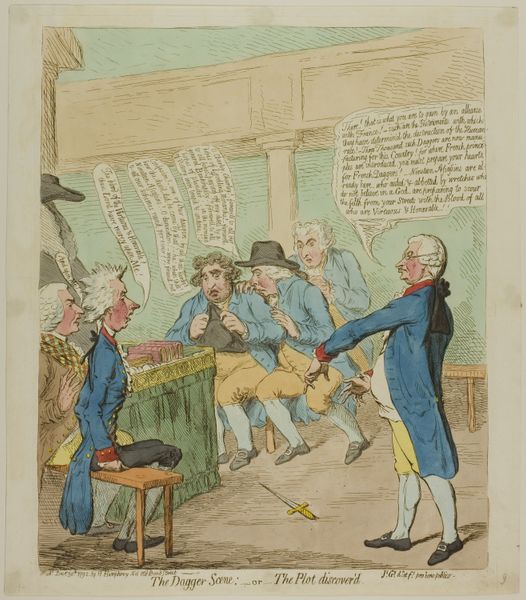
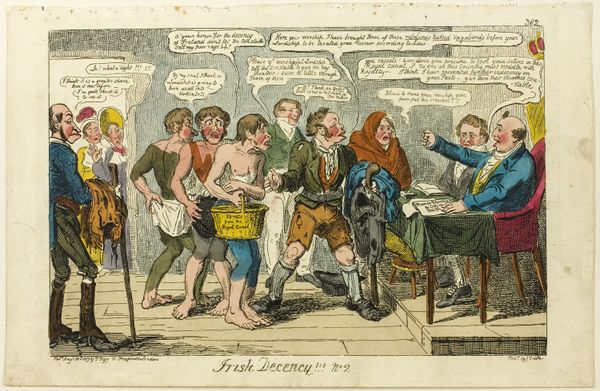
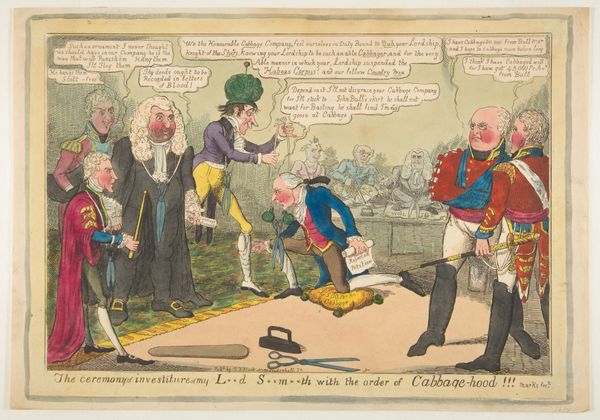
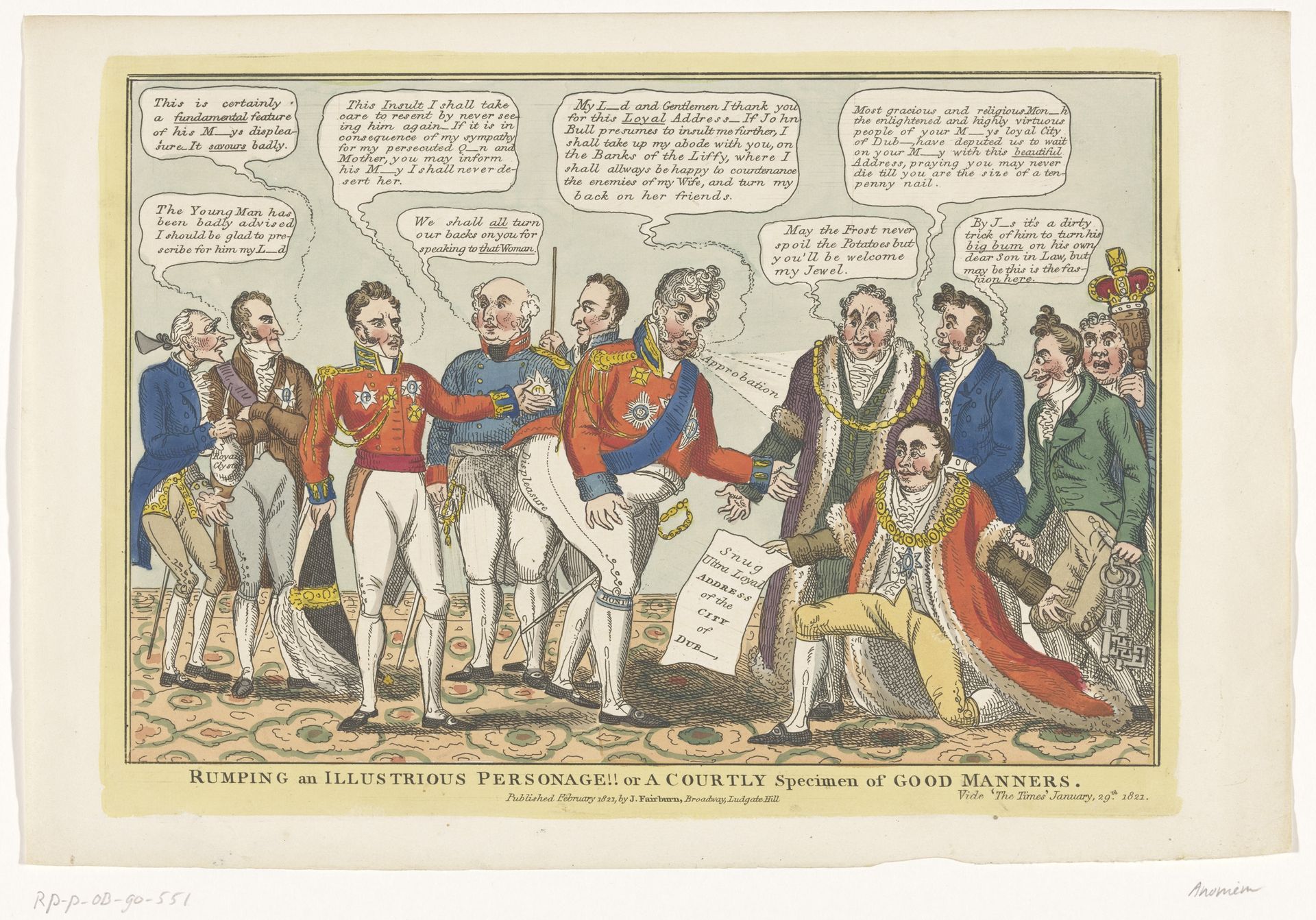
This print from 1821, made by an anonymous artist, caricatures King George IV's interaction with Irish dignitaries. The figures are adorned with symbols of authority: royal robes, ceremonial chains, and the crown, which in this instance, are employed ironically to underscore the perceived impropriety of the King's behaviour. Note the motif of kneeling. Here, it is meant to symbolize supplication and respect. Yet, if we delve into history, we see kneeling appears in numerous contexts: religious iconography to denote reverence, or, like here, political art to comment on submission. Think of the countless images throughout history where posture and gesture dictate power dynamics. Observe how, through caricature, the artist has engaged with the collective memory of royal decorum, contrasting it with the scene depicted. This approach evokes not just laughter but also a deeper, subconscious recognition of societal norms and their subversion, a dance between expectation and reality played out on the stage of public perception.

Artwork details
- Medium
- print, etching
- Dimensions
- height 250 mm, width 355 mm
- Location
- Rijksmuseum
- Copyright
- Rijks Museum: Open Domain
Tags
Comments
Share your thoughts
About this artwork
This print from 1821, made by an anonymous artist, caricatures King George IV's interaction with Irish dignitaries. The figures are adorned with symbols of authority: royal robes, ceremonial chains, and the crown, which in this instance, are employed ironically to underscore the perceived impropriety of the King's behaviour. Note the motif of kneeling. Here, it is meant to symbolize supplication and respect. Yet, if we delve into history, we see kneeling appears in numerous contexts: religious iconography to denote reverence, or, like here, political art to comment on submission. Think of the countless images throughout history where posture and gesture dictate power dynamics. Observe how, through caricature, the artist has engaged with the collective memory of royal decorum, contrasting it with the scene depicted. This approach evokes not just laughter but also a deeper, subconscious recognition of societal norms and their subversion, a dance between expectation and reality played out on the stage of public perception.
Comments
Share your thoughts