


Curatorial notes
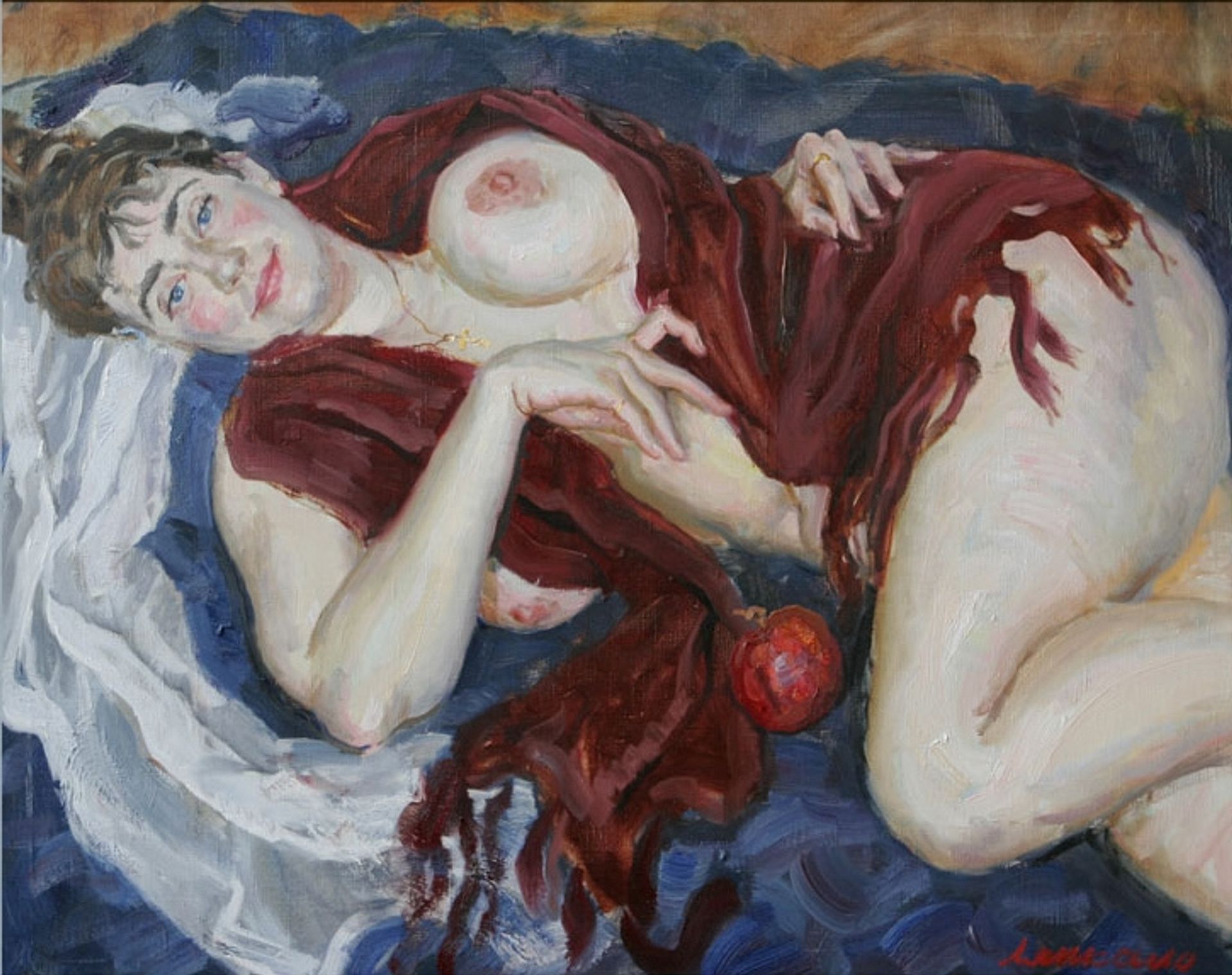
Editor: So, this is Viktor Lyapkalo's "Olga," an oil painting from 2008. The figure's gaze is immediately engaging, but the composition feels both classic and a little unsettling at the same time. What's your read on this piece? Curator: That tension between classical form and unsettling modernity is key, isn't it? Considering the historical context, the nude female figure has been a prominent subject in art for centuries. But what happens when that representation is filtered through the lens of post-Soviet expressionism? This isn't just a nude; it's a statement. Editor: A statement about what exactly? The power dynamic? The gaze? Curator: Perhaps both. The gaze, certainly. She’s meeting our gaze directly, almost challenging it. And consider the context of display: who gets to see this, where, and how does that shape the work's reception? Lyapkalo is part of a lineage of Ukrainian artists who navigate these complex questions of representation and national identity within the evolving art market. Does her slightly melancholic expression change the narrative, you think? Editor: It softens it, maybe? Or makes it more human. The inclusion of the apple… that feels like a conscious nod to classical themes and perhaps biblical origins. But is it too on the nose? Curator: The apple is indeed a loaded symbol. Here, it’s placed almost casually. The institutional forces in the art world often expect and even encourage these overt symbolic references, and they can play a part in how an artist like Lyapkalo finds visibility. We could think of it as performative symbolism. How do we, as viewers, participate in that performance? Editor: That's a great point! I hadn’t considered the performance aspect. Looking at it now, knowing the historical pressures Lyapkalo faced makes this more than just a nude study. It becomes a complex negotiation. Curator: Precisely! And that negotiation shapes the ongoing dialogue about Ukrainian art and its place within the broader cultural landscape.