1840
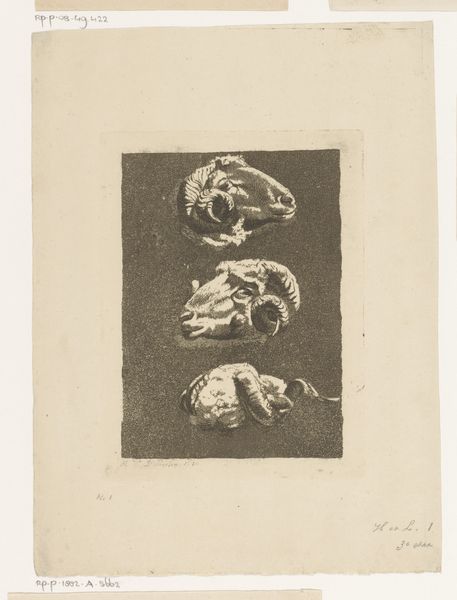
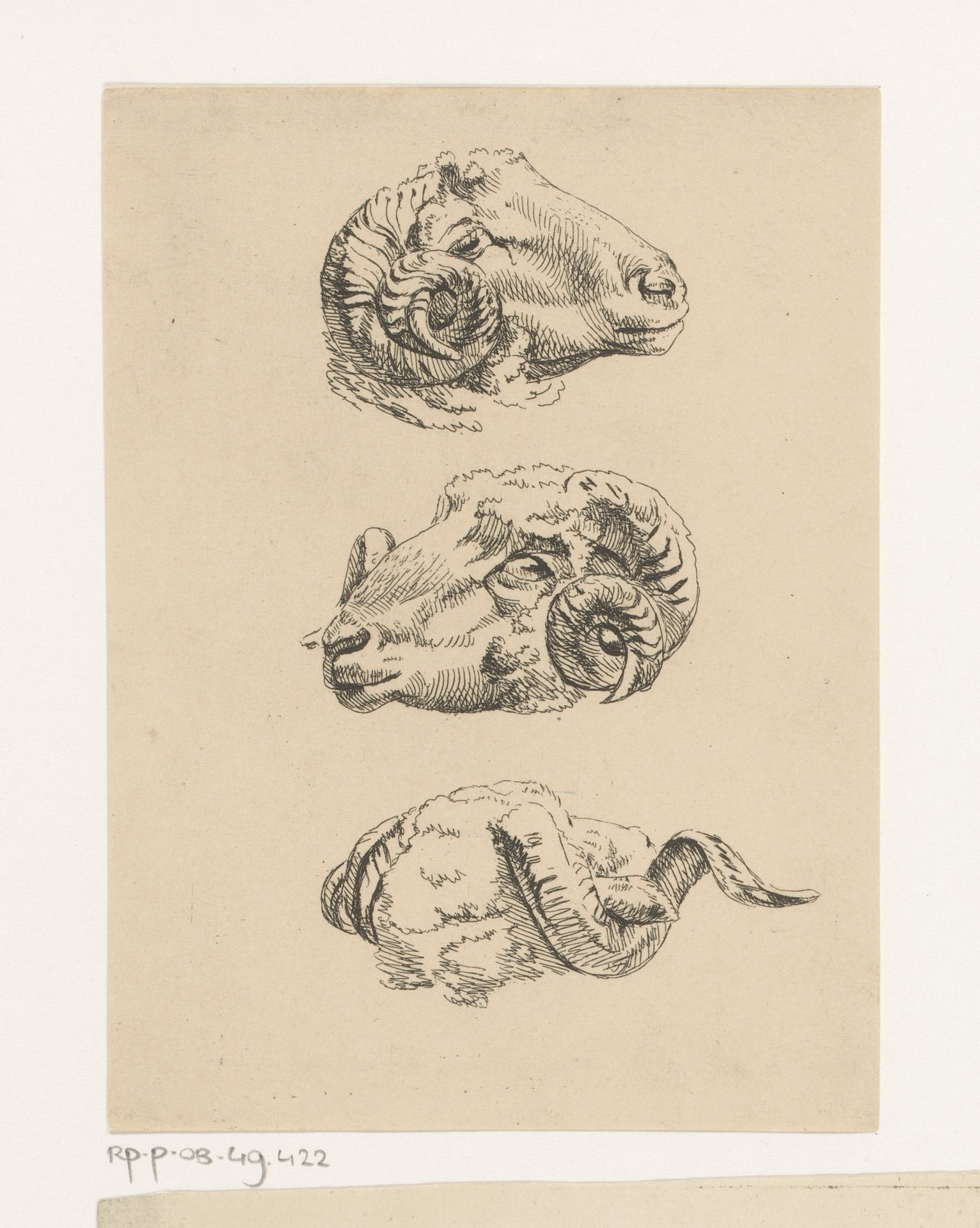
Drie ramskoppen

Hendrik Jozef Franciscus van der Poorten
1789 - 1874Location
RijksmuseumListen to curator's interpretation
Curatorial notes
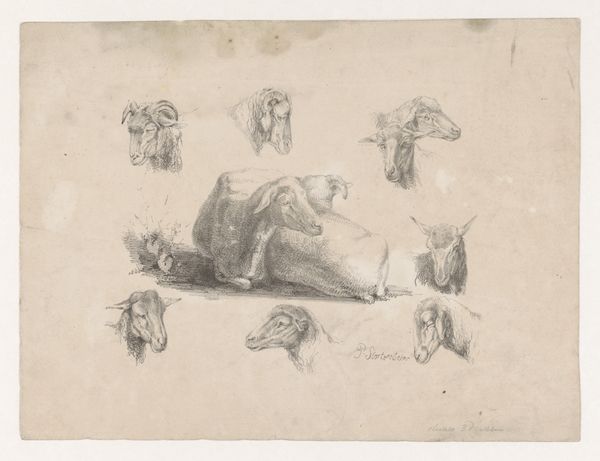
Hendrik Jozef Franciscus van der Poorten rendered these three ram heads with pen in the 18th or 19th century. The ram, an age-old symbol of virility, leadership, and sacrifice, gazes out at us. Since antiquity, the ram's head has been a potent emblem, revered from ancient Egypt to the Greeks. Think of the Egyptian god Khnum, depicted with a ram's head, symbolizing creation and fertility. Consider, too, its association with Aries, the first sign of the Zodiac, embodying new beginnings. The spiraling horns are particularly striking: a visual echo of the labyrinth, the convolutions of the mind, and perhaps even the cyclical nature of time itself. This motif resurfaces across cultures, a persistent echo in the collective unconscious. It appears in early Christian art as a symbol of sacrifice, later in heraldry as a sign of strength. Notice how the artist captures the animal's gaze, a piercing intensity. It is a profound visual reminder of the enduring power of symbols to evoke primal emotions and connect us to the depths of human experience.