1931
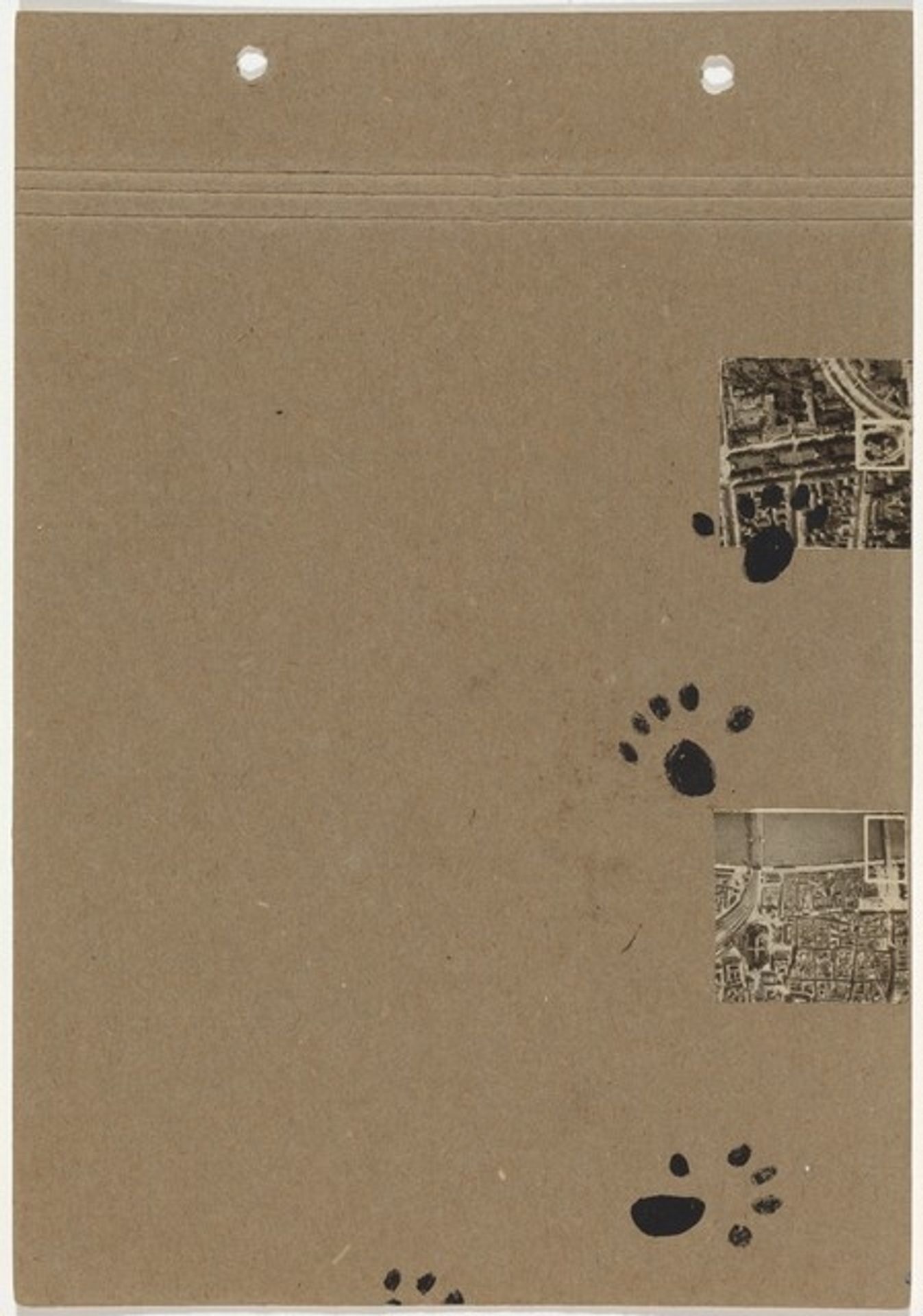
Honeymoon Album


Listen to curator's interpretation
Curatorial notes
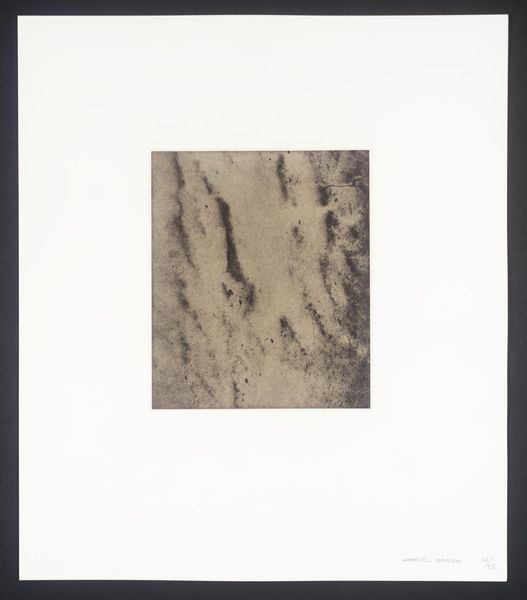
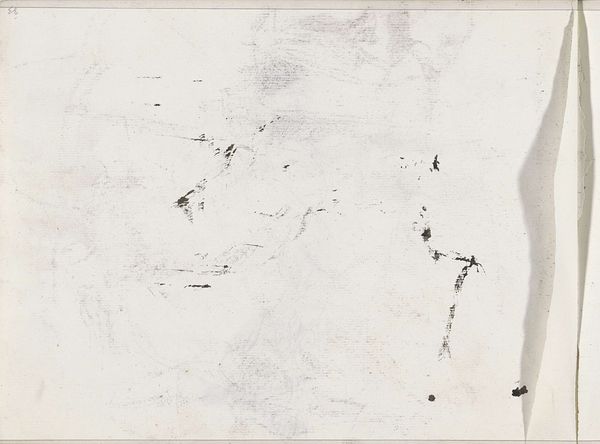
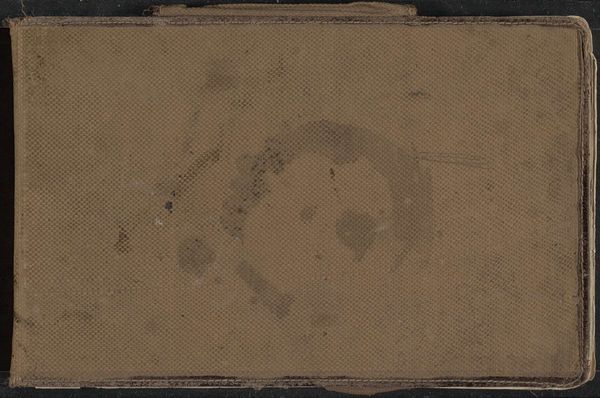
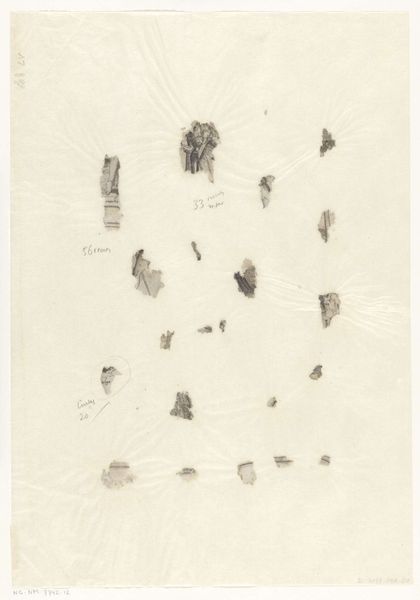
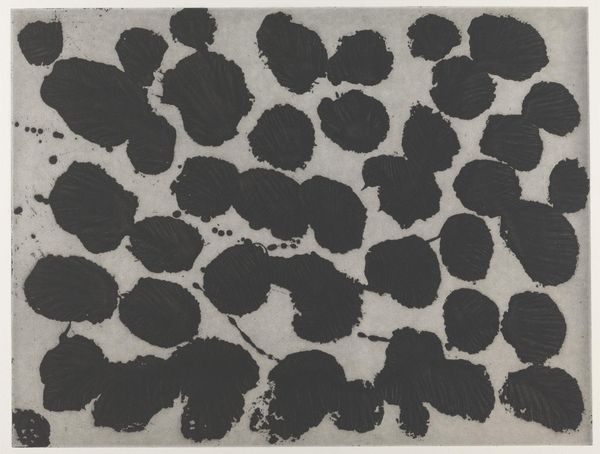
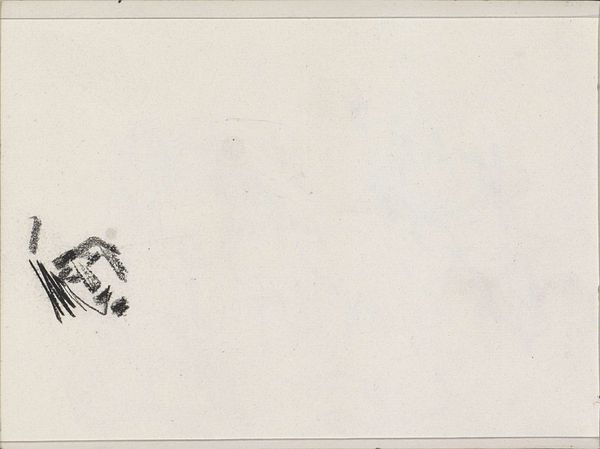
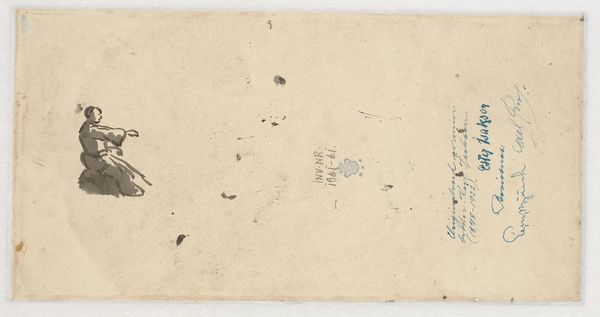
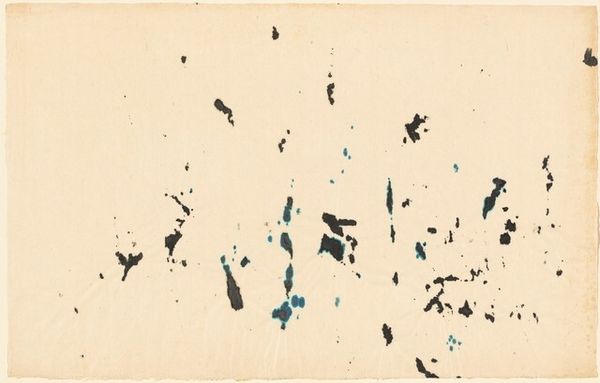
Curator: This photomontage, made in 1931, is called "Honeymoon Album" by Alexander Zhitomirsky. What's catching your eye? Editor: Immediately, it's the stark contrast. The plain brown background, almost cardboard-like, paired with these crisp, dark graphic elements. It feels deliberately unfinished, raw. Curator: It is a fascinating juxtaposition of textures and surfaces. Zhitomirsky’s utilization of assemblage in the urban street landscape evokes Constructivist principles through the use of photomontage and geometric forms. Consider how this interplay shapes meaning. Editor: For me, there's something inherently playful in that simplicity. The paw prints, almost like a child's drawing, lead you through the urban landscapes in the collage elements, as if tracking an animal's journey, making you want to reconsider urban structures as mere objects. I would suggest its material and form undermine the state propaganda context, but also transform and satirize it. Curator: A provocative point. Semiotically, these images act as signs that reference modernity. He's clearly toying with visual language. How do you read those geometric structures within the landscape? Editor: They're almost mocking the ideal of ordered urban design and control in the post-revolution USSR. Using photography, collage, and print complicates notions of authenticity. We’re not seeing a pristine vision of socialist progress, but something assembled, literally constructed with human hands. This is also evident by the way in which the edges and imperfections are intentionally revealed. It forces us to confront the making of images and ideology simultaneously. Curator: Indeed. The raw aesthetic invites a dismantling of utopian ideals. By emphasizing materials, the work underscores the manual construction of meaning itself. Editor: Which makes me wonder about the reception of this at the time, considering what was going on politically and socially... Curator: Exactly! Thinking about its materiality shifts our understanding of the relationship between production, politics, and representation within its historical moment. Editor: Yes, there's real agency shown here.