About this artwork
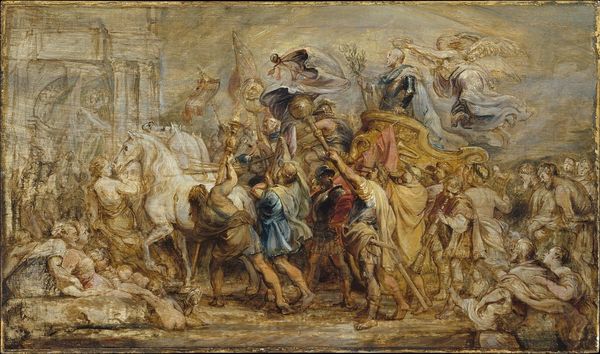
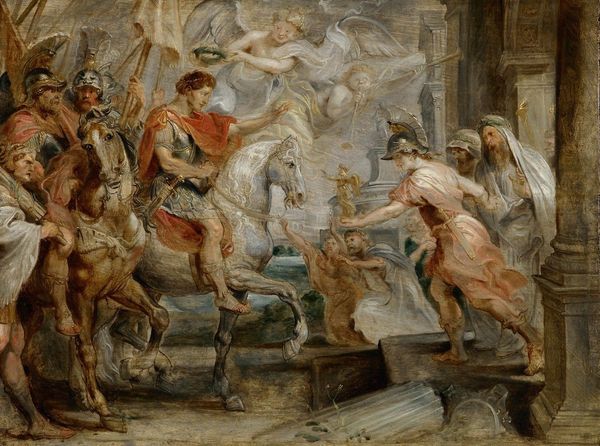
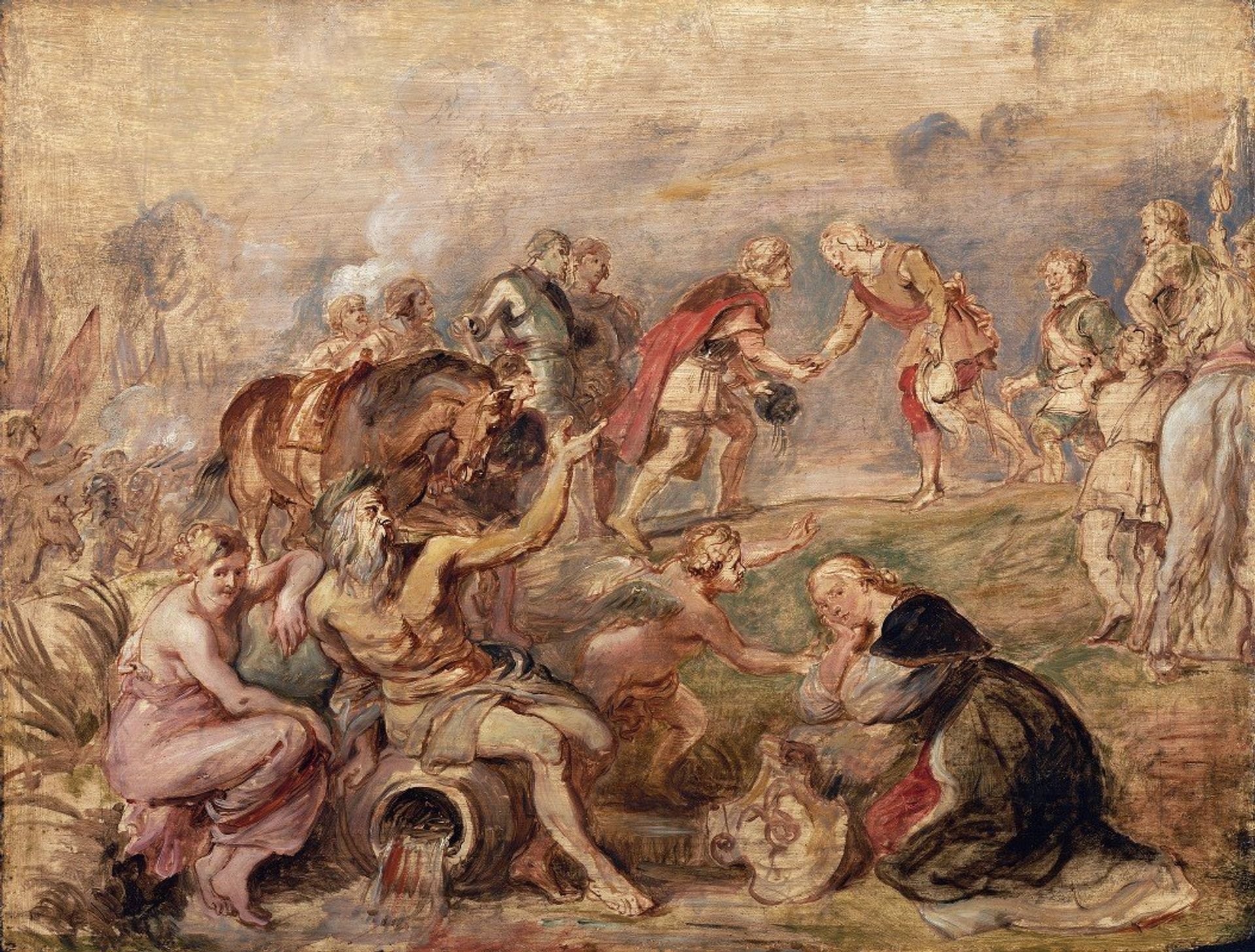
Peter Paul Rubens created this oil on canvas study to prepare for a large-scale painting celebrating the 1634 victory at Nördlingen. Rubens was not just an artist, but also a diplomat, and his understanding of political theatre shines through. But even in a sketch like this, made rapidly with loose brushwork, the materiality counts. The fluid, almost liquid quality of oil paint allowed Rubens to build up layers of color and light, creating a sense of dynamism and energy. The very act of painting becomes a performance mirroring the historical event. Consider how different the impact would be if this scene were rendered in tapestry, or marble. Oil paint allowed Rubens to capture a fleeting moment in time and enshrine it with layers of meaning. The artist, in a sense, becomes an alchemist, transforming humble materials into a potent expression of power.
Meeting of King Ferdinand of Hungary and the Cardinal-Infante Ferdinand of Spain at Nördlingen 1635

Artwork details
- Medium
- painting, oil-paint
- Copyright
- Public Domain: Artvee
Tags
figurative
baroque
painting
oil-paint
figuration
oil painting
genre-painting
history-painting
Comments
No comments
About this artwork
Peter Paul Rubens created this oil on canvas study to prepare for a large-scale painting celebrating the 1634 victory at Nördlingen. Rubens was not just an artist, but also a diplomat, and his understanding of political theatre shines through. But even in a sketch like this, made rapidly with loose brushwork, the materiality counts. The fluid, almost liquid quality of oil paint allowed Rubens to build up layers of color and light, creating a sense of dynamism and energy. The very act of painting becomes a performance mirroring the historical event. Consider how different the impact would be if this scene were rendered in tapestry, or marble. Oil paint allowed Rubens to capture a fleeting moment in time and enshrine it with layers of meaning. The artist, in a sense, becomes an alchemist, transforming humble materials into a potent expression of power.
Comments
No comments