About this artwork
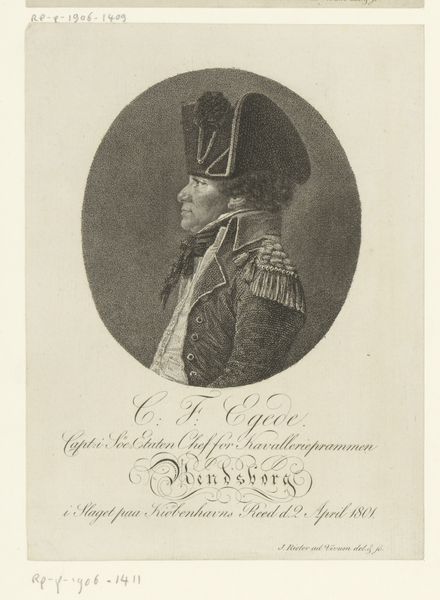
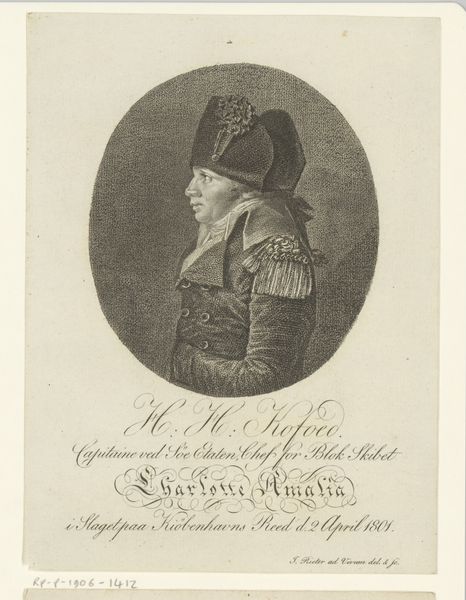
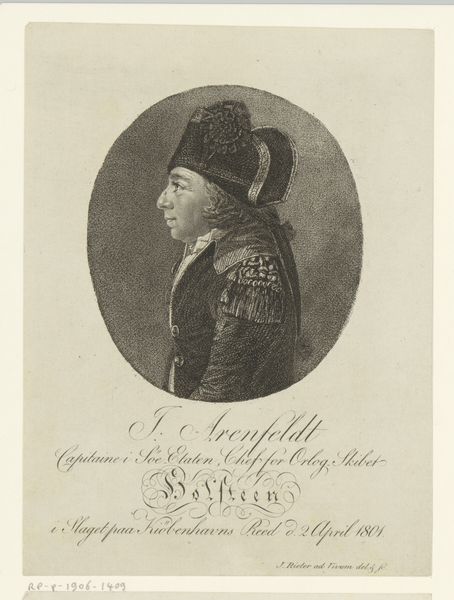
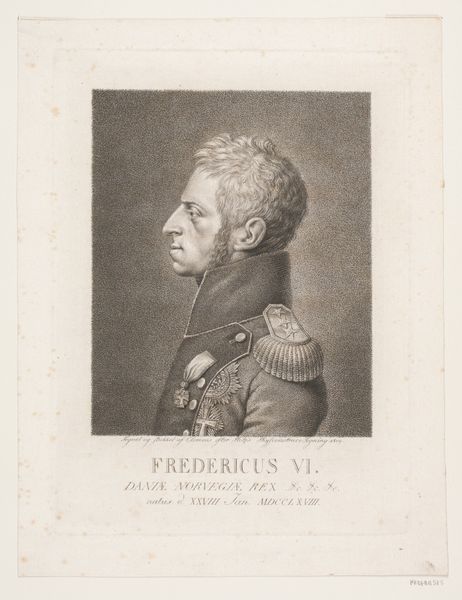
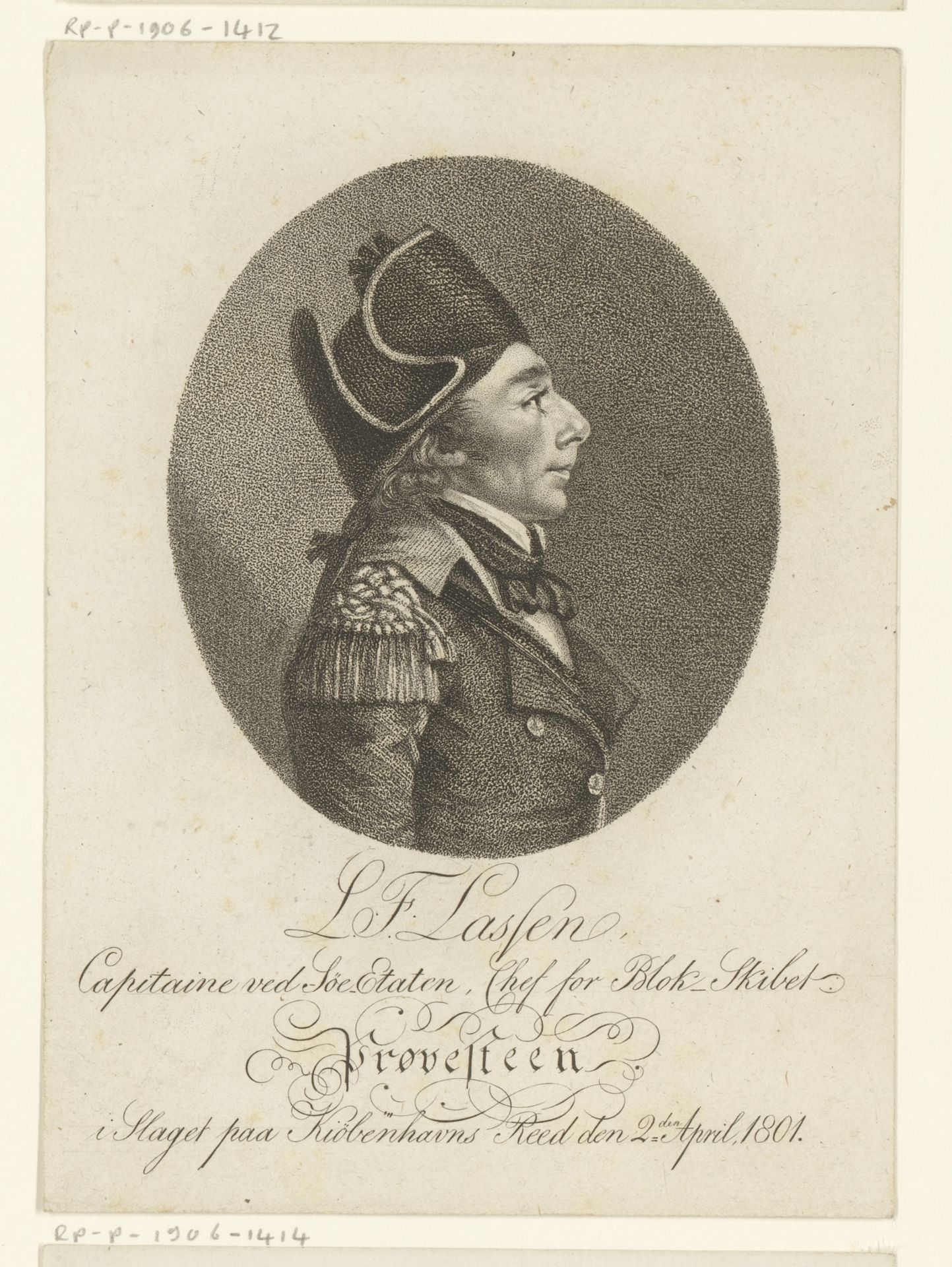
This is Johann Jakob Rieter’s monochrome portrait of L.F. Lassen, an etching on paper. The portrait captures its subject in profile within a sharply defined oval, a conventional format used to lend formality. The careful arrangement of light and shadow creates a sense of depth and volume, drawing our eye to Lassen’s strong profile. Rieter plays with textures, from the precise hatching that forms the background to the smoother tones defining Lassen's face. The uniform and hat are meticulously detailed, underscoring status. The composition centres Lassen, yet the etched inscription below roots him in a specific time and place; Copenhagen, April 25, 1801. The very act of portraying Lassen elevates him beyond the everyday, transforming him into a figure worthy of remembrance. The clean lines and balanced composition embody a sense of order and control, reflecting the values of its time. Through these formal elements, Rieter crafts not just a likeness, but an idea of authority.

Artwork details
- Medium
- engraving
- Dimensions
- width 180 mm, height 136 mm
- Location
- Rijksmuseum
- Copyright
- Rijks Museum: Open Domain
Tags
Comments
Share your thoughts
About this artwork
This is Johann Jakob Rieter’s monochrome portrait of L.F. Lassen, an etching on paper. The portrait captures its subject in profile within a sharply defined oval, a conventional format used to lend formality. The careful arrangement of light and shadow creates a sense of depth and volume, drawing our eye to Lassen’s strong profile. Rieter plays with textures, from the precise hatching that forms the background to the smoother tones defining Lassen's face. The uniform and hat are meticulously detailed, underscoring status. The composition centres Lassen, yet the etched inscription below roots him in a specific time and place; Copenhagen, April 25, 1801. The very act of portraying Lassen elevates him beyond the everyday, transforming him into a figure worthy of remembrance. The clean lines and balanced composition embody a sense of order and control, reflecting the values of its time. Through these formal elements, Rieter crafts not just a likeness, but an idea of authority.
Comments
Share your thoughts