1933
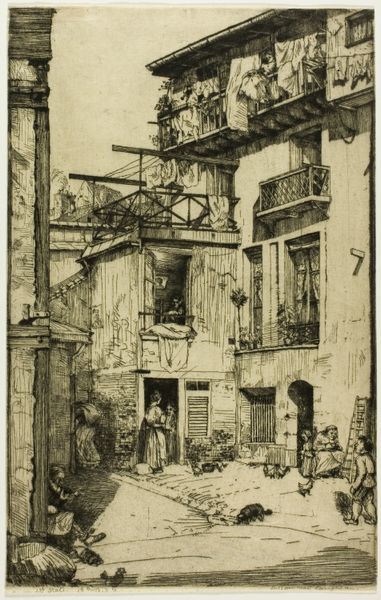
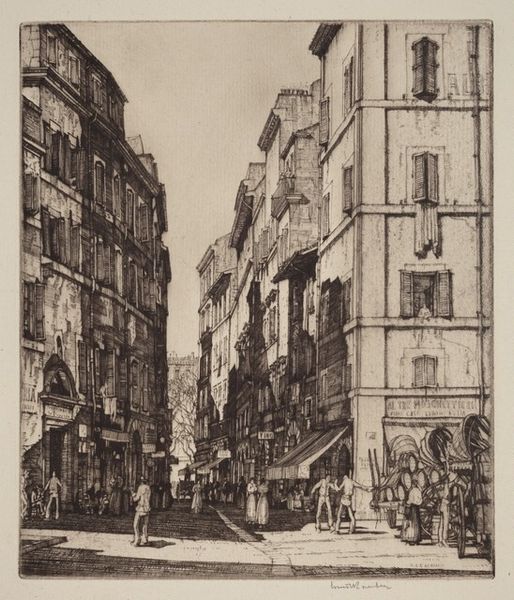
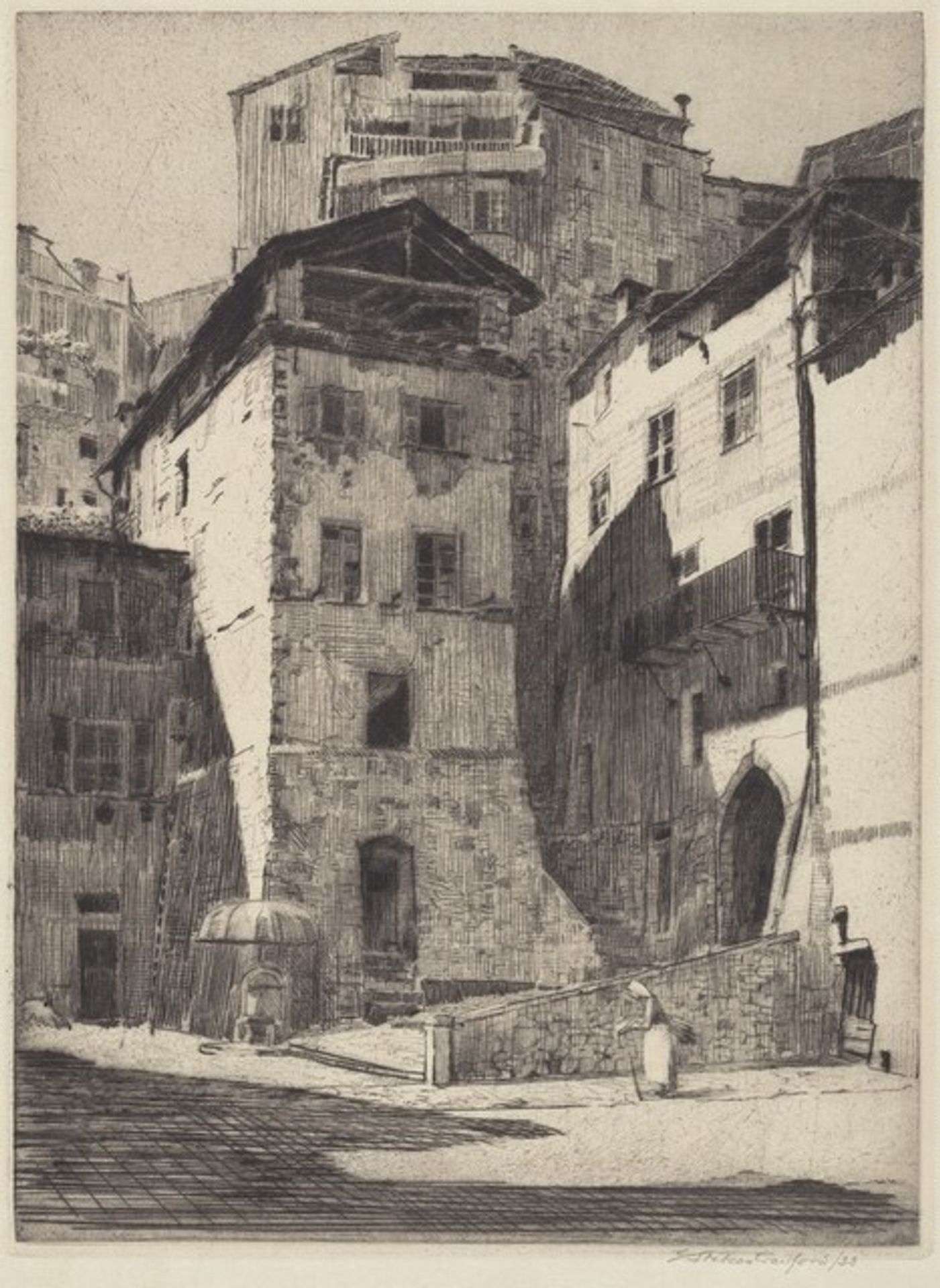
Saorqe


Listen to curator's interpretation
Curatorial notes
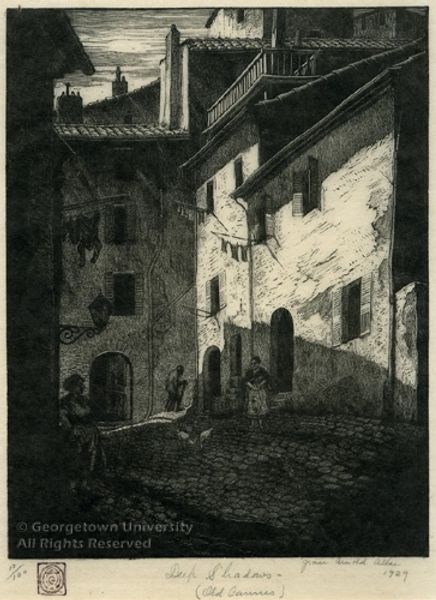
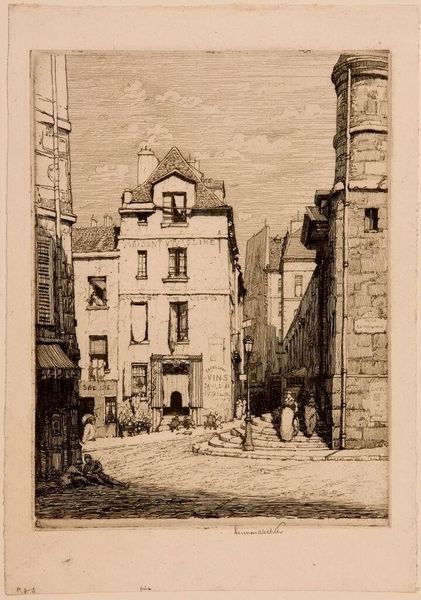
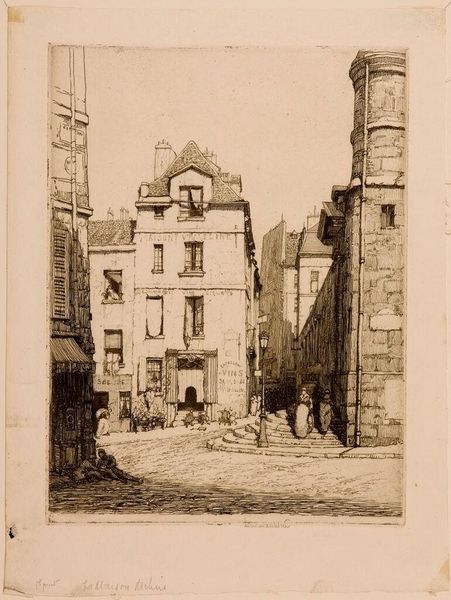
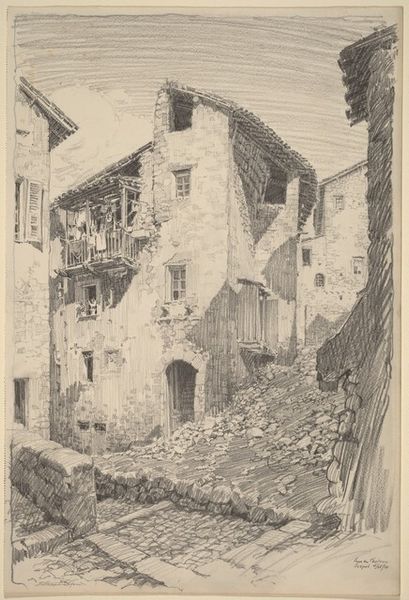
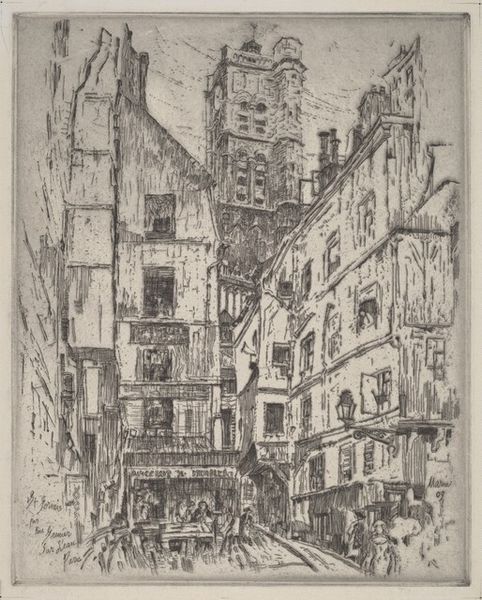
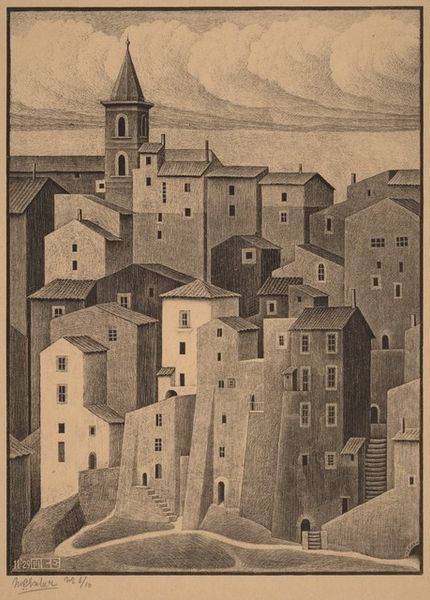
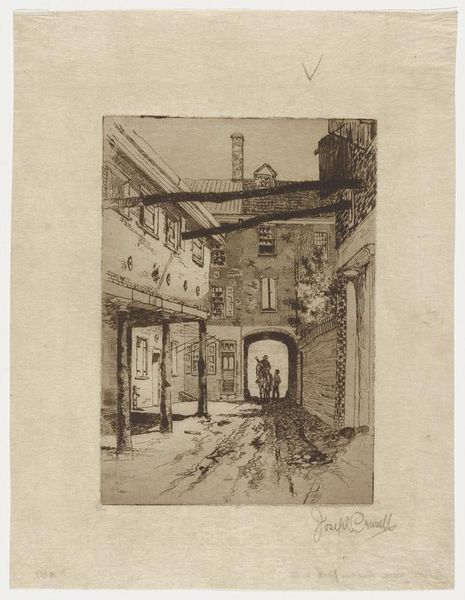
Earl Stetson Crawford made this etching, titled Saorqe, with black ink on white paper. It looks to me like the product of a deep looking and a careful mapping of the world onto a surface. The etching is mostly made up of vertical lines in different lengths and densities, giving the buildings a tangible texture. Light and shadow play across the surfaces, describing every bump and crevice. Look how the horizontal lines on the street draw you into the space. There’s a real sense of depth. Check out the building on the left, how the artist has captured the rough texture of the stone with a combination of short vertical lines, broken horizontal marks, and cross-hatching. It's like he's building the image up from the ground, mark by mark. Crawford’s work has echoes of Piranesi, who made architectural prints in the 1700’s, but Crawford brings a modern eye to bear. Instead of a grand vista, he shows us an intimate corner of the city, full of quiet life and history.