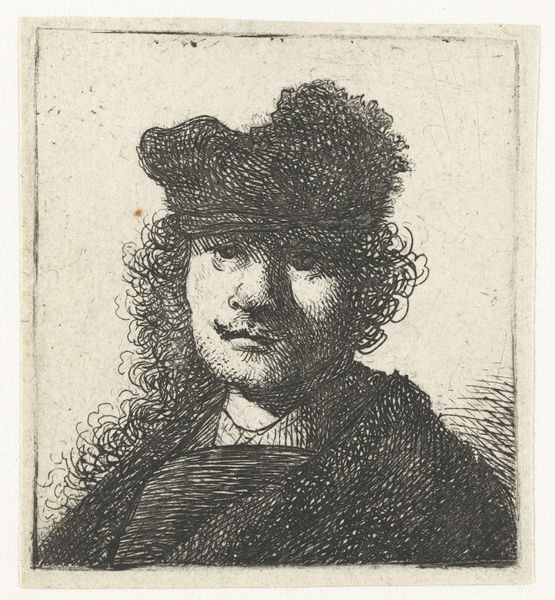
print, etching
#
portrait
#
self-portrait
#
baroque
#
dutch-golden-age
# print
#
etching
#
figuration
#
line
#
portrait drawing
Dimensions: height 50 mm, width 42 mm
Copyright: Rijks Museum: Open Domain
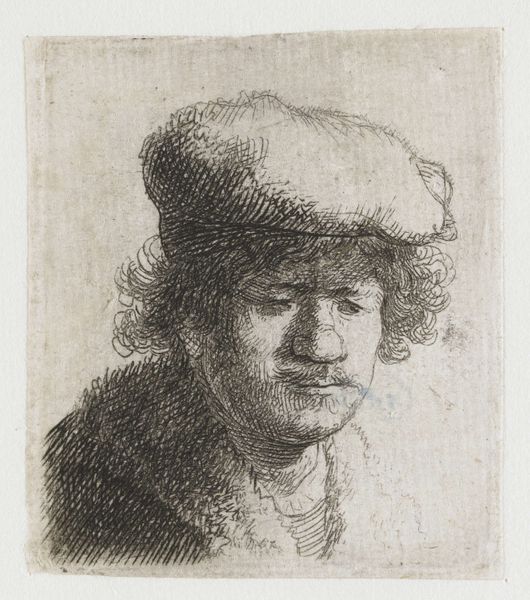
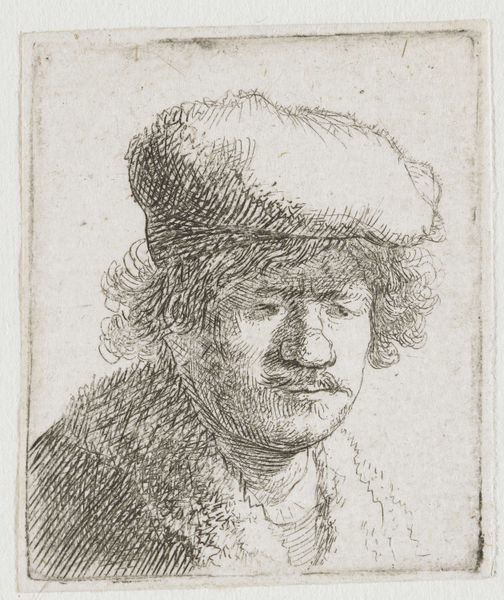
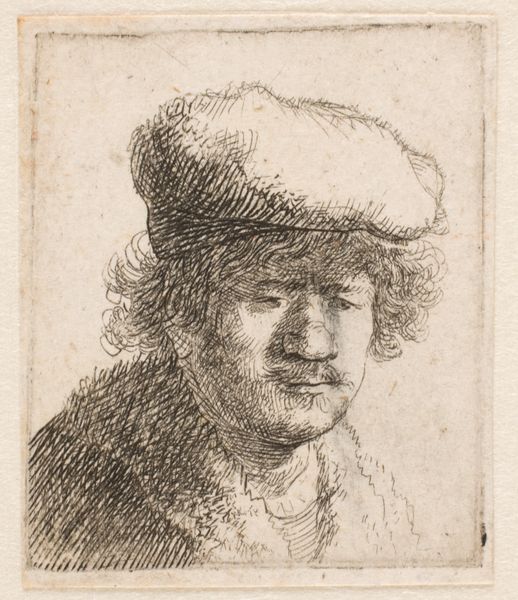
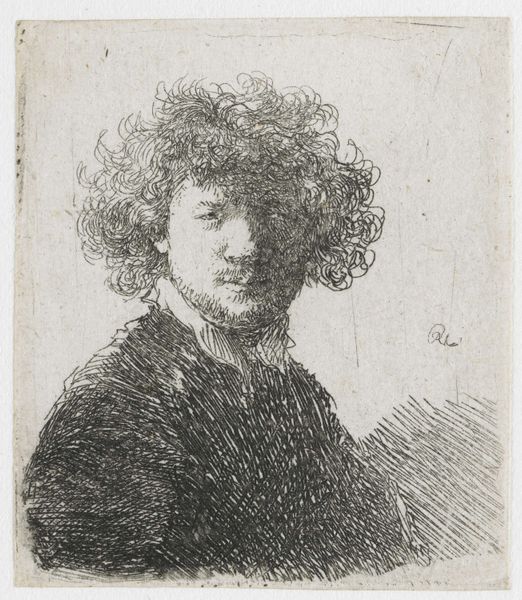
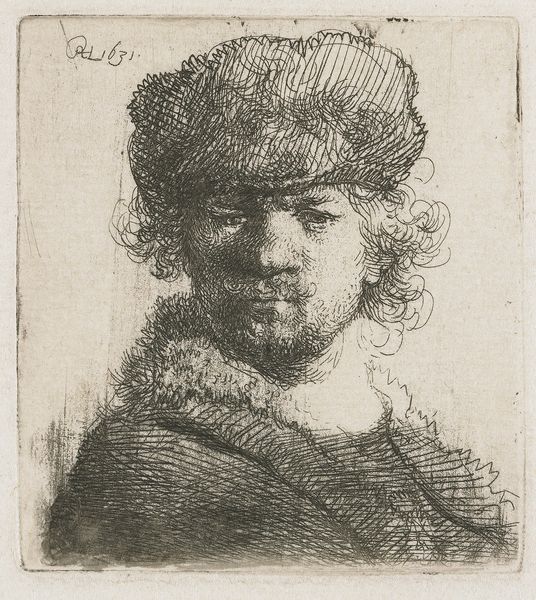
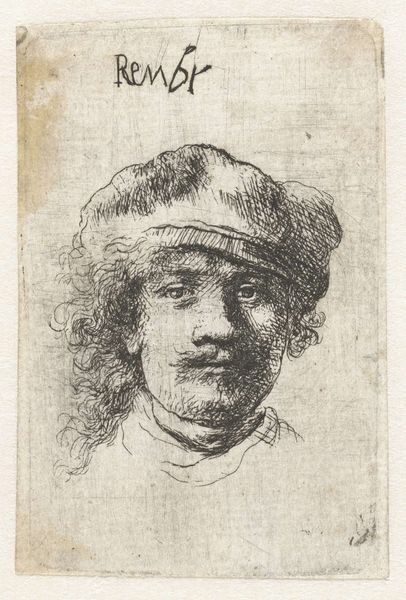
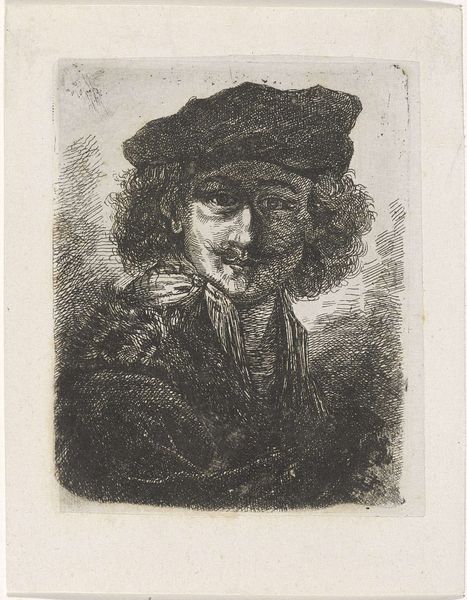
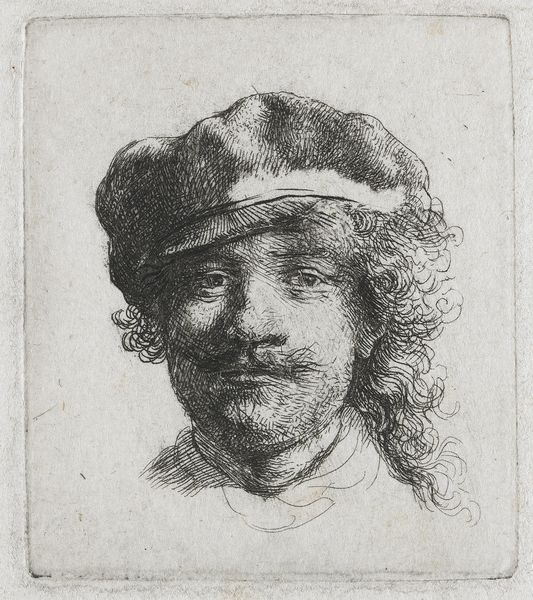
Editor: Here we have Rembrandt van Rijn's "Self-portrait with cap pulled forward," etched around 1630. It's a very small print. I’m struck by how immediate it feels, almost like a quick sketch. What do you see in this piece, Professor? Curator: It's a seemingly informal etching, yes, but consider its context. Self-portraits, then, were strategic acts of self-definition for artists. Rembrandt isn't just showing us his face. The slightly askew cap, the shadowy gaze – what does that communicate about his persona, especially for a young artist trying to establish himself in the competitive Dutch art world? How might the idea of performance play into this “quick sketch”? Editor: So, he's deliberately constructing an image? I guess the cap could signal a certain… artistic freedom? Maybe even defiance? Curator: Precisely! Think about the social hierarchies of the time. Clothing was a powerful signifier of class and status. Rembrandt is subtly playing with these visual codes. What do you make of the fact it's a print, designed to be reproduced and distributed? How does this strategy differ from, say, a unique oil painting that could be exclusively acquired by wealthy patrons? Editor: Interesting… Prints are more accessible. This makes it an affordable form to collect self-image. Was he trying to circumvent the traditional patronage system? Maybe promote himself to a wider audience? Curator: Exactly. Rembrandt understood the power of disseminating his image. The self-portrait became a tool for self-promotion and shaping his artistic identity beyond the confines of the elite art market. This etching represents the artist in a unique and arguably revolutionary fashion by capitalizing on identity as something to be shared. Editor: Wow, I never considered that an etching could have so much…agency! Thanks, I learned so much about the political potential of portraiture. Curator: My pleasure! I find his conscious manipulation of image incredibly relevant, echoing in contemporary practices of image creation and identity performance even today.
Comments
No comments
Be the first to comment and join the conversation on the ultimate creative platform.
 Collect
 React
React Comment
More like this