About this artwork
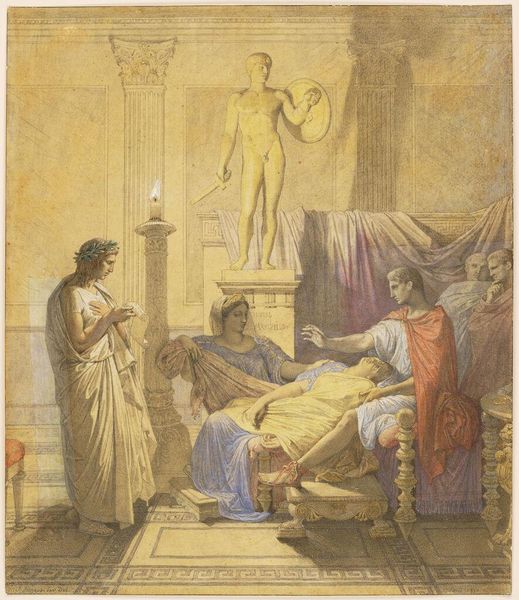
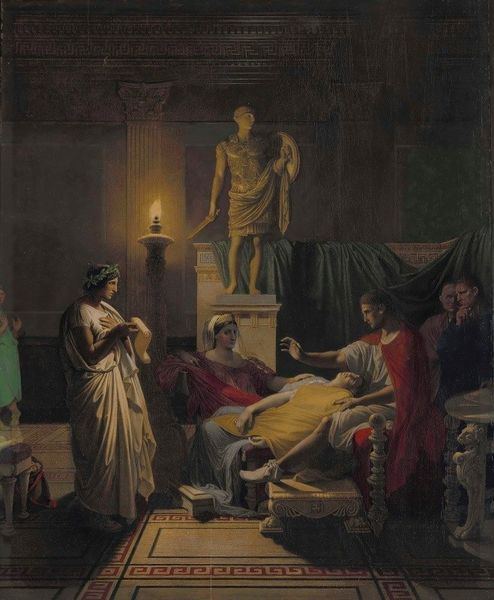
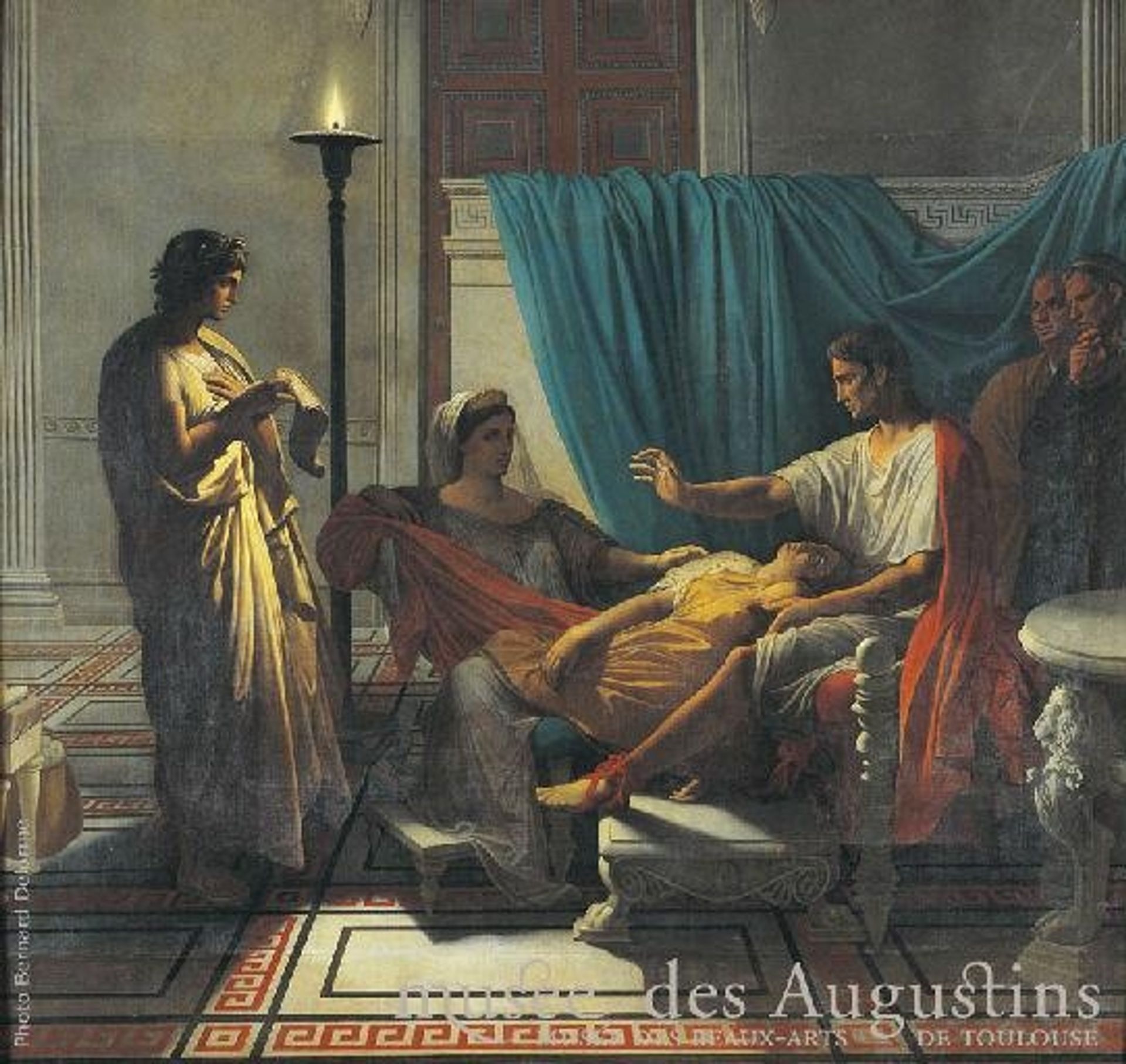
Jean Auguste Dominique Ingres painted “Tu Marcellus Eris” with oil on canvas sometime in the 1810’s. Ingres’s work reflects the values of Neoclassicism. He often drew inspiration from classical literature and history. Here, Ingres depicts a scene from Virgil's Aeneid, where the poet foretells the tragic death of Marcellus, the nephew and heir of Emperor Augustus. The painting is heavy with a sense of loss. Marcellus lies pale and lifeless. The figures around him express grief and despair. This scene isn't just a historical depiction; it's a meditation on mortality and the fragility of life. By choosing this subject, Ingres invites us to contemplate the personal tragedies that underlie historical events, and the human cost of political power and ambition. The pallid body of Marcellus serves as a focal point, inviting emotional connection with themes of loss and mourning. Through the classical subject matter Ingres encourages reflection on the universal human experience of grief and the transient nature of life.
Tu Marcellus Eris
1820

Jean Auguste Dominique Ingres
1780 - 1867Location
Musée des Augustins, Toulouse, FranceArtwork details
- Medium
- painting, oil-paint
- Dimensions
- 323 x 304 cm
- Location
- Musée des Augustins, Toulouse, France
- Copyright
- Public domain
Tags
Comments
Share your thoughts
About this artwork
Jean Auguste Dominique Ingres painted “Tu Marcellus Eris” with oil on canvas sometime in the 1810’s. Ingres’s work reflects the values of Neoclassicism. He often drew inspiration from classical literature and history. Here, Ingres depicts a scene from Virgil's Aeneid, where the poet foretells the tragic death of Marcellus, the nephew and heir of Emperor Augustus. The painting is heavy with a sense of loss. Marcellus lies pale and lifeless. The figures around him express grief and despair. This scene isn't just a historical depiction; it's a meditation on mortality and the fragility of life. By choosing this subject, Ingres invites us to contemplate the personal tragedies that underlie historical events, and the human cost of political power and ambition. The pallid body of Marcellus serves as a focal point, inviting emotional connection with themes of loss and mourning. Through the classical subject matter Ingres encourages reflection on the universal human experience of grief and the transient nature of life.
Comments
Share your thoughts