Copyright: Public Domain: Artvee
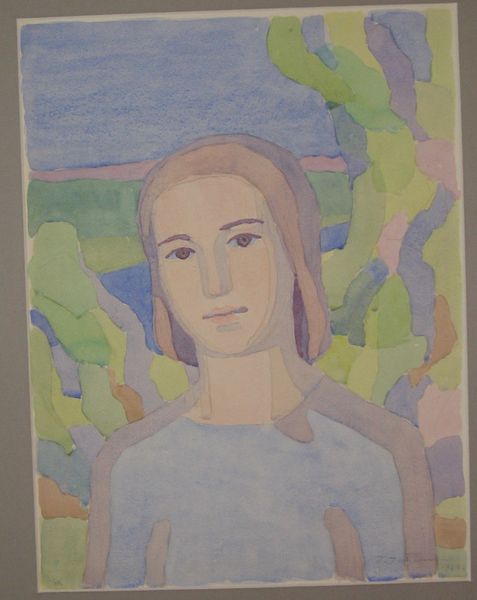
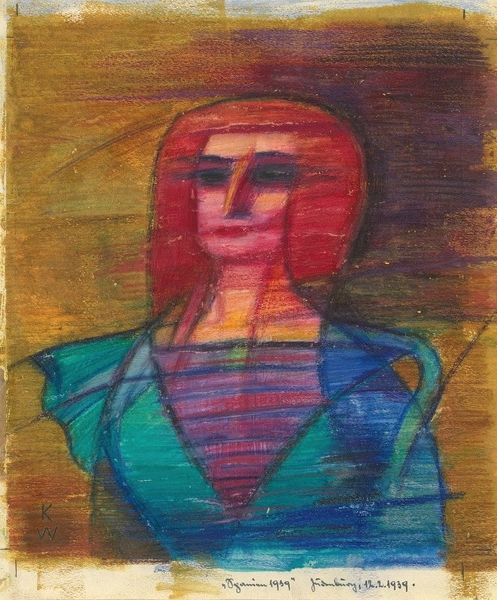
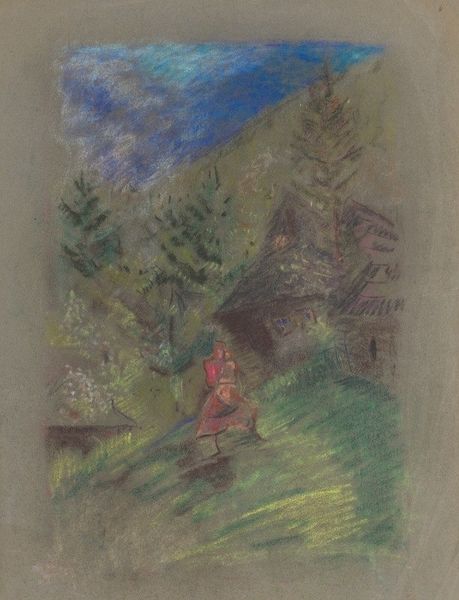
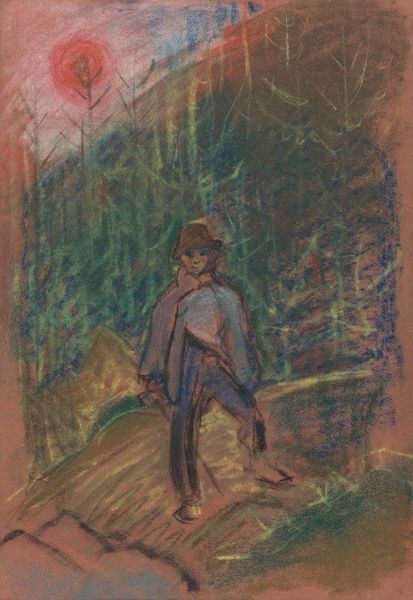
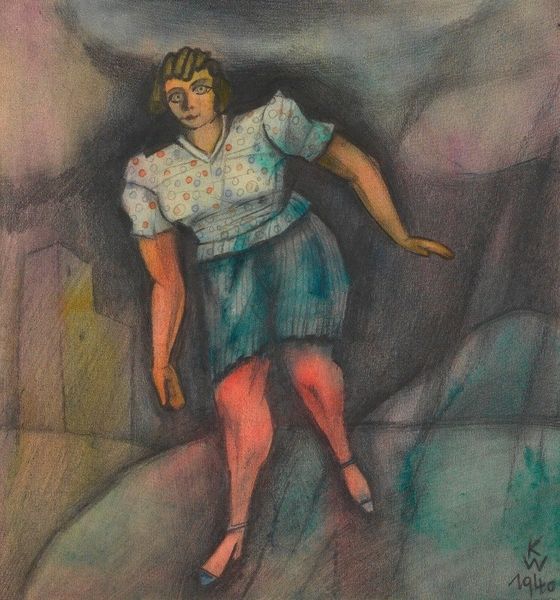
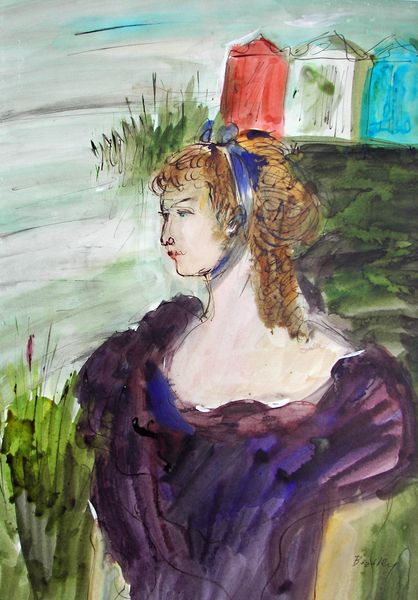
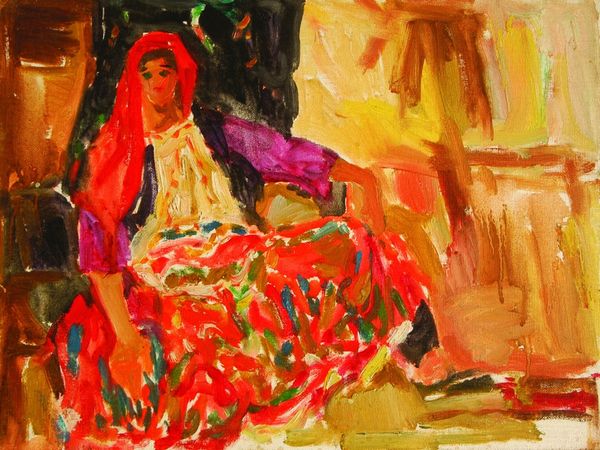
Editor: This pastel landscape, titled "Ohne V," from around 1940 by Karl Wiener, presents a woman against a somewhat stylized landscape. The palette is interesting; a kind of subdued rainbow. The figure looks pensive, almost melancholic. How do you interpret this work? Curator: It’s interesting how the landscape seems to mirror the woman's internal state. The colors are indeed subdued, almost dreamlike. Notice the flattening of the pictorial space; the woman seems superimposed rather than integrated. Consider how the symbols, like the mountains, resonate across cultures – endurance, challenge, even spiritual elevation. Do you see any other elements that stand out to you? Editor: The dress feels odd to me, in that setting. Like she’s dressed for something more formal than a walk in the mountains. Curator: Exactly! It’s a kind of dissonance. What could that suggest to you, culturally? The figure’s placement almost as an icon reminds us of figures in devotional paintings of the past. Maybe it reflects a cultural longing or tension, using recognizable symbols to evoke a complex emotional landscape. There's a certain intentional naivety, perhaps reflective of anxieties during wartime. Editor: So the artist uses familiar visual cues to tap into deeper, shared feelings and historical anxieties? Curator: Precisely. These symbolic landscapes often reveal a desire to find meaning and continuity during turbulent times. I think this makes us think about how individual experiences connect with collective history. Editor: I hadn't thought about the weight these kinds of images might carry or their cultural memory. Thanks for pointing that out. Curator: It's these subtle details which amplify art historical perspective.
Comments
No comments
Be the first to comment and join the conversation on the ultimate creative platform.
 React
React Comment