

About this artwork
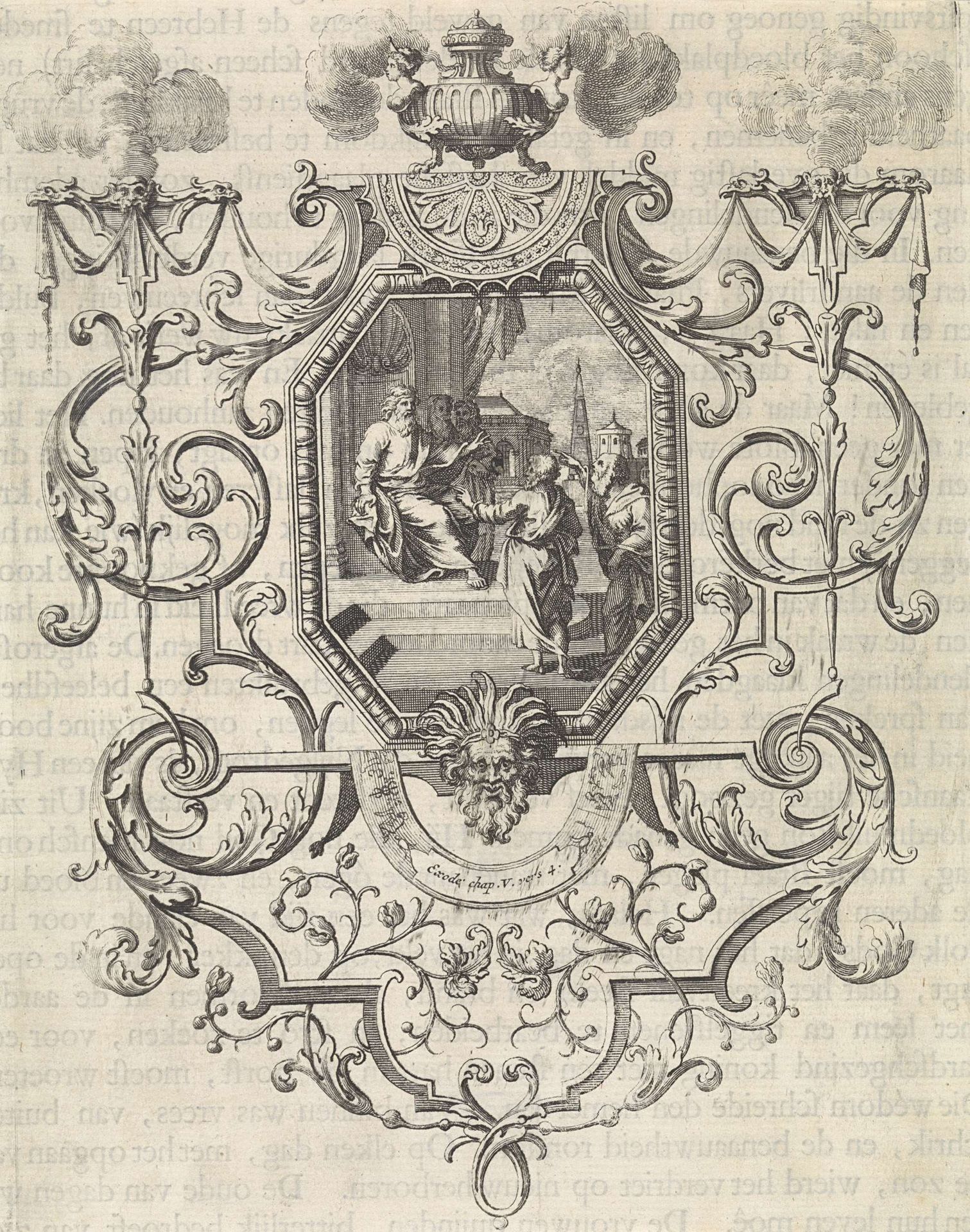
Editor: This etching, "Moses and Aaron before Pharaoh," was created between 1683 and 1733 by Bernard Picart. It's incredibly detailed and framed by baroque ornamentation, making the central scene feel almost like a play within a play. What symbolic layers am I missing here? Curator: Look closer. Beyond the immediate narrative, consider what the visual language communicates. Note the power dynamic emphasized by Pharaoh enthroned above Moses and Aaron, but then observe their unwavering gazes. What does this contrast suggest to you about the psychological weight of belief versus earthly authority? Editor: So, it's not just about who *appears* to be in charge? Is the frame itself significant? Curator: Precisely! The ornate frame, typical of Baroque sensibilities, could represent the opulence and potential entrapment of Pharaoh's court, while the central scene highlights the enduring power of faith. Notice, too, how the frame incorporates grotesque masks, echoing perhaps the moral ugliness hidden beneath Pharaoh's grandeur? What sort of dialogue emerges for you from this layering? Editor: I see… it's a battle of wills visually encoded. The detailed frame, the composition—it's all speaking to the tension and impending conflict. It goes beyond a simple illustration of a biblical scene. Curator: And beyond the specifics of this scene, the broader theme is about the perennial clash between spiritual conviction and worldly power. Consider how many visual narratives repeat this archetype across cultures and centuries. Editor: That makes the piece feel very relevant even now. Thanks, I see so much more in it now! Curator: The visual echoes of cultural memory are strong, aren't they? Every element contributes to the story.

Artwork details
- Medium
- print, etching, ink, engraving
- Dimensions
- height 223 mm, width 177 mm
- Location
- Rijksmuseum
- Copyright
- Rijks Museum: Open Domain
Tags
Comments
Share your thoughts
About this artwork
Editor: This etching, "Moses and Aaron before Pharaoh," was created between 1683 and 1733 by Bernard Picart. It's incredibly detailed and framed by baroque ornamentation, making the central scene feel almost like a play within a play. What symbolic layers am I missing here? Curator: Look closer. Beyond the immediate narrative, consider what the visual language communicates. Note the power dynamic emphasized by Pharaoh enthroned above Moses and Aaron, but then observe their unwavering gazes. What does this contrast suggest to you about the psychological weight of belief versus earthly authority? Editor: So, it's not just about who *appears* to be in charge? Is the frame itself significant? Curator: Precisely! The ornate frame, typical of Baroque sensibilities, could represent the opulence and potential entrapment of Pharaoh's court, while the central scene highlights the enduring power of faith. Notice, too, how the frame incorporates grotesque masks, echoing perhaps the moral ugliness hidden beneath Pharaoh's grandeur? What sort of dialogue emerges for you from this layering? Editor: I see… it's a battle of wills visually encoded. The detailed frame, the composition—it's all speaking to the tension and impending conflict. It goes beyond a simple illustration of a biblical scene. Curator: And beyond the specifics of this scene, the broader theme is about the perennial clash between spiritual conviction and worldly power. Consider how many visual narratives repeat this archetype across cultures and centuries. Editor: That makes the piece feel very relevant even now. Thanks, I see so much more in it now! Curator: The visual echoes of cultural memory are strong, aren't they? Every element contributes to the story.
Comments
Share your thoughts