photography, albumen-print
#
portrait
#
photography
#
genre-painting
#
albumen-print
Dimensions: height 82 mm, width 50 mm
Copyright: Rijks Museum: Open Domain
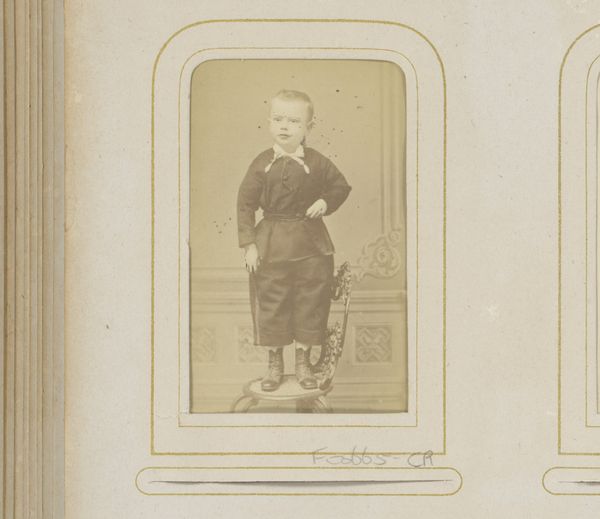
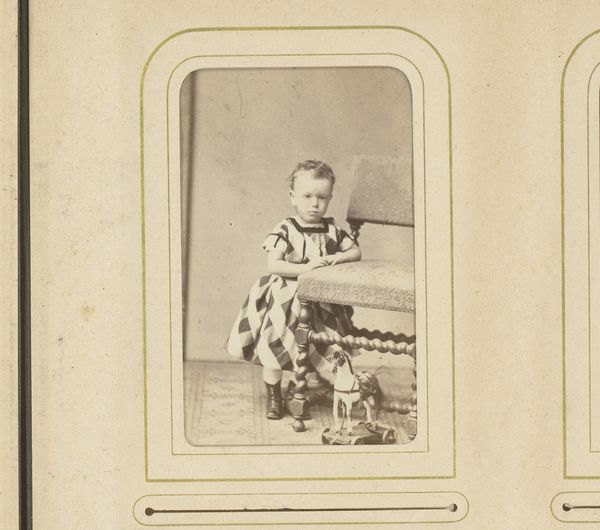
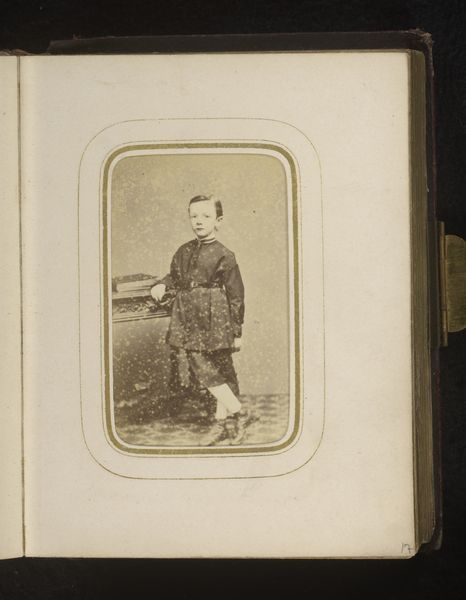
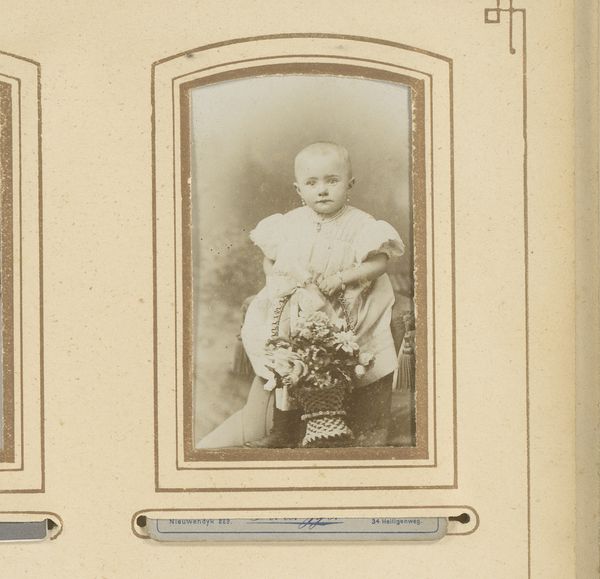
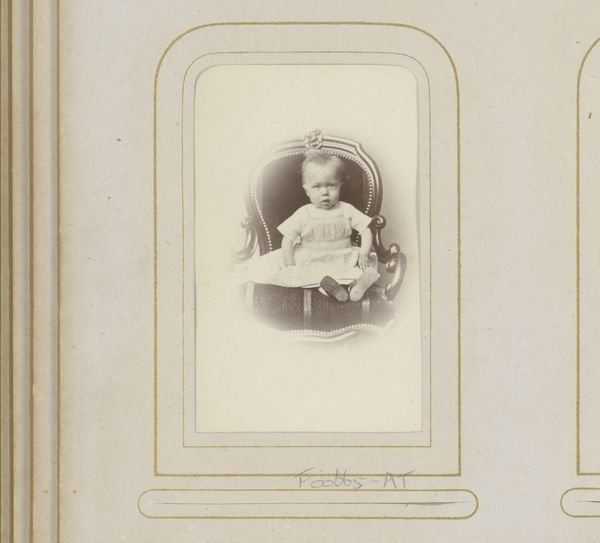
Curator: Looking at this small albumen print from between 1867 and 1890, we see "Portret van een jongen met tas en speelgoedpaard"—a portrait of a boy with a bag and a toy horse. The photographer here is Johannes Ephraim. Editor: There’s such stillness. He stands beside the table with his horse, like he's caught in a moment between playing and posing. It’s like a small stage. Curator: Yes, it feels posed, constructed. Notice the accoutrements—a painted table, carefully chosen clothing—it reads as a statement about class, aspiration, perhaps even the burdens of masculinity placed on young boys. Photography, especially then, was linked to representation and societal role playing. Editor: The horse, the bag... These are definitely symbols of what's expected: travel, responsibility, but all shrunk down to a child’s scale. And he isn’t engaging with them; there’s almost a forced quality to the inclusion of the horse, as if it needs to be in there. Curator: It’s the deliberate curation of childhood, isn't it? Think about how such a representation then informs notions of family values and success. Whose stories were amplified, and who was deliberately erased? Editor: And yet, regardless of context, this kid’s pose, and that slight tilt to the head is somewhat reminiscent of those older renaissance images of patrons. They both say “Look, I belong.” It goes beyond mere childhood and societal critique. It hits archetypes. Curator: Definitely. We need to consider these images not as isolated artworks, but as threads in a larger conversation about power, representation, and agency. What is considered ‘normal’ or ideal? Who sets the standards? Editor: Indeed. The image is interesting in this way as a relic and an echo; the child standing for family wealth at the same time also reaching to something of a timeless human ideal. Curator: Ultimately it highlights how photographs were and are tools—tools for constructing identity, negotiating social space, and shaping cultural memory. Editor: It just shows that every icon, no matter how seemingly straightforward, echoes louder once we open ourselves up to what it could potentially suggest.
Comments
No comments
Be the first to comment and join the conversation on the ultimate creative platform.
 Collect
 React
React Comment
More like this