


Curatorial notes
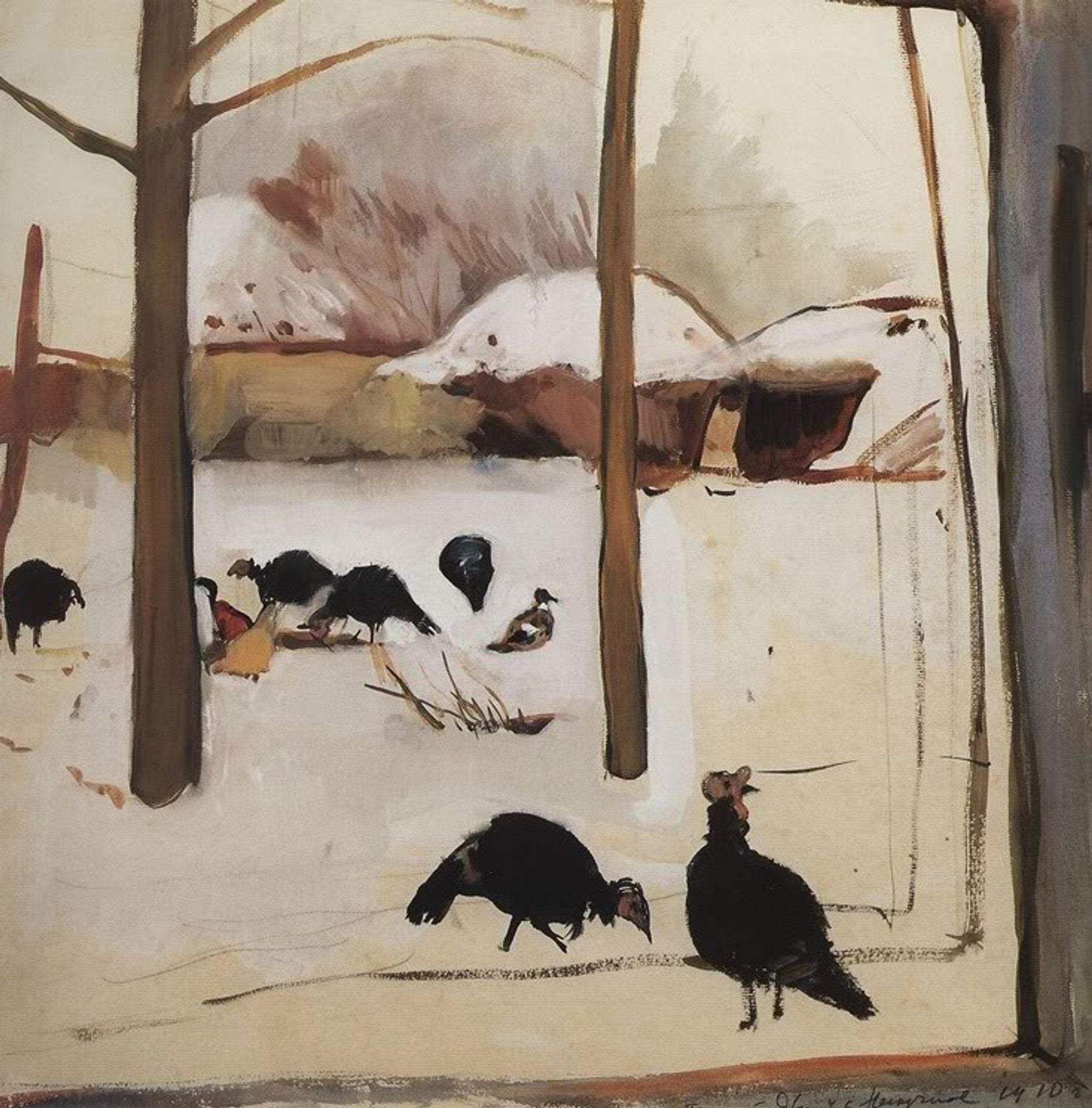
Curator: Looking at "Poultry Yard," painted around 1910 by Zinaida Serebriakova, I get this lovely, almost wistful feeling, like peering into a snow globe from a cozy window. What's your initial take? Editor: My initial impression is the sharp class divide present within the pre-Soviet Russian countryside. The poultry almost form a metonym for the peasantry who occupy a similar position within society. Curator: Oh, that's a fascinating reading! I was just thinking about the textures—the rough bark of the trees framing the scene, versus the fluffy snow and feathers, how the watercolor and oil paint capture such distinct surfaces. But you're pulling in a whole different layer. Editor: The "Poultry Yard" is more than just barnyard fowl within an idyllic setting. We need to recognize how it functions within the framework of pre-Revolutionary Russia where economic disparity defined quotidian realities and class was often rigidly assigned and imposed upon subjects. Curator: Right, right, because Serebriakova, despite painting these genre scenes, also came from a family with aristocratic roots. Her grandfather was a famous architect, after all. I suppose it does open up questions of representation and who gets to tell these stories, and from what perspective. But I still think this captures the magic of winter on a farm with an honesty and love. It's a Russian impressionist painting in that way. Editor: Agreed, however we can consider those earlier Russian Impressionist artistic and sociopolitical sentiments that also attempted to portray Russian serfdom. Although post-emancipation in 1861, this movement did not erase entrenched and historically-informed discrimination which had residual influence throughout Russia for generations after, and which, I would argue, the painting has the capacity to reveal. Curator: I am just very charmed by the artist's perspective. Editor: It reminds us to stay critically aware and consider layers of the past—of art history, class history, and more. Curator: Beautifully said, making even a peaceful poultry yard a little less, well, peaceful, and far more compelling!