About this artwork
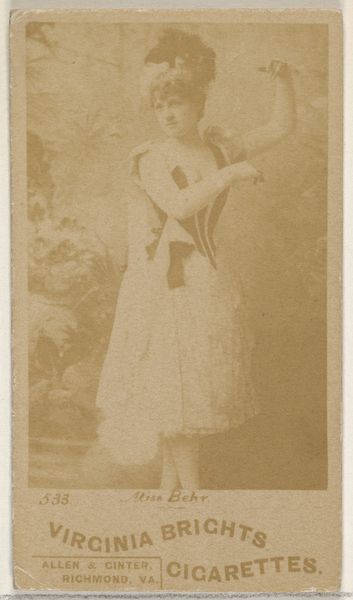
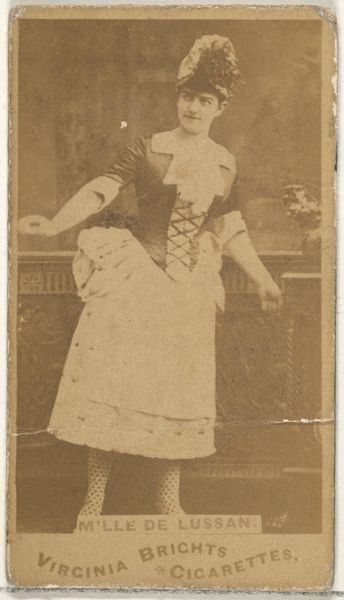
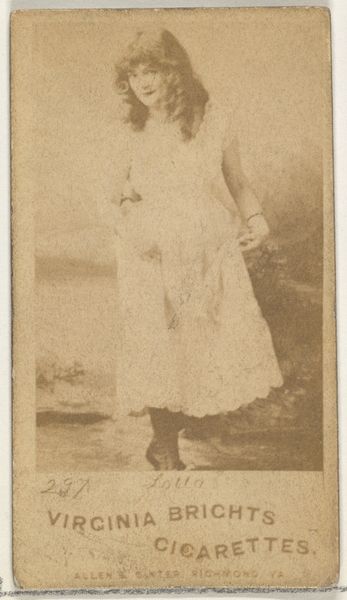
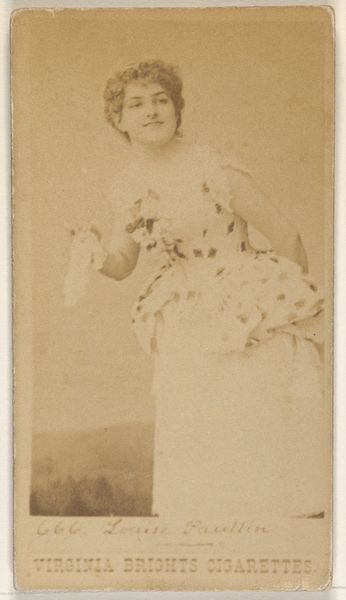
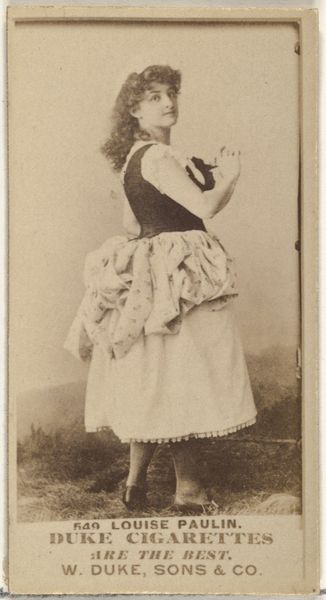
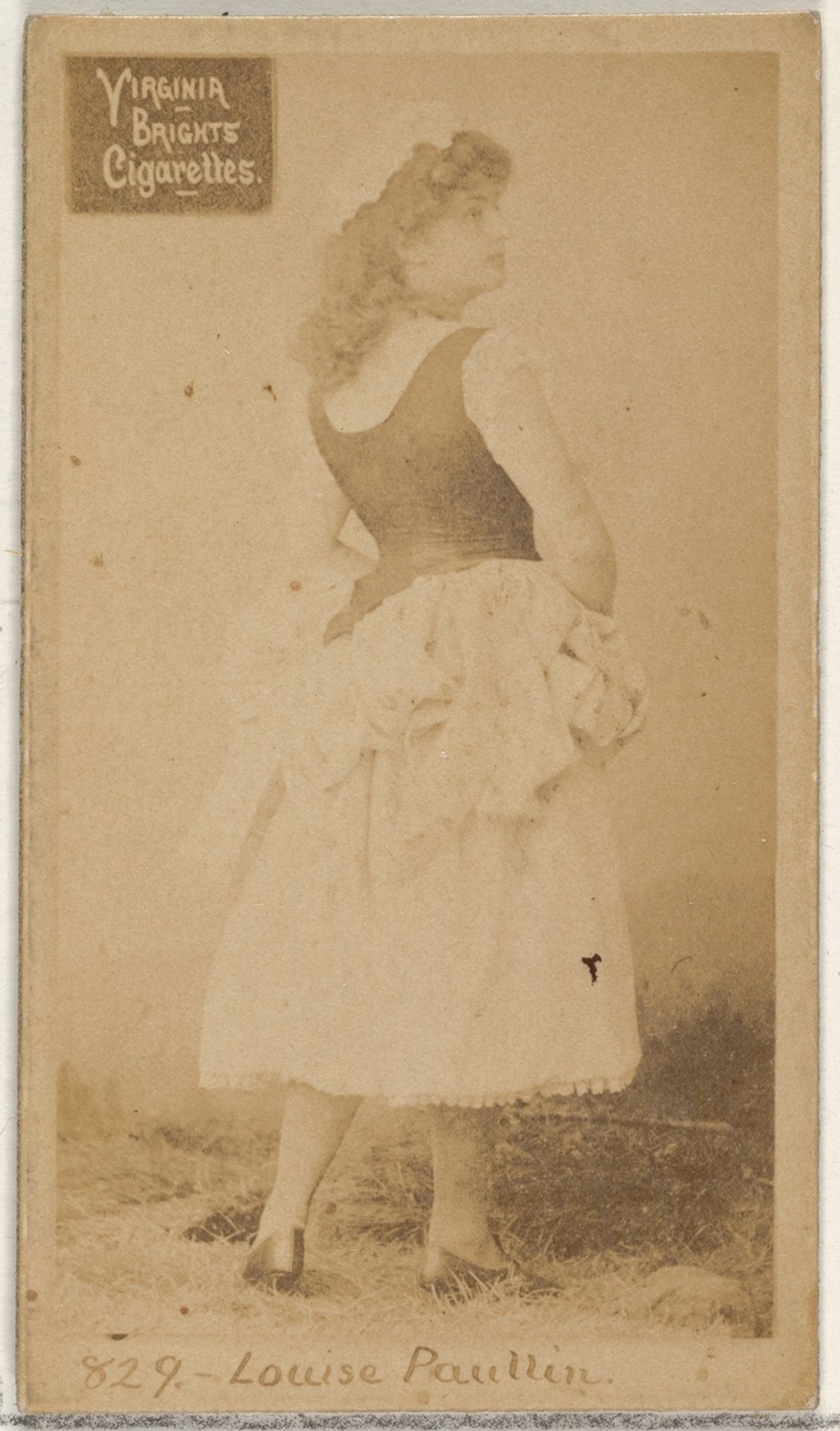
Allen & Ginter created this small card featuring Louise Paullin as part of a series for Virginia Brights Cigarettes. The sepia tones lend a nostalgic quality, emphasizing form through shadow and light. The actress is depicted in a costume, her body turned away, creating a dynamic interplay between visibility and concealment. The composition uses the frame to draw attention to the textures of her dress, which form a kind of sculptural relief. This card can be considered through the lens of semiotics. The brand name and series title establish a clear relationship between consumer culture and the performing arts. Paullin herself, becomes a sign, a symbol of beauty, performance, and aspiration, all packaged and sold to enhance the allure of the cigarettes. The image's structure, particularly its balance between Paullin's form and the commercial framing, showcases how early advertising skillfully intertwined cultural values with commodity promotion. This piece invites us to consider the evolving relationship between art, commerce, and identity.
Card 829, Louise Paullin, from the Actors and Actresses series (N45, Type 2) for Virginia Brights Cigarettes 1885 - 1891
Artwork details
- Medium
- drawing, print, photography
- Dimensions
- Sheet: 2 3/4 x 1 3/8 in. (7 x 3.5 cm)
- Location
- Metropolitan Museum of Art, New York, NY
- Copyright
- Public Domain
Tags
portrait
drawing
photography
19th century
Comments
No comments
About this artwork
Allen & Ginter created this small card featuring Louise Paullin as part of a series for Virginia Brights Cigarettes. The sepia tones lend a nostalgic quality, emphasizing form through shadow and light. The actress is depicted in a costume, her body turned away, creating a dynamic interplay between visibility and concealment. The composition uses the frame to draw attention to the textures of her dress, which form a kind of sculptural relief. This card can be considered through the lens of semiotics. The brand name and series title establish a clear relationship between consumer culture and the performing arts. Paullin herself, becomes a sign, a symbol of beauty, performance, and aspiration, all packaged and sold to enhance the allure of the cigarettes. The image's structure, particularly its balance between Paullin's form and the commercial framing, showcases how early advertising skillfully intertwined cultural values with commodity promotion. This piece invites us to consider the evolving relationship between art, commerce, and identity.
Comments
No comments