About this artwork
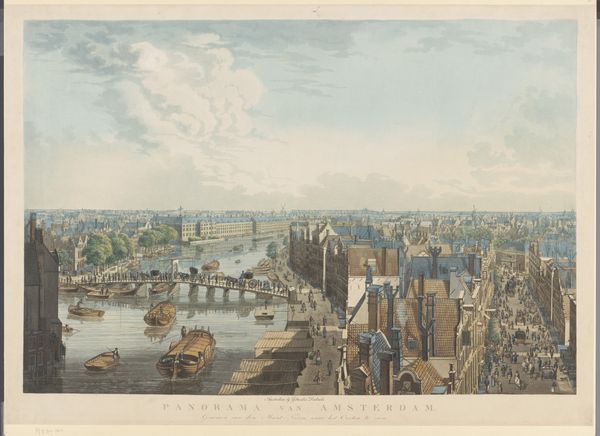
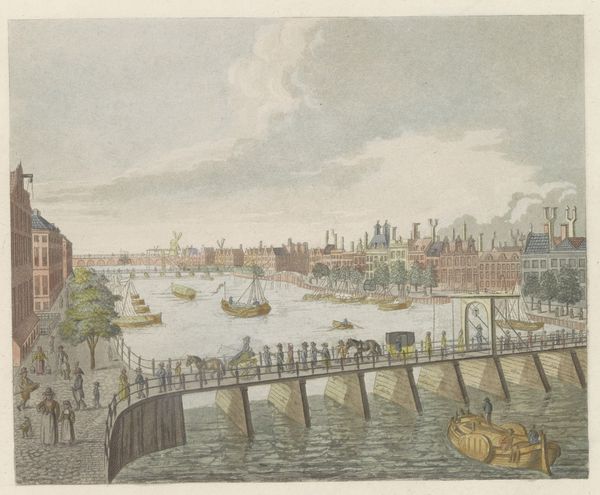
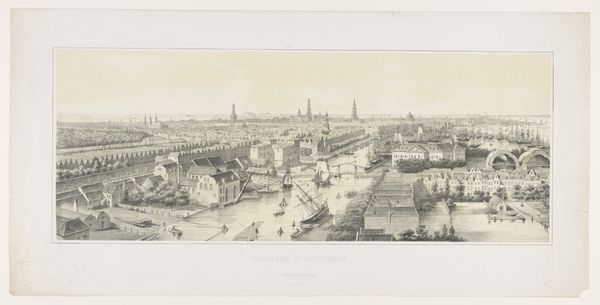
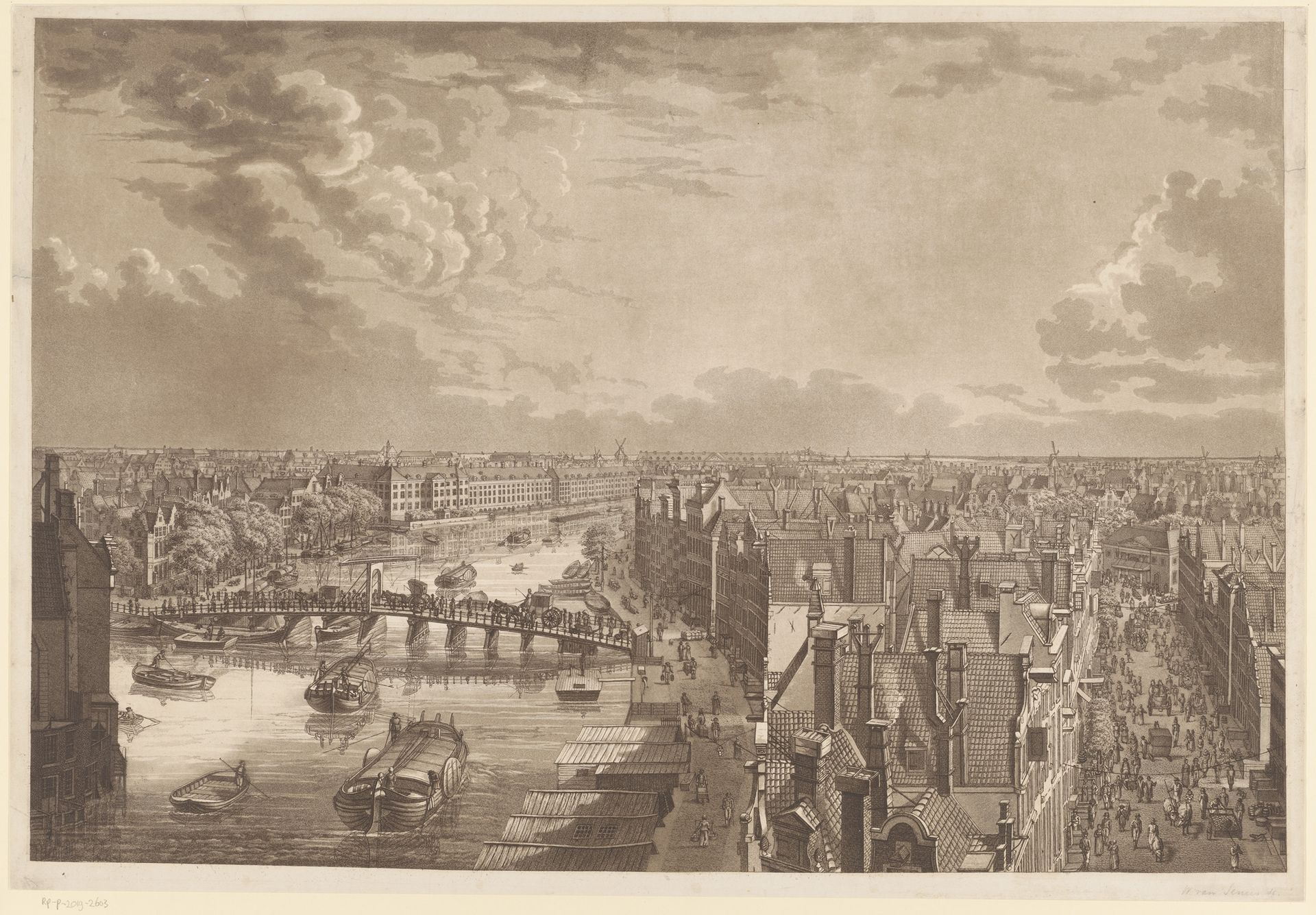
Willem van Senus created this drawing of the Amstel in Amsterdam from the Munttoren using pen and brush in grey ink. Look closely at the meticulous rendering of urban life that animates the composition. The artist's use of line and tonal variation articulates the bustling activity along the Amstel River, the movement of clouds in the sky, and the dense architecture of Amsterdam. Notice the linear perspective that guides the viewer's eye from the detailed foreground to the distant horizon, creating depth and scale. The drawing can be seen as an exercise in the representation of space and urban structure. By combining empirical observation with artistic interpretation, Senus invites us to contemplate the relationship between the individual and the collective, the natural and the built environment. Consider, too, the drawing's status as a cultural record, capturing a specific moment in the history of Amsterdam. The formal structure serves to convey the city’s enduring characteristics, making this work a window into the past.
Gezicht op de Amstel in Amsterdam vanaf de Munttoren
1783 - 1851

Willem van Senus
1773 - 1851Location
RijksmuseumArtwork details
- Medium
- print, engraving
- Dimensions
- height 526 mm, width 770 mm
- Location
- Rijksmuseum
- Copyright
- Rijks Museum: Open Domain
Tags
Comments
Share your thoughts
About this artwork
Willem van Senus created this drawing of the Amstel in Amsterdam from the Munttoren using pen and brush in grey ink. Look closely at the meticulous rendering of urban life that animates the composition. The artist's use of line and tonal variation articulates the bustling activity along the Amstel River, the movement of clouds in the sky, and the dense architecture of Amsterdam. Notice the linear perspective that guides the viewer's eye from the detailed foreground to the distant horizon, creating depth and scale. The drawing can be seen as an exercise in the representation of space and urban structure. By combining empirical observation with artistic interpretation, Senus invites us to contemplate the relationship between the individual and the collective, the natural and the built environment. Consider, too, the drawing's status as a cultural record, capturing a specific moment in the history of Amsterdam. The formal structure serves to convey the city’s enduring characteristics, making this work a window into the past.
Comments
Share your thoughts